Salicaceae
Black Poplar (Populus nigra): Complete Care Guide
Populus nigra
Black Poplar is a low-maintenance, fast-growing outdoor tree that thrives in full sun with moist, well-drained soil. It tolerates a wide range of conditions but prefers ample moisture. Water deeply during dry periods and fertilize once per season in spring.
Every 10 days
Direct sun
-30° - 35°C
40% - 70%
Categories
What is Black Poplar?
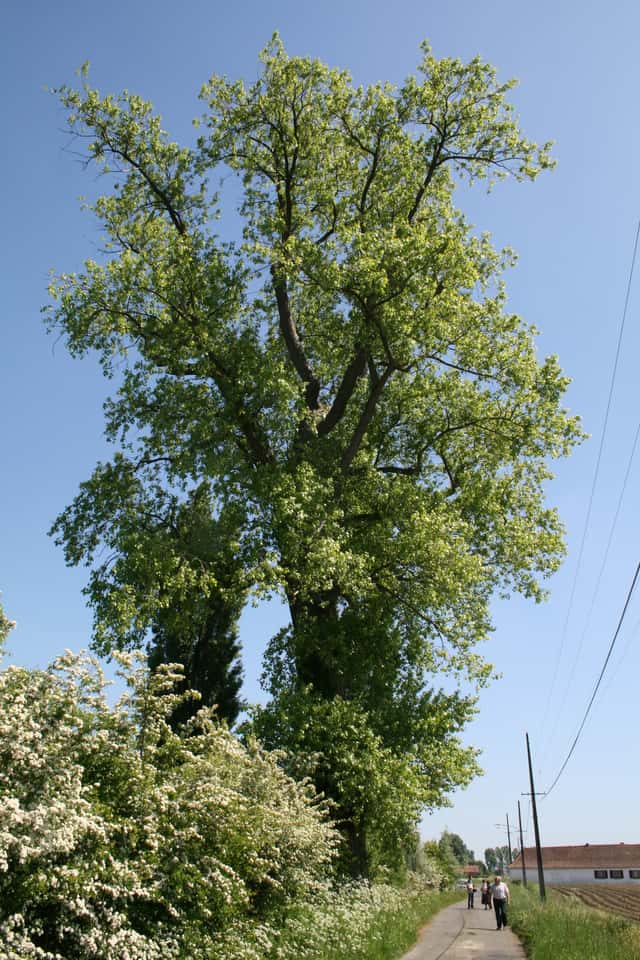
Black Poplar (Populus nigra) is a easy-care plant from the Salicaceae family. Populus nigra, commonly known as Black Poplar, is a large deciduous tree native to Europe and Western Asia. It is one of the most iconic trees of the European landscape, renowned for its fast growth, dark furrowed bark, and graceful triangular leaves that shimmer in the breeze. The Lombardy Poplar (...
Black Poplar grows up to 30.0m, spread of 2000cm, watering every 10 days, -30°C – 35°C, 40–70% humidity. It is not suitable for indoor environments and safe for pets.
Unlike many tropical plants, Black Poplar tolerates watering mistakes. Best for beginners. Unlike many popular species, Black Poplar is safe to keep around pets.
How to Care for Black Poplar?
TLDR: Black Poplar needs Direct sun, watering every 10 days, and temperatures between -30-35°C with 40-70% humidity.
How Often Should You Water Black Poplar?
Water young trees regularly to keep the soil consistently moist. Established trees need deep watering every 7-14 days during dry spells. Avoid waterlogging as it can promote root rot.
How Much Light Does Black Poplar Need?
Requires full sun (at least 6 hours of direct sunlight per day). Does not tolerate shade. Plant in open areas away from buildings to allow full light exposure and root spread.
What Is the Best Soil for Black Poplar?
Prefers deep, loamy, moist soil rich in organic matter. Tolerates a wide pH range (6.0-8.0). Avoid compacted or heavily clay soils without amendment. Good drainage is important to prevent root diseases.
What Pot Should You Use for Black Poplar?
Open ground — this is a large outdoor tree and should not be grown in containers long-term.
Care Schedule
Fertilize
Every 90 days
What Is Black Poplar and Where Does It Come From?
Populus nigra, commonly known as Black Poplar, is a large deciduous tree native to Europe and Western Asia. It is one of the most iconic trees of the European landscape, renowned for its fast growth, dark furrowed bark, and graceful triangular leaves that shimmer in the breeze. The Lombardy Poplar (P. nigra 'Italica') is a well-known columnar cultivar widely used as a windbreak and for landscape definition.
How to Propagate Black Poplar?
Hardwood Cutting
Take cuttings from healthy, disease-free wood. Keep the soil consistently moist but not waterlogged during rooting.
- 1 Cut a 20-30cm hardwood stem section in late winter when the tree is dormant.
- 2 Remove all leaves and ensure the cutting has at least 2-3 nodes.
- 3 Plant the cutting in moist, well-draining soil or place in water.
- 4 Keep in a sheltered location with indirect light until roots develop.
- 5 Transplant to final location once well-rooted.
Materials needed:
How Big Does Black Poplar Grow?
TLDR: Black Poplar can reach up to 30.0m tall with Fast growth rate.
Max height
30.0m
Spread
20.0m
Growth rate
Fast
Foliage
Deciduous
Plant Uses
Ornamental
Great for decoration
Is your plant showing symptoms?
Click on the symptom to discover possible causes:
What Diseases Commonly Affect Black Poplar?
TLDR: Black Poplar is susceptible to 8 known diseases. Monitor regularly for early detection.
Canker
Canker is a disease caused by various fungi and bacteria that create necrotic, sunken areas on bark of branches, stems, and trunks. Pathogens enter through wounds and natural openings, especially when plants are stressed. Canker can gradually weaken or kill branches by disrupting water and nutrient flow.
Leaf Spot
Leaf spot is a common fungal disease caused by various pathogens including Alternaria, Ascochyta, Colletotrichum, Septoria, and Venturia. It primarily affects leaves, causing discolored spots that can lead to premature leaf drop if left untreated.
Rust
Rust is a common fungal disease caused by fungi in the order Pucciniales that affects a wide variety of plants. The disease gets its name from the characteristic orange, yellow, or reddish-brown pustules that appear on leaves, resembling metal rust. This obligate fungal parasite requires living plants to survive and can cause significant economic losses in agricultural crops.
Powdery Mildew
Powdery mildew is a common fungal disease caused by various fungi species including Erysiphe, Podosphaera, Oïdium, and Leveillula. It affects over 10,000 plant species worldwide. The disease thrives in warm, dry climates with high humidity and appears as a distinctive white powdery coating on plant surfaces.
Meaning & Symbolism
In European folklore, the Black Poplar symbolizes resilience, courage, and regeneration. It was associated with the underworld in ancient Greek mythology and seen as a tree of transformation and endurance.
Fun Facts
Populus nigra is one of Europe's rarest native trees — the true wild species is now endangered in many countries due to hybridization with cultivated varieties.
The Lombardy Poplar (P. nigra 'Italica') is a male clone propagated vegetatively; it almost never produces seeds.
Black Poplar wood has been historically used for making shields, bowls, and matches due to its light weight and resistance to splitting.
In Greek mythology, the Black Poplar was associated with Heracles and the Elysian Fields — heroes were crowned with its leaves.
Frequently asked questions
How fast does Black Poplar grow?
Is Black Poplar toxic to pets or humans?
How often should I water a Black Poplar?
Can Black Poplar grow near buildings?
What are the most common diseases of Black Poplar?
Compare with similar plants
| Attribute | Difficulty | Light | Watering | Pet Safe |
|---|---|---|---|---|
| Field Maple | Easy | Bright indirect | 14d | ✓ |
| Silver Birch | Easy | Direct sun | 14d | ✓ |
| Common Blanketflower | Easy | Direct sun | 10d | ✓ |
| Cushion Bush | Easy | Direct sun | 14d | ✓ |





