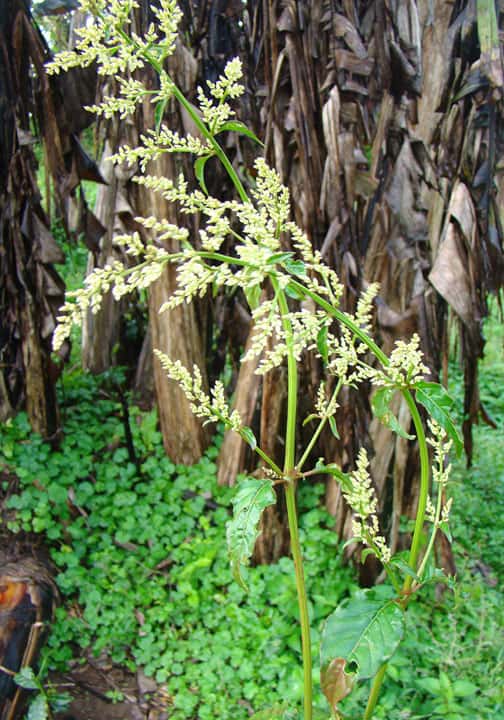
Amaranthaceae
Bloodleaf (Iresine diffusa): How to Care for This Tropical Beauty
Iresine diffusa
An easy-care plant that needs bright light to maintain its vibrant color. Water weekly, keeping the soil lightly moist but well-drained. Thrives between 15-30°C with humidity around 50-70%. Great for bright indoor spots or tropical gardens.
Every 7 days
Bright indirect
15° - 30°C
50% - 70%
Categories
What is Bloodleaf?
Bloodleaf (Iresine diffusa) is a easy-care plant from the Amaranthaceae family. Bloodleaf (Iresine diffusa) is a tropical shrub in the Amaranthaceae family, native to the tropical Americas. Celebrated for its vivid pinkish-red foliage, it is widely grown as an ornamental plant in gardens and indoors. It holds a significant place in Brazilian and Caribbean folk medicine, where i...
Bloodleaf grows up to 90cm, spread of 60cm, watering every 7 days, 15°C – 30°C, 50–70% humidity. It is suitable for indoor environments and safe for pets.
Unlike many tropical plants, Bloodleaf tolerates watering mistakes. Best for beginners. Unlike many popular species, Bloodleaf is safe to keep around pets. Without adequate drainage, root rot can develop within 14 days.
How to Care for Bloodleaf?
TLDR: Bloodleaf needs Bright indirect, watering every 7 days, and temperatures between 15-30°C with 50-70% humidity.
How Often Should You Water Bloodleaf?
Water once a week, or when the top inch of soil feels dry. Avoid overwatering — soggy soil leads to root rot. Increase watering frequency in summer heat and reduce in cooler winter months.
How Much Light Does Bloodleaf Need?
Place in bright indirect light or morning sun (4-6 hours). Without adequate light, leaves lose their red coloration and turn green. Avoid harsh midday direct sun indoors to prevent scorching.
What Is the Best Soil for Bloodleaf?
Use well-draining, organically rich soil. A mix of regular potting soil, perlite, and compost (1:1:1) works well. Target pH of 5.5-6.5. Refresh soil at every repotting.
What Pot Should You Use for Bloodleaf?
Terracotta or ceramic pots are ideal as they allow root breathing. Always ensure the pot has drainage holes. For indoor use, plastic pots with a saucer work well — empty the saucer after watering.
Care Schedule
Fertilize
Every 30 days
Misting
Every 7 days
Rotate
Every 30 days
Repot
Every 365 days
What Is Bloodleaf and Where Does It Come From?
Bloodleaf (Iresine diffusa) is a tropical shrub in the Amaranthaceae family, native to the tropical Americas. Celebrated for its vivid pinkish-red foliage, it is widely grown as an ornamental plant in gardens and indoors. It holds a significant place in Brazilian and Caribbean folk medicine, where it has been traditionally used as an analgesic, diuretic, and anti-inflammatory remedy.
How to Propagate Bloodleaf?
Stem cutting
Use clean, sharp scissors. Keep out of direct sun during rooting. Spring cuttings have the highest success rate.
- 1 Cut a healthy stem 4-6 inches long with 2-3 leaf pairs
- 2 Remove lower leaves and optionally apply rooting hormone
- 3 Insert into moist, well-draining propagation mix
- 4 Keep in a warm spot with bright indirect light
- 5 Water lightly to maintain moisture without waterlogging
Materials needed:
How Big Does Bloodleaf Grow?
TLDR: Bloodleaf can reach up to 90cm tall with Medium growth rate.
Max height
90cm
Spread
60cm
Growth rate
Medium
Foliage
Evergreen
Plant Uses
Ornamental
Great for decoration
Medicinal
Medicinal properties
Medicinal Uses
- Natural analgesic: leaves brewed as tea to relieve pain
- Diuretic: traditional use to support kidney function
- Anti-inflammatory: used for ovarian inflammation in Peruvian and Brazilian folk medicine
- Antimalarial: leaves used in Amazonian traditions to treat fever and malaria
- General tonic: leaf infusion consumed as an energizing tonic
Is your plant showing symptoms?
Click on the symptom to discover possible causes:
What Diseases Commonly Affect Bloodleaf?
TLDR: Bloodleaf is susceptible to 7 known diseases. Monitor regularly for early detection.
Root Rot
Root rot is a serious fungal disease that affects the root system of plants, causing them to decay and die. It is primarily caused by overwatering, poor drainage, or soil-borne fungi such as Pythium, Phytophthora, Rhizoctonia, and Fusarium. The disease thrives in waterlogged conditions where roots are deprived of oxygen, making them susceptible to fungal infection.
Powdery Mildew
Powdery mildew is a common fungal disease caused by various fungi species including Erysiphe, Podosphaera, Oïdium, and Leveillula. It affects over 10,000 plant species worldwide. The disease thrives in warm, dry climates with high humidity and appears as a distinctive white powdery coating on plant surfaces.
Aphids
Aphids are small, soft-bodied, pear-shaped insects (1/16 to 1/8 inch long) that feed by sucking nutrient-rich sap from plants. They reproduce rapidly and can quickly weaken plants, causing distorted growth and transmitting plant viruses. Aphids come in various colors including green, black, red, yellow, brown, and gray. They secrete honeydew, a sticky substance that attracts ants and encourages sooty mold growth.
Mealybugs
Mealybugs are small, soft-bodied insects covered with a white, waxy, cottony material. They are common pests of houseplants and outdoor plants in mild climates. These sap-sucking insects feed on plant tissue, causing damage, stunted growth, and can lead to plant death if left untreated. They produce sticky honeydew which attracts sooty mold.
Meaning & Symbolism
In Afro-Brazilian and Caribbean traditions, Bloodleaf symbolizes vital force, passion, and protection. Its intense red foliage is associated with the energy of life and blood.
Fun Facts
Despite its dramatic name, Bloodleaf is non-toxic to pets and humans
In Amazonian traditions, leaf teas have been used for centuries to treat fever and inflammation
Its vivid red-pink color comes from betalain pigments — the same compounds that make beetroot red
It is one of the few ornamental plants with documented medicinal use across three continents
Frequently asked questions
How often should I water Bloodleaf?
Why are my Bloodleaf leaves turning green?
Is Bloodleaf toxic to pets?
How do I propagate Bloodleaf?
What are the medicinal uses of Bloodleaf?
Compare with similar plants
| Attribute | Difficulty | Light | Watering | Pet Safe |
|---|---|---|---|---|
| Field Maple | Easy | Bright indirect | 14d | ✓ |
| Silver Birch | Easy | Direct sun | 14d | ✓ |
| Common Blanketflower | Easy | Direct sun | 10d | ✓ |
| Cushion Bush | Easy | Direct sun | 14d | ✓ |





