Lamiaceae
Blue Butterfly Bush (Rotheca myricoides)
Rotheca myricoides
An easy-care, fast-growing shrub for warm climates. Thrives in full sun with well-draining soil and regular watering. Reduce watering in winter. Prune back annually to maintain shape and encourage prolific flowering.
Every 14 days
Bright indirect
10° - 38°C
50% - 80%
Categories
What is Blue Butterfly Bush?
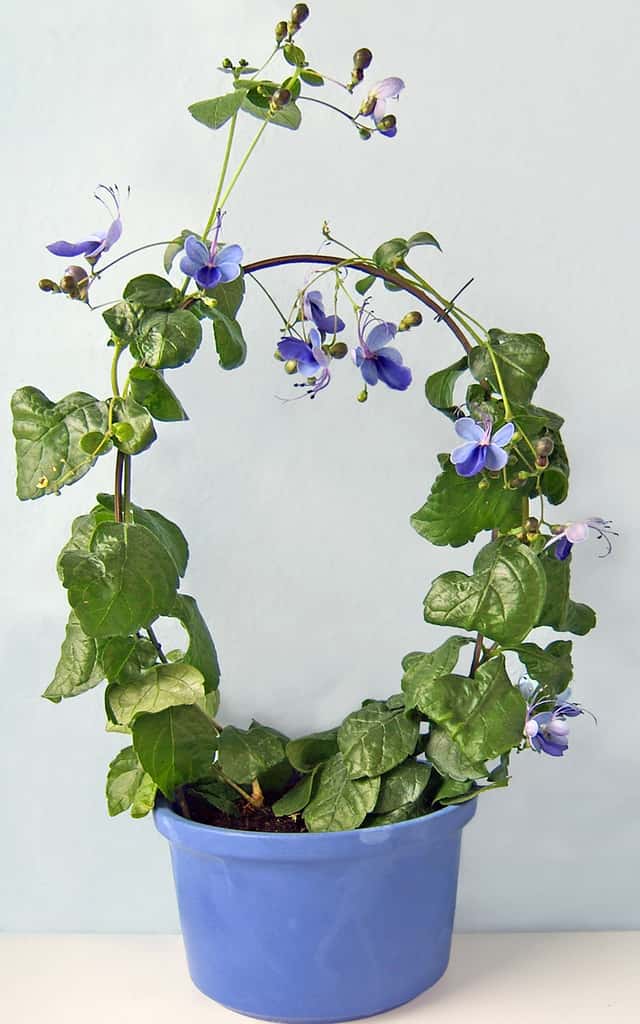
Blue Butterfly Bush (Rotheca myricoides) is a easy-care plant from the Lamiaceae family. Rotheca myricoides, commonly known as the Blue Butterfly Bush, is an evergreen shrub native to East Africa. It produces stunning pale violet-blue, butterfly-shaped flowers with a distinctive darker blue lower petal and long curved stamens, making it a showstopper in tropical and subtropical gardens....
Blue Butterfly Bush grows up to 4.0m, spread of 250cm, watering every 14 days, 10°C – 38°C, 50–80% humidity. It is not suitable for indoor environments and safe for pets.
Unlike many tropical plants, Blue Butterfly Bush tolerates watering mistakes. Best for beginners. Unlike many popular species, Blue Butterfly Bush is safe to keep around pets.
How to Care for Blue Butterfly Bush?
TLDR: Blue Butterfly Bush needs Bright indirect, watering every 14 days, and temperatures between 10-38°C with 50-80% humidity.
How Often Should You Water Blue Butterfly Bush?
Water every 1-2 weeks, keeping soil consistently moist but never waterlogged. Allow the top inch to dry slightly between waterings. Reduce frequency significantly during winter dormancy.
How Much Light Does Blue Butterfly Bush Need?
Requires full sun to partial shade for best flowering. In very hot climates, provide afternoon shade to prevent leaf scorch. Minimum 4-6 hours of direct sunlight daily for abundant blooms.
What Is the Best Soil for Blue Butterfly Bush?
Plant in fertile, well-draining soil rich in organic matter. A pH of 6.0-7.5 is ideal. Avoid heavy clay soils — amend with sand or perlite to improve drainage.
What Pot Should You Use for Blue Butterfly Bush?
A wide, sturdy pot with drainage holes works best — terracotta or glazed ceramic are ideal. Use a pot at least 12-14 inches in diameter for outdoor container growing.
Care Schedule
Fertilize
Every 30 days
Misting
Every 7 days
Repot
Every 730 days
What Is Blue Butterfly Bush and Where Does It Come From?
Rotheca myricoides, commonly known as the Blue Butterfly Bush, is an evergreen shrub native to East Africa. It produces stunning pale violet-blue, butterfly-shaped flowers with a distinctive darker blue lower petal and long curved stamens, making it a showstopper in tropical and subtropical gardens. Previously classified as Clerodendrum ugandense, it belongs to the mint family Lamiaceae.
How to Propagate Blue Butterfly Bush?
Stem Cutting
Use clean, sharp shears. Change the bag daily to avoid mold buildup. Rooting is most reliable in spring and early summer with bottom heat.
- 1 Take a 4-6 inch semi-hardwood stem cutting just below a leaf node
- 2 Remove lower leaves leaving 2-3 at the top
- 3 Dip the cut end in rooting hormone powder
- 4 Insert into moist, well-draining propagation mix
- 5 Cover with a plastic bag or humidity dome to retain moisture
- 6 Place in bright indirect light and keep soil moist until roots form
Materials needed:
How Big Does Blue Butterfly Bush Grow?
TLDR: Blue Butterfly Bush can reach up to 4.0m tall with Fast growth rate.
Max height
4.0m
Spread
2.5m
Growth rate
Fast
Foliage
Evergreen
Plant Uses
Ornamental
Great for decoration
Medicinal
Medicinal properties
Medicinal Uses
- Traditional use in East Africa for managing diabetes, epilepsy, arthritis, malaria, and rheumatism
- Anti-hyperglycemic properties studied in scientific research
Is your plant showing symptoms?
Click on the symptom to discover possible causes:
What Diseases Commonly Affect Blue Butterfly Bush?
TLDR: Blue Butterfly Bush is susceptible to 7 known diseases. Monitor regularly for early detection.
Leaf Spot
Leaf spot is a common fungal disease caused by various pathogens including Alternaria, Ascochyta, Colletotrichum, Septoria, and Venturia. It primarily affects leaves, causing discolored spots that can lead to premature leaf drop if left untreated.
Aphids
Aphids are small, soft-bodied, pear-shaped insects (1/16 to 1/8 inch long) that feed by sucking nutrient-rich sap from plants. They reproduce rapidly and can quickly weaken plants, causing distorted growth and transmitting plant viruses. Aphids come in various colors including green, black, red, yellow, brown, and gray. They secrete honeydew, a sticky substance that attracts ants and encourages sooty mold growth.
Mealybugs
Mealybugs are small, soft-bodied insects covered with a white, waxy, cottony material. They are common pests of houseplants and outdoor plants in mild climates. These sap-sucking insects feed on plant tissue, causing damage, stunted growth, and can lead to plant death if left untreated. They produce sticky honeydew which attracts sooty mold.
Scale Insects
Scale insects are small sap-sucking pests that appear as brown, shell-like bumps on plant stems and leaves. There are over 25 species, divided into armored (hard) and unarmored (soft) scales. They feed by piercing plant tissue and extracting sap, which weakens the plant and can lead to yellowing, stunted growth, and even death if left untreated. They also excrete honeydew, which attracts ants and promotes sooty mold growth.
Meaning & Symbolism
The butterfly-like flowers symbolize freedom, transformation, and the beauty of the natural world. In East African traditions, the plant is associated with renewal and healing.
Fun Facts
Rotheca myricoides was previously known as Clerodendrum ugandense before DNA studies led to its reclassification in 1998.
Its butterfly-shaped flowers attract real butterflies, making it a favorite in pollinator gardens.
Traditional East African medicine has used this plant to treat diabetes, epilepsy, and malaria for centuries.
In warm frost-free climates, it can bloom nearly year-round, providing a near-constant display of blue flowers.
Frequently asked questions
How often should I water Blue Butterfly Bush?
Is Rotheca myricoides toxic to pets?
Why is my Blue Butterfly Bush not flowering?
How do I propagate Rotheca myricoides?
Can Blue Butterfly Bush grow in containers?
Compare with similar plants
| Attribute | Difficulty | Light | Watering | Pet Safe |
|---|---|---|---|---|
| Field Maple | Easy | Bright indirect | 14d | ✓ |
| Silver Birch | Easy | Direct sun | 14d | ✓ |
| Common Blanketflower | Easy | Direct sun | 10d | ✓ |
| Cushion Bush | Easy | Direct sun | 14d | ✓ |





