Caprifoliaceae
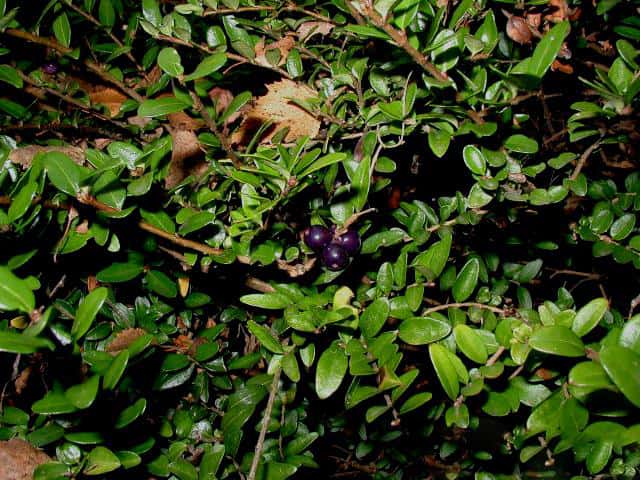
Boxleaf Honeysuckle (Lonicera nitida)
Lonicera nitida
Plant in full sun to partial shade in well-draining soil. Water every 7 days, allowing the top layer of soil to dry between waterings. Fertilize every 90 days during the growing season. Prune 2-3 times a year to maintain shape.
Every 7 days
Bright indirect
-18° - 35°C
40% - 70%
Categories
What is Boxleaf Honeysuckle?
Boxleaf Honeysuckle (Lonicera nitida) is a easy-care plant from the Caprifoliaceae family. Lonicera nitida, commonly known as Boxleaf Honeysuckle, is a fast-growing evergreen shrub native to China. It is widely valued in horticulture for its dense, small-leaved foliage that responds exceptionally well to clipping and shaping. Frequently used for hedging, topiary, ground cover, and border...
Boxleaf Honeysuckle grows up to 3.0m, spread of 300cm, watering every 7 days, -18°C – 35°C, 40–70% humidity. It is not suitable for indoor environments and safe for pets.
Unlike many tropical plants, Boxleaf Honeysuckle tolerates watering mistakes. Best for beginners. Unlike many popular species, Boxleaf Honeysuckle is safe to keep around pets.
How to Care for Boxleaf Honeysuckle?
TLDR: Boxleaf Honeysuckle needs Bright indirect, watering every 7 days, and temperatures between -18-35°C with 40-70% humidity.
How Often Should You Water Boxleaf Honeysuckle?
Water every 7 days, letting the topsoil dry slightly between waterings. Avoid overwatering and waterlogging as root rot is the most common cause of decline. Increase watering frequency during hot, dry spells.
How Much Light Does Boxleaf Honeysuckle Need?
Prefers full sun for denser growth but tolerates partial shade. In very hot climates, afternoon shade helps prevent heat stress. Avoid prolonged deep shade as it reduces foliage density.
What Is the Best Soil for Boxleaf Honeysuckle?
Thrives in fertile, well-drained soil with a pH of 5.5–7.5. Tolerates sandy, loamy, and clay soils. For containers, mix universal potting mix with 30% perlite to ensure adequate drainage.
What Pot Should You Use for Boxleaf Honeysuckle?
Ceramic or plastic pots with drainage holes. For hedging, plant directly in the ground.
Care Schedule
Fertilize
Every 90 days
What Is Boxleaf Honeysuckle and Where Does It Come From?
Lonicera nitida, commonly known as Boxleaf Honeysuckle, is a fast-growing evergreen shrub native to China. It is widely valued in horticulture for its dense, small-leaved foliage that responds exceptionally well to clipping and shaping. Frequently used for hedging, topiary, ground cover, and border planting, it produces small, fragrant white flowers in spring followed by blue-purple berries.
How to Propagate Boxleaf Honeysuckle?
Semi-hardwood cutting
Take cuttings in spring for the best success rate. Use clean, sharp tools to prevent disease.
- 1 Cut a semi-hardwood stem of 20-30 cm from a healthy branch
- 2 Remove leaves from the lower half of the cutting
- 3 Apply rooting hormone to the base
- 4 Plant in moist, well-draining substrate
- 5 Keep in indirect light with high humidity until roots form
Materials needed:
Seed propagation
Stem cutting propagation is faster and more reliable. Use seeds only if vegetative material is unavailable.
- 1 Collect ripe seeds from the blue-purple berries
- 2 Sow in moist, well-draining substrate
- 3 Keep in a warm location with indirect light
- 4 Wait for germination which may take weeks to months
Materials needed:
How Big Does Boxleaf Honeysuckle Grow?
TLDR: Boxleaf Honeysuckle can reach up to 3.0m tall with Fast growth rate.
Max height
3.0m
Spread
3.0m
Growth rate
Fast
Foliage
Evergreen
Warning: Toxic Plant
This plant can be toxic if ingested. Keep out of reach of:
Plant Uses
Ornamental
Great for decoration
Ground Cover
Soil coverage
Is your plant showing symptoms?
Click on the symptom to discover possible causes:
What Diseases Commonly Affect Boxleaf Honeysuckle?
TLDR: Boxleaf Honeysuckle is susceptible to 6 known diseases. Monitor regularly for early detection.
Phytophthora Root Rot
Disease caused by fungus-like organisms (oomycetes) that live in soil and can survive for years. It affects roots, stem, and crown of plants, being especially severe in waterlogged or poorly drained soils. It is the second most common cause of root rot in trees and shrubs.
Powdery Mildew
Powdery mildew is a common fungal disease caused by various fungi species including Erysiphe, Podosphaera, Oïdium, and Leveillula. It affects over 10,000 plant species worldwide. The disease thrives in warm, dry climates with high humidity and appears as a distinctive white powdery coating on plant surfaces.
Leaf Spot
Leaf spot is a common fungal disease caused by various pathogens including Alternaria, Ascochyta, Colletotrichum, Septoria, and Venturia. It primarily affects leaves, causing discolored spots that can lead to premature leaf drop if left untreated.
Aphids
Aphids are small, soft-bodied, pear-shaped insects (1/16 to 1/8 inch long) that feed by sucking nutrient-rich sap from plants. They reproduce rapidly and can quickly weaken plants, causing distorted growth and transmitting plant viruses. Aphids come in various colors including green, black, red, yellow, brown, and gray. They secrete honeydew, a sticky substance that attracts ants and encourages sooty mold growth.
Meaning & Symbolism
Symbolizes resilience and adaptability. As a hedge plant, it represents defined boundaries and structure in the garden.
Fun Facts
Lonicera nitida can grow up to 3 meters tall and wide under ideal conditions.
Its small white flowers emit a delicate sweet fragrance in spring.
It is resistant to honey fungus, one of the most destructive diseases for garden shrubs.
It can be clipped into geometric shapes, making it popular for topiary and formal gardens.
Frequently asked questions
How often should I water Boxleaf Honeysuckle?
Is Lonicera nitida toxic?
How often should I prune Boxleaf Honeysuckle?
Is it frost hardy?
Can I grow Boxleaf Honeysuckle in a container?
Compare with similar plants
| Attribute | Difficulty | Light | Watering | Pet Safe |
|---|---|---|---|---|
| Field Maple | Easy | Bright indirect | 14d | ✓ |
| Silver Birch | Easy | Direct sun | 14d | ✓ |
| Common Blanketflower | Easy | Direct sun | 10d | ✓ |
| Cushion Bush | Easy | Direct sun | 14d | ✓ |





