Rosaceae
Cherry laurel: Ground Cover Plant
Prunus laurocerasus
A very low-maintenance and adaptable shrub that thrives in most soil types and light conditions. Regular pruning is recommended to maintain its shape and size when used as a hedge.
Every 14 days
Bright indirect
-10° - 25°C
40% - 70%
Categories
What is Cherry laurel?
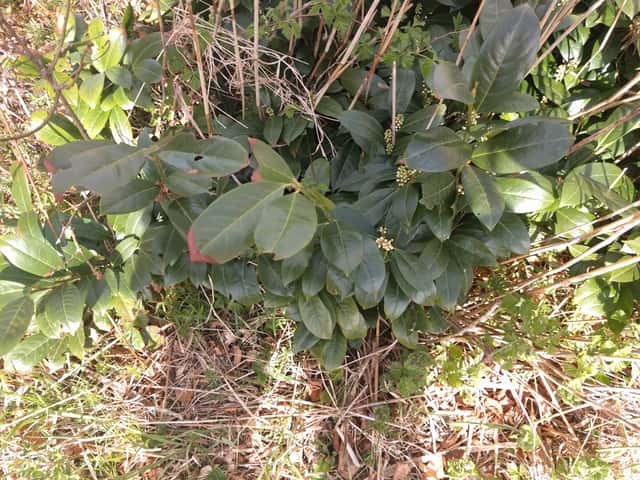
Cherry laurel (Prunus laurocerasus) is a easy-care plant from the Rosaceae family. Prunus laurocerasus, commonly known as Cherry Laurel, is a vigorous, large evergreen shrub or small tree. It is widely appreciated for its dense growth habit and glossy, leathery dark green leaves, making it an ideal choice for privacy hedges. In mid-spring, it produces upright spikes of small, frag...
Cherry laurel grows up to 9.0m, spread of 900cm, watering every 14 days, -10°C – 25°C, 40–70% humidity. It is not suitable for indoor environments and not safe for pets.
Unlike many tropical plants, Cherry laurel tolerates watering mistakes. Best for beginners. Without precautions, ingestion can cause irritation in pets. Keep out of reach of cats and dogs.
How to Care for Cherry laurel?
TLDR: Cherry laurel needs Bright indirect, watering every 14 days, and temperatures between -10-25°C with 40-70% humidity.
How Often Should You Water Cherry laurel?
Water deeply and regularly during the first two growing seasons to establish a strong root system; once established, it is quite drought-tolerant.
How Much Light Does Cherry laurel Need?
While it thrives in full sun, it is one of the few evergreen shrubs that can maintain dense foliage even in deep shade.
What Is the Best Soil for Cherry laurel?
Tolerates most soils, including clay and chalk, provided they are not constantly waterlogged.
What Pot Should You Use for Cherry laurel?
Best planted directly in the ground; if kept in a pot, use a very large, heavy container to accommodate its vigorous root system.
Care Schedule
Fertilize
Every 365 days
What Is Cherry laurel and Where Does It Come From?
Prunus laurocerasus, commonly known as Cherry Laurel, is a vigorous, large evergreen shrub or small tree. It is widely appreciated for its dense growth habit and glossy, leathery dark green leaves, making it an ideal choice for privacy hedges. In mid-spring, it produces upright spikes of small, fragrant white flowers that attract pollinators, followed by small, cherry-like fruits that ripen to black. It is exceptionally hardy and can tolerate significant urban pollution and heavy shade.
How to Propagate Cherry laurel?
Semi-hardwood Cuttings
- Keep the soil consistently moist but not waterlogged
- Using a heated propagator can speed up the rooting process
- 1 Take Cuttings
Cut a 15cm healthy stem from the current year's growth that is starting to firm up at the base.
- 2 Prepare Stem
Remove the lower leaves and dip the cut end into rooting hormone powder.
- 3 Planting
Insert the cutting into a pot filled with a mix of compost and grit, then keep it in a sheltered, humid environment.
Materials needed:
How Big Does Cherry laurel Grow?
TLDR: Cherry laurel can reach up to 9.0m tall with Fast growth rate.
Max height
9.0m
Spread
9.0m
Growth rate
Fast
Foliage
Evergreen
Warning: Toxic Plant
This plant can be toxic if ingested. Keep out of reach of:
Plant Uses
Ornamental
Great for decoration
Ground Cover
Soil coverage
Is your plant showing symptoms?
Click on the symptom to discover possible causes:
What Diseases Commonly Affect Cherry laurel?
TLDR: Cherry laurel is susceptible to 13 known diseases. Monitor regularly for early detection.
Powdery Mildew
Powdery mildew is a common fungal disease caused by various fungi species including Erysiphe, Podosphaera, Oïdium, and Leveillula. It affects over 10,000 plant species worldwide. The disease thrives in warm, dry climates with high humidity and appears as a distinctive white powdery coating on plant surfaces.
Phytophthora Root Rot
Disease caused by fungus-like organisms (oomycetes) that live in soil and can survive for years. It affects roots, stem, and crown of plants, being especially severe in waterlogged or poorly drained soils. It is the second most common cause of root rot in trees and shrubs.
Leaf Spot
Leaf spot is a common fungal disease caused by various pathogens including Alternaria, Ascochyta, Colletotrichum, Septoria, and Venturia. It primarily affects leaves, causing discolored spots that can lead to premature leaf drop if left untreated.
Scale Insects
Scale insects are small sap-sucking pests that appear as brown, shell-like bumps on plant stems and leaves. There are over 25 species, divided into armored (hard) and unarmored (soft) scales. They feed by piercing plant tissue and extracting sap, which weakens the plant and can lead to yellowing, stunted growth, and even death if left untreated. They also excrete honeydew, which attracts ants and promotes sooty mold growth.
Meaning & Symbolism
Often represents resilience and endurance due to its ability to thrive in difficult conditions and remain green year-round.
Compare with similar plants
| Attribute | Difficulty | Light | Watering | Pet Safe |
|---|---|---|---|---|
| Field Maple | Easy | Bright indirect | 14d | ✓ |
| Silver Birch | Easy | Direct sun | 14d | ✓ |
| Common Blanketflower | Easy | Direct sun | 10d | ✓ |
| Cushion Bush | Easy | Direct sun | 14d | ✓ |





