Primulaceae
Creeping Jenny: Ground Cover Plant
Lysimachia nummularia
Creeping Jenny is an easy-to-grow plant that thrives in moist, well-drained soil and partial shade. It is particularly well-suited for bog gardens or as a trailing accent in mixed containers.
Every 5 days
Partial shade
1° - 30°C
60% - 90%
Categories
What is Creeping Jenny?
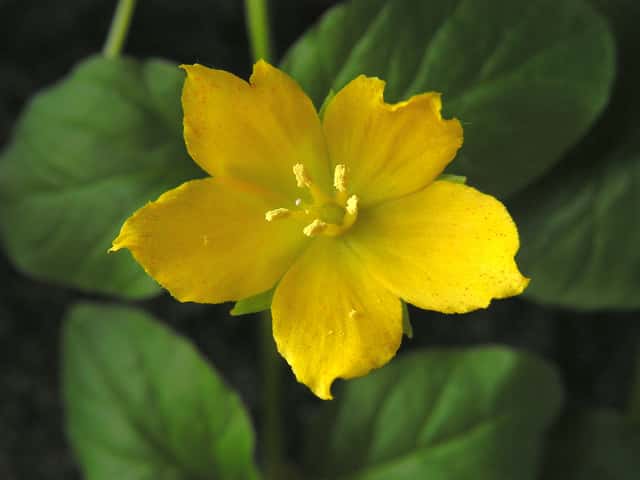
Creeping Jenny (Lysimachia nummularia) is a easy-care plant from the Primulaceae family. Lysimachia nummularia, commonly known as Creeping Jenny, is a vigorous, low-growing perennial ground cover. It features small, rounded, lime-green to golden leaves that resemble coins, and produces bright yellow, cup-shaped flowers in the summer. It is highly valued for its ability to quickly cover...
Creeping Jenny grows up to 15cm, spread of 60cm, watering every 5 days, 1°C – 30°C, 60–90% humidity. It is suitable for indoor environments and safe for pets.
Unlike many tropical plants, Creeping Jenny tolerates watering mistakes. Best for beginners. Unlike many popular species, Creeping Jenny is safe to keep around pets. Without adequate drainage, root rot can develop within 10 days.
How to Care for Creeping Jenny?
TLDR: Creeping Jenny needs Partial shade, watering every 5 days, and temperatures between 1-30°C with 60-90% humidity.
How Often Should You Water Creeping Jenny?
Never let the soil dry out completely. If the leaves start to wilt, water immediately.
How Much Light Does Creeping Jenny Need?
In hotter climates, provide afternoon shade to prevent the foliage from bleaching or burning.
What Is the Best Soil for Creeping Jenny?
Prefers a rich, organic soil that stays consistently moist; it can even tolerate poorly drained areas.
What Pot Should You Use for Creeping Jenny?
Best grown in hanging baskets or containers with drainage holes, using a moisture-retentive potting mix.
Care Schedule
Fertilize
Every 90 days
Rotate
Every 30 days
Repot
Every 730 days
What Is Creeping Jenny and Where Does It Come From?
Lysimachia nummularia, commonly known as Creeping Jenny, is a vigorous, low-growing perennial ground cover. It features small, rounded, lime-green to golden leaves that resemble coins, and produces bright yellow, cup-shaped flowers in the summer. It is highly valued for its ability to quickly cover ground in damp areas and its beautiful trailing habit in containers. It can also be grown submerged in aquariums.
How to Propagate Creeping Jenny?
Root Division
- Keep the new division well-watered until established.
- 1 Identify a clump
Locate a healthy, established section of the plant with visible roots.
- 2 Separate
Use a clean spade or knife to cut a section of the plant, ensuring it has both foliage and roots.
- 3 Replant
Place the division in moist soil at the same depth it was previously growing.
Materials needed:
Stem Cuttings
- Cuttings root very easily at the nodes.
- 1 Cut a stem
Snip a 4-6 inch section of a healthy stem.
- 2 Remove lower leaves
Strip the leaves from the bottom half of the cutting.
- 3 Root in water or soil
Place the cutting in a glass of water or directly into moist potting soil.
Materials needed:
How Big Does Creeping Jenny Grow?
TLDR: Creeping Jenny can reach up to 15cm tall with Fast growth rate.
Max height
15cm
Spread
60cm
Growth rate
Fast
Foliage
Semi-evergreen
Plant Uses
Ornamental
Great for decoration
Ground Cover
Soil coverage
Medicinal Uses
- Historically used as a vulnerary for healing wounds
- Used in traditional medicine for its astringent properties
Culinary Uses
- Dried leaves are occasionally used for herbal tea
Is your plant showing symptoms?
Click on the symptom to discover possible causes:
What Diseases Commonly Affect Creeping Jenny?
TLDR: Creeping Jenny is susceptible to 9 known diseases. Monitor regularly for early detection.
Root Rot
Root rot is a serious fungal disease that affects the root system of plants, causing them to decay and die. It is primarily caused by overwatering, poor drainage, or soil-borne fungi such as Pythium, Phytophthora, Rhizoctonia, and Fusarium. The disease thrives in waterlogged conditions where roots are deprived of oxygen, making them susceptible to fungal infection.
Rust
Rust is a common fungal disease caused by fungi in the order Pucciniales that affects a wide variety of plants. The disease gets its name from the characteristic orange, yellow, or reddish-brown pustules that appear on leaves, resembling metal rust. This obligate fungal parasite requires living plants to survive and can cause significant economic losses in agricultural crops.
Leaf Spot
Leaf spot is a common fungal disease caused by various pathogens including Alternaria, Ascochyta, Colletotrichum, Septoria, and Venturia. It primarily affects leaves, causing discolored spots that can lead to premature leaf drop if left untreated.
Powdery Mildew
Powdery mildew is a common fungal disease caused by various fungi species including Erysiphe, Podosphaera, Oïdium, and Leveillula. It affects over 10,000 plant species worldwide. The disease thrives in warm, dry climates with high humidity and appears as a distinctive white powdery coating on plant surfaces.
Meaning & Symbolism
Represents endurance and the ability to thrive in challenging, wet environments.
Compare with similar plants
| Attribute | Difficulty | Light | Watering | Pet Safe |
|---|---|---|---|---|
| Field Maple | Easy | Bright indirect | 14d | ✓ |
| Silver Birch | Easy | Direct sun | 14d | ✓ |
| Common Blanketflower | Easy | Direct sun | 10d | ✓ |
| Cushion Bush | Easy | Direct sun | 14d | ✓ |





