Orchidaceae
Devon's Cymbidium (Cymbidium devonianum): Complete Care Guide
Cymbidium devonianum
A demanding orchid requiring cool temperatures, bright indirect light, and regular watering without waterlogging. Needs a cold rest period to initiate flowering. Fertilize every two weeks and repot every 2 years after bloom.
Every 3 days
Bright indirect
7° - 24°C
40% - 70%
Categories
What is Devon's Cymbidium?
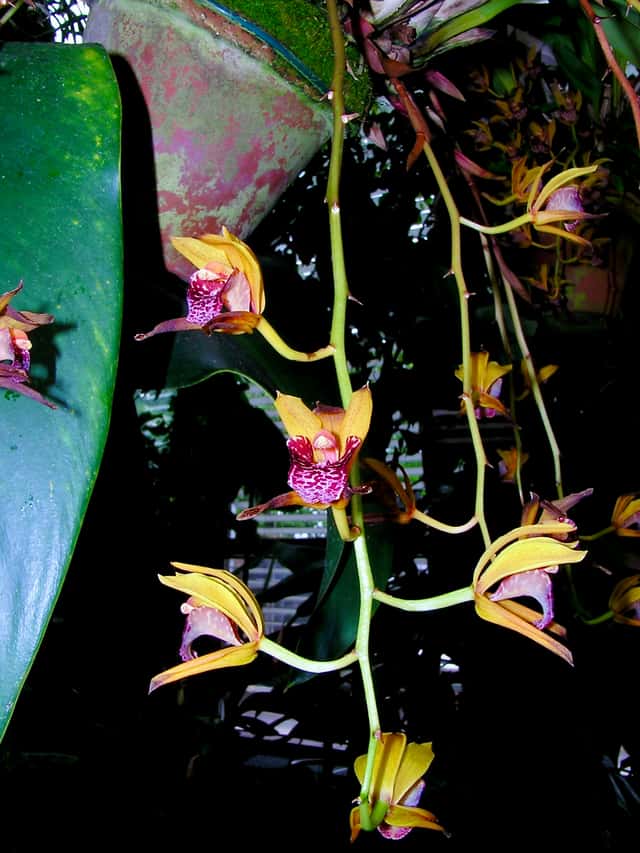
Devon's Cymbidium (Cymbidium devonianum) is a hard-care plant from the Orchidaceae family. Devon's Cymbidium (Cymbidium devonianum) is an epiphytic orchid native to the Himalayan foothills of Nepal, northeast India, Bhutan, and Myanmar. It is prized for its striking pendant flower spikes bearing 15–35 blooms in yellow-green with purple-red markings, making it one of the most distinctive s...
Devon's Cymbidium grows up to 70cm, spread of 60cm, watering every 3 days, 7°C – 24°C, 40–70% humidity. It is suitable for indoor environments and safe for pets.
Unlike easy-care plants, Devon's Cymbidium demands constant attention to humidity and light. Not recommended for beginners. Unlike many popular species, Devon's Cymbidium is safe to keep around pets. Without adequate drainage, root rot can develop within 7 days.
How to Care for Devon's Cymbidium?
TLDR: Devon's Cymbidium needs Bright indirect, watering every 3 days, and temperatures between 7-24°C with 40-70% humidity.
How Often Should You Water Devon's Cymbidium?
Water abundantly during active growth in spring and summer, keeping the substrate slightly moist but never soggy. Reduce watering gradually in autumn and keep on the drier side in winter. Overhead watering is ideal in late afternoon during summer.
How Much Light Does Devon's Cymbidium Need?
Requires bright indirect light of 20,000–54,000 lux. Avoid direct summer sun which can scorch leaves. Full sun is tolerated in cool or winter conditions. Yellowish-green leaves indicate ideal light levels.
What Is the Best Soil for Devon's Cymbidium?
Use a loose, fast-draining bark mix — medium bark in the lower half and fine bark with 10% perlite and 10% charcoal in the upper half. Never use regular potting soil. Good aeration at the roots is essential.
What Pot Should You Use for Devon's Cymbidium?
Clay or ceramic pot with generous drainage holes. Avoid oversized pots — Cymbidiums bloom best when slightly root-bound. Wire baskets also work well for pendant-type plants.
Care Schedule
Fertilize
Every 14 days
Misting
Every 2 days
Rotate
Every 30 days
Repot
Every 730 days
What Is Devon's Cymbidium and Where Does It Come From?
Devon's Cymbidium (Cymbidium devonianum) is an epiphytic orchid native to the Himalayan foothills of Nepal, northeast India, Bhutan, and Myanmar. It is prized for its striking pendant flower spikes bearing 15–35 blooms in yellow-green with purple-red markings, making it one of the most distinctive species in the Cymbidium genus.
How to Propagate Devon's Cymbidium?
Clump Division
Always sterilize cutting tools to prevent virus transmission. Do not fertilize for 4 weeks after division.
- 1 Remove the plant from its pot after flowering
- 2 Divide pseudobulbs into groups of 3-5 bulbs per division
- 3 Cut away dead or rotted roots and allow cut surfaces to air-dry for 30 minutes
- 4 Plant each division in fresh, well-draining bark mix
- 5 Keep in a shaded, humid spot for 2-3 weeks until established
Materials needed:
Back Bulb Propagation
Back bulbs have lower success rates but are useful for propagating rare cultivars.
- 1 Separate older leafless pseudobulbs (back bulbs) from the main plant
- 2 Plant individually in fine, moist substrate
- 3 Maintain warm temperatures and high humidity
- 4 Wait for new shoots — it may take 2-4 years to bloom
Materials needed:
How Big Does Devon's Cymbidium Grow?
TLDR: Devon's Cymbidium can reach up to 70cm tall with Slow growth rate.
Max height
70cm
Spread
60cm
Growth rate
Slow
Foliage
Evergreen
Plant Uses
Ornamental
Great for decoration
Is your plant showing symptoms?
Click on the symptom to discover possible causes:
What Diseases Commonly Affect Devon's Cymbidium?
TLDR: Devon's Cymbidium is susceptible to 9 known diseases. Monitor regularly for early detection.
Root Rot
Root rot is a serious fungal disease that affects the root system of plants, causing them to decay and die. It is primarily caused by overwatering, poor drainage, or soil-borne fungi such as Pythium, Phytophthora, Rhizoctonia, and Fusarium. The disease thrives in waterlogged conditions where roots are deprived of oxygen, making them susceptible to fungal infection.
Spider Mites
Spider mites are tiny arachnids (less than 1/20 inch long) related to spiders and ticks that feed on plant sap. They thrive in hot, dry conditions and can cause significant damage to ornamental and vegetable plants. During severe infestations, crop losses can reach 14% or higher as these pests disrupt vital plant processes including photosynthesis, carbon dioxide absorption, and transpiration.
Mosaic Virus
Mosaic virus is a group of plant viruses that cause mottled, patchy patterns on leaves and can affect a wide variety of plants. The virus creates characteristic yellow, white, and green mosaic patterns, often accompanied by stunted growth and deformed plant parts. This highly contagious disease spreads rapidly through insect vectors and contaminated tools.
Gray Mold (Botrytis Blight)
Gray mold, caused by the fungus Botrytis cinerea, is one of the most common fungal diseases in plants. It affects over 200 plant species, including ornamentals, vegetables, fruits, and houseplants. The disease thrives in cool, humid conditions with poor air circulation, causing grayish spots and soft rot on infected tissues.
Meaning & Symbolism
Symbolizes elegance, exotic beauty, and refinement — deeply valued in Asian cultures as a symbol of virtue and nobility.
Fun Facts
The species was named in honor of the 6th Duke of Devonshire, a celebrated 19th-century orchid collector.
Its pendant flower spikes can reach 44 cm in length, bearing up to 35 blooms each.
One of the few Cymbidium orchids naturally adapted to elevations above 1,500 m in the Himalayas.
The flowers have a unique coloration: yellow-green with purple-red spots and a white lip dotted with red.
Frequently asked questions
How often should I water Devon's Cymbidium?
Does Devon's Cymbidium need cold temperatures to flower?
Is Devon's Cymbidium toxic to pets?
Why won't my Devon's Cymbidium bloom?
How often should I fertilize Devon's Cymbidium?
Compare with similar plants
| Attribute | Difficulty | Light | Watering | Pet Safe |
|---|---|---|---|---|
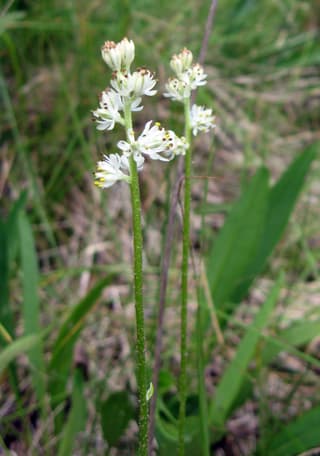
| Sticky false asphodel | Hard | Bright indirect | 1d | ✓ |
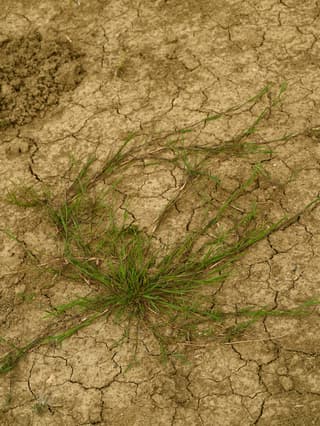
| Creeping bentgrass | Hard | Direct sun | 3d | ✓ |
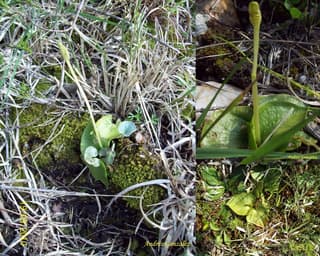
| Bulbous Adder's-tongue | Hard | Partial shade | 4d | ✓ |
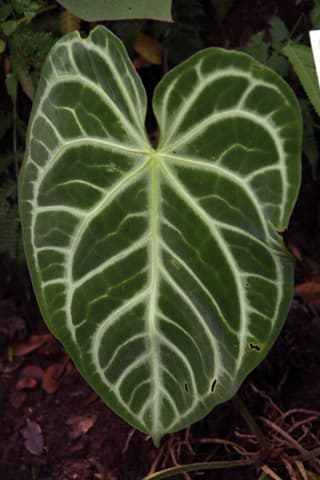
| Crystal Anthurium | Hard | Partial shade | 7d | ⚠️ |