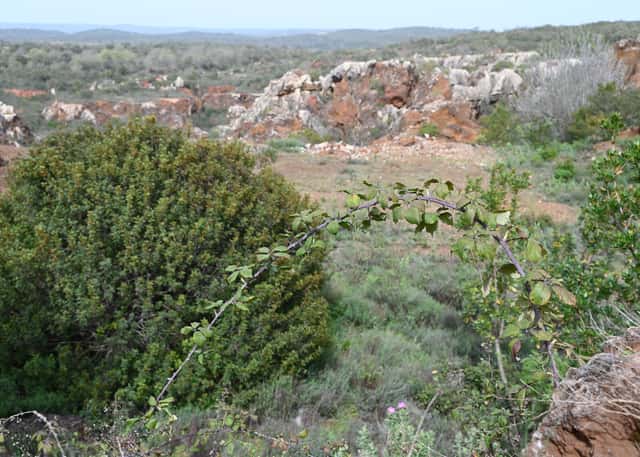
Rosaceae
Elm-leaved Blackberry — Rubus ulmifolius
Rubus ulmifolius
Low-maintenance and extremely hardy plant. Thrives in full sun, tolerates drought and poor soils. Prune twice yearly to control vigorous growth. Water every 3 weeks or when soil is dry.
Every 21 days
Bright indirect
-18° - 35°C
40% - 70%
Categories
What is Elm-leaved Blackberry?
Elm-leaved Blackberry (Rubus ulmifolius) is a easy-care plant from the Rosaceae family. Rubus ulmifolius, commonly known as the Elm-leaved Blackberry or Silverleaf Bramble, is a vigorous semi-evergreen shrub native to Europe and the Mediterranean region. It forms dense, thorny thickets and produces edible blackberries widely used in cooking and traditional medicine. Introduced beyond i...
Elm-leaved Blackberry grows up to 3.0m, spread of 400cm, watering every 21 days, -18°C – 35°C, 40–70% humidity. It is not suitable for indoor environments and safe for pets.
Unlike many tropical plants, Elm-leaved Blackberry tolerates watering mistakes. Best for beginners. Unlike many popular species, Elm-leaved Blackberry is safe to keep around pets.
How to Care for Elm-leaved Blackberry?
TLDR: Elm-leaved Blackberry needs Bright indirect, watering every 21 days, and temperatures between -18-35°C with 40-70% humidity.
How Often Should You Water Elm-leaved Blackberry?
Water every 3 weeks. During flowering and fruiting, keep soil slightly moist for better fruit quality. Avoid overwatering — root rot can occur in waterlogged soil.
How Much Light Does Elm-leaved Blackberry Need?
Prefers full sun (6-8 hours daily) for optimal fruit production. Tolerates partial shade but yields fewer berries.
What Is the Best Soil for Elm-leaved Blackberry?
Adapts to most soil types including clay and poor soils. Prefers well-draining loamy soil rich in organic matter. Optimal pH 6.0–7.5.
What Pot Should You Use for Elm-leaved Blackberry?
Outdoor plant — not suitable for containers. If grown in a large container (50L+), use rich well-draining compost.
Care Schedule
Fertilize
Every 90 days
What Is Elm-leaved Blackberry and Where Does It Come From?
Rubus ulmifolius, commonly known as the Elm-leaved Blackberry or Silverleaf Bramble, is a vigorous semi-evergreen shrub native to Europe and the Mediterranean region. It forms dense, thorny thickets and produces edible blackberries widely used in cooking and traditional medicine. Introduced beyond its native range, it is considered invasive in parts of Australia, Chile, and New Zealand.
How to Propagate Elm-leaved Blackberry?
Tip Layering
The easiest and most reliable method for this species. Best done in summer when canes are flexible.
- 1 Bend a long flexible cane to the ground
- 2 Pin the tip with a wire or stone
- 3 Wait for rooting and sever from the parent plant
Materials needed:
Semi-ripe Cutting
Use semi-hardwood cuttings taken in midsummer for best results.
- 1 Take a semi-ripe cutting 15-20 cm long in July or August
- 2 Remove lower leaves
- 3 Dip base in rooting hormone
- 4 Insert in moist, well-draining propagation mix
Materials needed:
Root Division
Ideal for rejuvenating old established plants.
- 1 Dig up established plant in early spring or autumn
- 2 Divide root clump ensuring each section has a shoot
- 3 Replant immediately and water well
Materials needed:
Seed Propagation
Germination is erratic. Tip layering is preferred for faster, more reliable results.
- 1 Collect ripe seeds in autumn
- 2 Cold-stratify for 4-8 weeks
- 3 Sow in moist seed compost in a cold frame
- 4 Transplant seedlings when 10 cm tall
Materials needed:
How Big Does Elm-leaved Blackberry Grow?
TLDR: Elm-leaved Blackberry can reach up to 3.0m tall with Fast growth rate.
Max height
3.0m
Spread
4.0m
Growth rate
Fast
Foliage
Semi-evergreen
Plant Uses
Ornamental
Great for decoration
Edible
Can be consumed
Medicinal
Medicinal properties
Medicinal Uses
- Astringent and anti-inflammatory properties of leaves
- Traditionally used for sore throats, diarrhea, and mouth ulcers
- Rich in antioxidants and vitamin C
Culinary Uses
- Fresh or cooked blackberries in jams, jellies, and desserts
- Homemade wines, juices, and liqueurs
- Young shoots eaten raw in salads or cooked like asparagus
Is your plant showing symptoms?
Click on the symptom to discover possible causes:
What Diseases Commonly Affect Elm-leaved Blackberry?
TLDR: Elm-leaved Blackberry is susceptible to 7 known diseases. Monitor regularly for early detection.
Powdery Mildew
Powdery mildew is a common fungal disease caused by various fungi species including Erysiphe, Podosphaera, Oïdium, and Leveillula. It affects over 10,000 plant species worldwide. The disease thrives in warm, dry climates with high humidity and appears as a distinctive white powdery coating on plant surfaces.
Gray Mold (Botrytis Blight)
Gray mold, caused by the fungus Botrytis cinerea, is one of the most common fungal diseases in plants. It affects over 200 plant species, including ornamentals, vegetables, fruits, and houseplants. The disease thrives in cool, humid conditions with poor air circulation, causing grayish spots and soft rot on infected tissues.
Root Rot
Root rot is a serious fungal disease that affects the root system of plants, causing them to decay and die. It is primarily caused by overwatering, poor drainage, or soil-borne fungi such as Pythium, Phytophthora, Rhizoctonia, and Fusarium. The disease thrives in waterlogged conditions where roots are deprived of oxygen, making them susceptible to fungal infection.
Rust
Rust is a common fungal disease caused by fungi in the order Pucciniales that affects a wide variety of plants. The disease gets its name from the characteristic orange, yellow, or reddish-brown pustules that appear on leaves, resembling metal rust. This obligate fungal parasite requires living plants to survive and can cause significant economic losses in agricultural crops.
Fun Facts
Rubus ulmifolius is listed as an invasive weed in Australia, Chile, and New Zealand where it displaces native vegetation
Its berries contain high levels of anthocyanins — powerful antioxidant pigments responsible for their deep purple-black color
A single plant can produce thousands of seeds annually, dispersed by birds that eat the berries
The roots yield a natural orange-brown dye used in traditional textile dyeing
Frequently asked questions
How often should I water Rubus ulmifolius?
Is the Elm-leaved Blackberry toxic to pets or humans?
How do I control the invasive spread of this bramble?
How much sun does Rubus ulmifolius need?
What are the most common diseases affecting this plant?
Compare with similar plants
| Attribute | Difficulty | Light | Watering | Pet Safe |
|---|---|---|---|---|
| Field Maple | Easy | Bright indirect | 14d | ✓ |
| Silver Birch | Easy | Direct sun | 14d | ✓ |
| Common Blanketflower | Easy | Direct sun | 10d | ✓ |
| Cushion Bush | Easy | Direct sun | 14d | ✓ |





