Asparagaceae
Foxtail Agave: Low Water Needs
Agave attenuata
An extremely hardy and low-maintenance plant. It prefers sunny locations and well-draining soil, making it ideal for xeriscape gardens or large pots.
Every 14 days
Bright indirect
10° - 38°C
10% - 40%
Categories
What is Foxtail Agave?
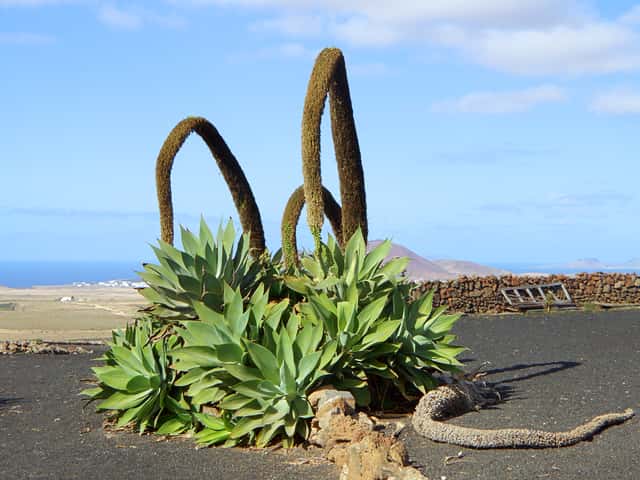
Foxtail Agave (Agave attenuata) is a easy-care plant from the Asparagaceae family. Agave attenuata is a sculptural perennial succulent, famous for its rosettes of wide, soft, light-green leaves that lack the sharp spines typical of other agaves. Native to Mexico, it develops a thick trunk and, when mature, produces a long, curved inflorescence resembling a swan's neck, which gives...
Foxtail Agave grows up to 90cm, spread of 120cm, watering every 14 days, 10°C – 38°C, 10–40% humidity. It is suitable for indoor environments and not safe for pets.
Unlike many tropical plants, Foxtail Agave tolerates watering mistakes. Best for beginners. Without precautions, ingestion can cause irritation in pets. Keep out of reach of cats and dogs. Without adequate drainage, root rot can develop within 28 days.
How to Care for Foxtail Agave?
TLDR: Foxtail Agave needs Bright indirect, watering every 14 days, and temperatures between 10-38°C with 10-40% humidity.
How Often Should You Water Foxtail Agave?
Water deeply and wait for the soil to dry out completely before watering again. In winter, reduce watering to once a month.
How Much Light Does Foxtail Agave Need?
While it tolerates partial shade, full sun helps keep the rosette compact and the leaves vibrantly colored.
What Is the Best Soil for Foxtail Agave?
Use a sandy soil mix or commercial cactus potting mix to ensure water does not pool around the roots.
What Pot Should You Use for Foxtail Agave?
Terracotta or ceramic pots with drainage holes are recommended to prevent moisture buildup around the roots.
Care Schedule
Fertilize
Every 365 days
Repot
Every 730 days
What Is Foxtail Agave and Where Does It Come From?
Agave attenuata is a sculptural perennial succulent, famous for its rosettes of wide, soft, light-green leaves that lack the sharp spines typical of other agaves. Native to Mexico, it develops a thick trunk and, when mature, produces a long, curved inflorescence resembling a swan's neck, which gives it one of its common names.
How to Propagate Foxtail Agave?
Offset Removal (Pups)
- Avoid watering immediately after planting to prevent base rot.
- Keep the new offset in indirect light until it is established.
- 1 Identification
Locate the small offsets (pups) emerging at the base of the main stem.
- 2 Separation
Using a sterilized knife, cut the offset as close to the main stem as possible, preferably with some roots already formed.
- 3 Callousing
Leave the offset in a dry, shaded spot for 2 to 3 days to allow the cut to heal and form a callus.
- 4 Planting
Plant in a new pot with succulent-specific substrate and do not water for the first few days.
Materials needed:
How Big Does Foxtail Agave Grow?
TLDR: Foxtail Agave can reach up to 90cm tall with Slow growth rate.
Max height
90cm
Spread
1.2m
Growth rate
Slow
Foliage
Evergreen
Warning: Toxic Plant
This plant can be toxic if ingested. Keep out of reach of:
Plant Uses
Ornamental
Great for decoration
Is your plant showing symptoms?
Click on the symptom to discover possible causes:
What Diseases Commonly Affect Foxtail Agave?
TLDR: Foxtail Agave is susceptible to 9 known diseases. Monitor regularly for early detection.
Root Rot
Root rot is a serious fungal disease that affects the root system of plants, causing them to decay and die. It is primarily caused by overwatering, poor drainage, or soil-borne fungi such as Pythium, Phytophthora, Rhizoctonia, and Fusarium. The disease thrives in waterlogged conditions where roots are deprived of oxygen, making them susceptible to fungal infection.
Crown Rot
Crown rot is a serious fungal disease that attacks the crown (base) of the plant where the stem meets the soil. It is caused by various fungal pathogens including Phytophthora, Fusarium, and Rhizoctonia. The disease thrives in waterlogged conditions and can quickly spread to kill the entire plant if not addressed promptly.
Anthracnose
Anthracnose is a fungal disease caused by fungi in the genus Colletotrichum that affects many plants, including vegetables, fruits, and trees. The disease thrives in cool, wet conditions, causing dark, sunken lesions on leaves, stems, flowers, and fruits.
Scale Insects
Scale insects are small sap-sucking pests that appear as brown, shell-like bumps on plant stems and leaves. There are over 25 species, divided into armored (hard) and unarmored (soft) scales. They feed by piercing plant tissue and extracting sap, which weakens the plant and can lead to yellowing, stunted growth, and even death if left untreated. They also excrete honeydew, which attracts ants and promotes sooty mold growth.
Meaning & Symbolism
Represents longevity, security, and the ability to flourish in adverse conditions.
Compare with similar plants
| Attribute | Difficulty | Light | Watering | Pet Safe |
|---|---|---|---|---|
| Field Maple | Easy | Bright indirect | 14d | ✓ |
| Silver Birch | Easy | Direct sun | 14d | ✓ |
| Common Blanketflower | Easy | Direct sun | 10d | ✓ |
| Cushion Bush | Easy | Direct sun | 14d | ✓ |





