Apocynaceae
Greater Periwinkle (Vinca major) – Complete Care Guide
Vinca major
Greater Periwinkle is a low-maintenance, shade-tolerant ground cover. Water weekly, allow soil to dry slightly between waterings, fertilize every 30 days during the growing season, and trim back overly aggressive runners in spring or autumn to keep it tidy.
Every 7 days
Partial shade
-5° - 30°C
40% - 70%
Categories
What is Greater Periwinkle?
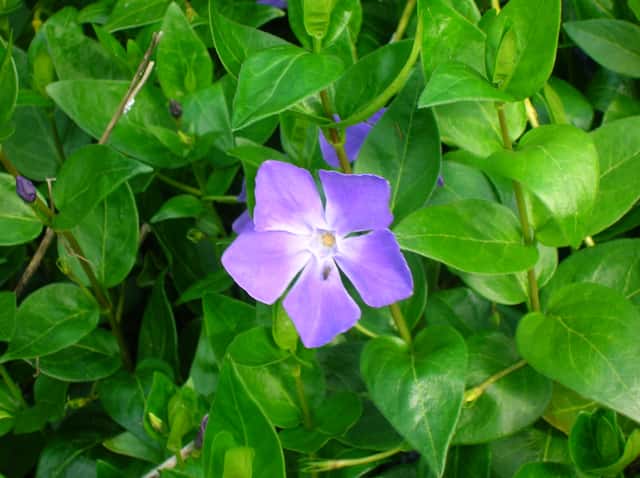
Greater Periwinkle (Vinca major) is a easy-care plant from the Apocynaceae family. Vinca major, commonly known as Greater Periwinkle, is a vigorous evergreen ground cover native to the Mediterranean region of Europe. It produces glossy dark green leaves and charming five-petaled violet-blue flowers from spring through summer. Fast-spreading and highly adaptable, it thrives in part...
Greater Periwinkle grows up to 45cm, spread of 120cm, watering every 7 days, -5°C – 30°C, 40–70% humidity. It is suitable for indoor environments and not safe for pets.
Unlike many tropical plants, Greater Periwinkle tolerates watering mistakes. Best for beginners. Without precautions, ingestion can cause irritation in pets. Keep out of reach of cats and dogs. Without adequate drainage, root rot can develop within 14 days.
How to Care for Greater Periwinkle?
TLDR: Greater Periwinkle needs Partial shade, watering every 7 days, and temperatures between -5-30°C with 40-70% humidity.
How Often Should You Water Greater Periwinkle?
Water deeply once a week, more frequently during hot or dry spells. Allow the top 2–3 cm of soil to dry between waterings. Avoid waterlogging as root rot may occur. Once established, it tolerates short periods of drought.
How Much Light Does Greater Periwinkle Need?
Prefers partial shade to full shade; tolerates full sun in cooler climates. In hot climates, protect from intense afternoon sun. In deep shade, flowering may be reduced but foliage remains lush.
What Is the Best Soil for Greater Periwinkle?
Plant in well-draining soil enriched with organic matter. Tolerates poor, sandy, or clay soils as long as drainage is adequate. A pH of 6.0–7.5 is ideal. Amend heavy clay soils with compost to improve drainage.
What Pot Should You Use for Greater Periwinkle?
Terracotta pots, hanging baskets, or wide shallow containers work well for Greater Periwinkle. Ensure adequate drainage holes. Hanging baskets showcase its trailing habit beautifully.
Care Schedule
Fertilize
Every 30 days
Repot
Every 365 days
What Is Greater Periwinkle and Where Does It Come From?
Vinca major, commonly known as Greater Periwinkle, is a vigorous evergreen ground cover native to the Mediterranean region of Europe. It produces glossy dark green leaves and charming five-petaled violet-blue flowers from spring through summer. Fast-spreading and highly adaptable, it thrives in partial shade and is widely used to cover slopes, suppress weeds, and fill shaded garden areas. Despite its ornamental appeal, it can become invasive outside its native range.
How to Propagate Greater Periwinkle?
Stem Cutting
Use a clean, sharp blade. Keep cuttings consistently moist but not soggy.
- 1 Take a 10–15 cm stem cutting just below a node
- 2 Remove lower leaves, keeping 2–3 at the tip
- 3 Insert into moist, well-draining potting mix
- 4 Keep in a shaded, warm spot and water lightly
- 5 Roots develop in 2–3 weeks
Materials needed:
Division
Division is best done in early spring before active growth resumes.
- 1 Dig up a clump of established Vinca major
- 2 Divide into sections ensuring each has roots attached
- 3 Replant immediately at the same depth
- 4 Water thoroughly after planting
Materials needed:
How Big Does Greater Periwinkle Grow?
TLDR: Greater Periwinkle can reach up to 45cm tall with Fast growth rate.
Max height
45cm
Spread
1.2m
Growth rate
Fast
Foliage
Evergreen
Warning: Toxic Plant
This plant can be toxic if ingested. Keep out of reach of:
Plant Uses
Ornamental
Great for decoration
Ground Cover
Soil coverage
Medicinal
Medicinal properties
Medicinal Uses
- Historically used in folk medicine as a memory tonic and mild sedative; contains the alkaloid vincamine used in pharmaceutical preparations
Is your plant showing symptoms?
Click on the symptom to discover possible causes:
What Diseases Commonly Affect Greater Periwinkle?
TLDR: Greater Periwinkle is susceptible to 10 known diseases. Monitor regularly for early detection.
Root Rot
Root rot is a serious fungal disease that affects the root system of plants, causing them to decay and die. It is primarily caused by overwatering, poor drainage, or soil-borne fungi such as Pythium, Phytophthora, Rhizoctonia, and Fusarium. The disease thrives in waterlogged conditions where roots are deprived of oxygen, making them susceptible to fungal infection.
Leaf Spot
Leaf spot is a common fungal disease caused by various pathogens including Alternaria, Ascochyta, Colletotrichum, Septoria, and Venturia. It primarily affects leaves, causing discolored spots that can lead to premature leaf drop if left untreated.
Alternaria Leaf Spot
Alternaria leaf spot is a common fungal disease caused by Alternaria solani and Alternaria alternata that affects a wide range of plants including tomatoes, potatoes, brassicas, and ornamentals. The disease thrives in warm, humid conditions and can cause significant crop damage if left untreated. Spores overwinter on plant debris and can attach to seeds, making complete elimination difficult.
Gray Mold (Botrytis Blight)
Gray mold, caused by the fungus Botrytis cinerea, is one of the most common fungal diseases in plants. It affects over 200 plant species, including ornamentals, vegetables, fruits, and houseplants. The disease thrives in cool, humid conditions with poor air circulation, causing grayish spots and soft rot on infected tissues.
Meaning & Symbolism
In the Victorian language of flowers, periwinkle symbolizes eternal love, tender memories, and enduring friendship. It was placed on graves as a symbol of remembrance.
Fun Facts
Vinca major can root wherever its stems touch the soil, making it a natural self-spreading ground cover
Its alkaloid vincamine is used in modern medicine to treat cerebrovascular disorders and improve memory circulation
In some regions it is considered invasive due to its aggressive spreading in forest understories
It was used in medieval European herbalism as a treatment for nervous ailments and bleeding
Frequently asked questions
How often should I water Greater Periwinkle?
Is Vinca major toxic to pets?
Can Greater Periwinkle grow in full shade?
How do I stop Vinca major from spreading too much?
When does Greater Periwinkle bloom?
Compare with similar plants
| Attribute | Difficulty | Light | Watering | Pet Safe |
|---|---|---|---|---|
| Field Maple | Easy | Bright indirect | 14d | ✓ |
| Silver Birch | Easy | Direct sun | 14d | ✓ |
| Common Blanketflower | Easy | Direct sun | 10d | ✓ |
| Cushion Bush | Easy | Direct sun | 14d | ✓ |





