Geraniaceae
Horseshoe Geranium (Pelargonium zonale) – Complete Care Guide
Pelargonium zonale
A sun-loving, drought-tolerant plant that blooms prolifically from spring to fall. Water every 7-10 days allowing soil to dry between waterings. Feed every 2 weeks with a balanced fertilizer during the growing season. Deadhead spent blooms to encourage continuous flowering. Bring indoors before frost in colder climates.
Every 10 days
Direct sun
5° - 27°C
30% - 50%
Categories
What is Horseshoe Geranium?
Horseshoe Geranium (Pelargonium zonale) is a easy-care plant from the Geraniaceae family. Pelargonium zonale, commonly known as the Horseshoe Geranium or Zonal Geranium, is the most popular and widely grown "geranium" in the world — though it is not a true Geranium at all, but belongs to the genus Pelargonium in the family Geraniaceae. Native to South Africa, it is prized for its distinc...
Horseshoe Geranium grows up to 60cm, spread of 45cm, watering every 10 days, 5°C – 27°C, 30–50% humidity. It is suitable for indoor environments and not safe for pets.
Unlike many tropical plants, Horseshoe Geranium tolerates watering mistakes. Best for beginners. Without precautions, ingestion can cause irritation in pets. Keep out of reach of cats and dogs. Without adequate drainage, root rot can develop within 20 days.
How to Care for Horseshoe Geranium?
TLDR: Horseshoe Geranium needs Direct sun, watering every 10 days, and temperatures between 5-27°C with 30-50% humidity.
How Often Should You Water Horseshoe Geranium?
Water thoroughly every 7-14 days, allowing the top 2-3 cm of soil to dry out completely between waterings. Overwatering is the most common cause of problems — when in doubt, wait. Water at the base to avoid wetting the foliage, which can promote fungal disease.
How Much Light Does Horseshoe Geranium Need?
Place in full sun — at least 6 hours of direct sunlight daily. A south or west-facing window indoors, or an unobstructed outdoor spot. Insufficient light leads to leggy growth and reduced flowering. This is a true sun plant.
What Is the Best Soil for Horseshoe Geranium?
Use a free-draining potting mix with perlite or coarse sand added. Never leave in waterlogged soil. A slightly alkaline to neutral pH (6.0–7.0) is ideal. Ensure pots have drainage holes to prevent root rot.
What Pot Should You Use for Horseshoe Geranium?
Terracotta pots are ideal — they allow moisture to evaporate through the walls, keeping roots healthier. Ensure pots have drainage holes. Window boxes and hanging baskets also work well.
Care Schedule
Fertilize
Every 14 days
Rotate
Every 30 days
Repot
Every 365 days
What Is Horseshoe Geranium and Where Does It Come From?
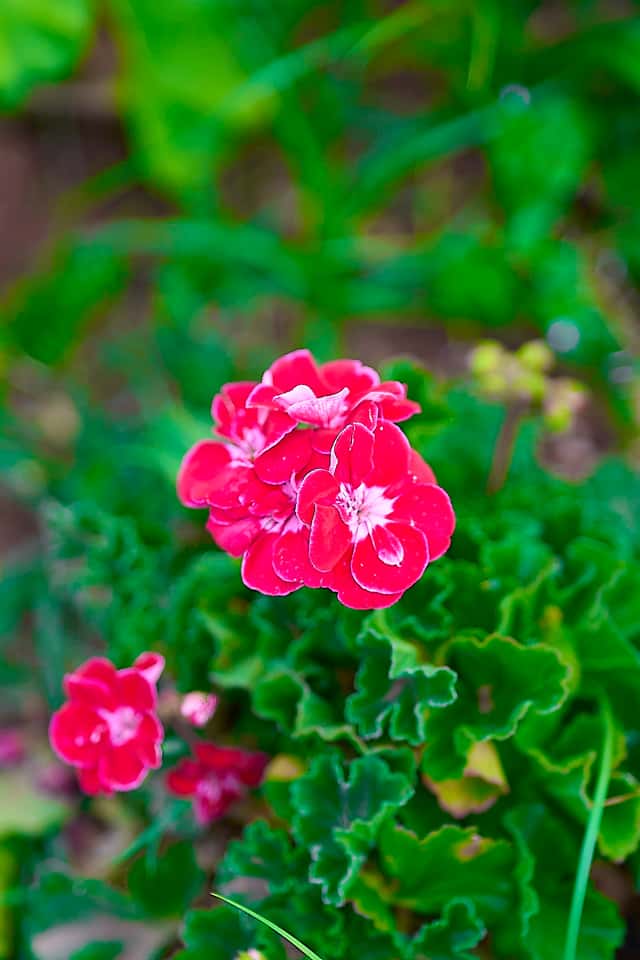
Pelargonium zonale, commonly known as the Horseshoe Geranium or Zonal Geranium, is the most popular and widely grown "geranium" in the world — though it is not a true Geranium at all, but belongs to the genus Pelargonium in the family Geraniaceae. Native to South Africa, it is prized for its distinctive horseshoe-shaped darker zone on its rounded leaves and its prolific clusters of red, pink, white, salmon, or magenta flowers that bloom from spring through fall. It thrives in full sun and tolerates drought well, making it ideal for pots, balconies, window boxes, and garden beds.
How to Propagate Horseshoe Geranium?
Stem Cutting
Do not cover with a plastic bag — Pelargonium cuttings prefer good airflow. Rooting hormone is optional but can improve success. Avoid overwatering during rooting.
- 1 Cut a healthy stem 8-10 cm long just below a leaf node using clean, sharp scissors
- 2 Remove the lower leaves, leaving 2-3 at the top
- 3 Allow the cut end to callous for 1-2 hours to reduce rot risk
- 4 Insert into moist, well-draining potting mix or perlite
- 5 Place in bright indirect light and keep soil lightly moist until roots form
Materials needed:
How Big Does Horseshoe Geranium Grow?
TLDR: Horseshoe Geranium can reach up to 60cm tall with Medium growth rate.
Max height
60cm
Spread
45cm
Growth rate
Medium
Foliage
Semi-evergreen
Warning: Toxic Plant
This plant can be toxic if ingested. Keep out of reach of:
Plant Uses
Ornamental
Great for decoration
Is your plant showing symptoms?
Click on the symptom to discover possible causes:
What Diseases Commonly Affect Horseshoe Geranium?
TLDR: Horseshoe Geranium is susceptible to 15 known diseases. Monitor regularly for early detection.
Rust
Rust is a common fungal disease caused by fungi in the order Pucciniales that affects a wide variety of plants. The disease gets its name from the characteristic orange, yellow, or reddish-brown pustules that appear on leaves, resembling metal rust. This obligate fungal parasite requires living plants to survive and can cause significant economic losses in agricultural crops.
Bacterial Blight
Bacterial blight is a serious plant disease caused by pathogenic bacteria that enters plants through wounds or natural openings. It spreads rapidly in warm, wet conditions and can cause significant damage to leaves, stems, and flowers. The bacteria are transmitted by water splash, contaminated tools, and insects.
Gray Mold (Botrytis Blight)
Gray mold, caused by the fungus Botrytis cinerea, is one of the most common fungal diseases in plants. It affects over 200 plant species, including ornamentals, vegetables, fruits, and houseplants. The disease thrives in cool, humid conditions with poor air circulation, causing grayish spots and soft rot on infected tissues.
Gray Mold (Botrytis Blight)
Gray mold, caused by the fungus Botrytis cinerea, is a widespread necrotrophic pathogen affecting over 1,400 plant species. It thrives in cool, humid conditions and attacks weakened or aging plant tissues, causing soft rot and characteristic gray fuzzy growth.
Meaning & Symbolism
Cheerfulness, comfort, friendship, and festivity — long associated with cottage gardens and sunny balconies across Europe.
Fun Facts
Despite being called a geranium for centuries, Pelargonium zonale is not a true Geranium — it was reclassified into its own genus in 1789 by Charles L'Héritier.
The distinctive horseshoe or zonal marking on the leaves gives this plant its common name — the darker band of pigment forms a natural pattern unique to P. zonale.
Native to South Africa, Pelargonium zonale has been cultivated in Europe since the 17th century and is now naturalized in Mediterranean regions worldwide.
A single plant can produce hundreds of individual flowers across multiple seasons, making it one of the most floriferous container plants available.
Frequently asked questions
How often should I water my Horseshoe Geranium?
Why is my Geranium not blooming?
Is Horseshoe Geranium toxic to pets?
Can I grow Horseshoe Geranium indoors?
Is Pelargonium zonale the same as a true Geranium?
Compare with similar plants
| Attribute | Difficulty | Light | Watering | Pet Safe |
|---|---|---|---|---|
| Field Maple | Easy | Bright indirect | 14d | ✓ |
| Silver Birch | Easy | Direct sun | 14d | ✓ |
| Common Blanketflower | Easy | Direct sun | 10d | ✓ |
| Cushion Bush | Easy | Direct sun | 14d | ✓ |





