Aizoaceae
Hottentot Fig (Carpobrotus edulis): Complete Care Guide
Carpobrotus edulis
Extremely resilient and low-maintenance plant. Thrives in full direct sun and sandy, well-draining soil. Highly drought and salt tolerant. Water sparingly, allowing the soil to dry completely between waterings. Avoid waterlogged conditions to prevent root rot.
Every 21 days
Direct sun
-2° - 35°C
20% - 50%
Categories
What is Hottentot Fig?
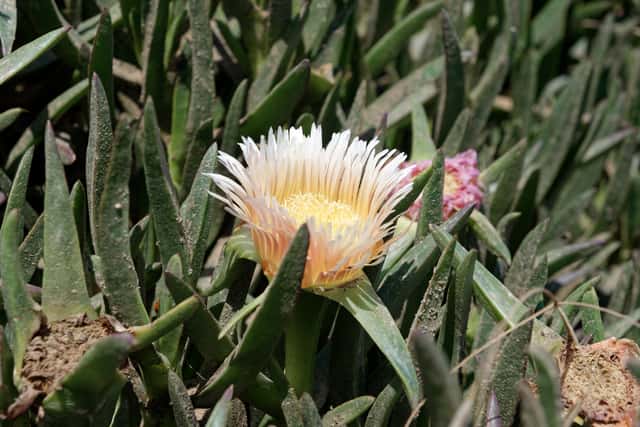
Hottentot Fig (Carpobrotus edulis) is a easy-care plant from the Aizoaceae family. Hottentot Fig (Carpobrotus edulis) is a fast-spreading succulent groundcover native to the coastal regions of South Africa. Its fleshy, triangular leaves form dense mats that can extend several meters. It produces showy daisy-like flowers in yellow, purple, or pink during spring and summer, followed...
Hottentot Fig grows up to 30cm, spread of 300cm, watering every 21 days, -2°C – 35°C, 20–50% humidity. It is not suitable for indoor environments and safe for pets.
Unlike many tropical plants, Hottentot Fig tolerates watering mistakes. Best for beginners. Unlike many popular species, Hottentot Fig is safe to keep around pets.
How to Care for Hottentot Fig?
TLDR: Hottentot Fig needs Direct sun, watering every 21 days, and temperatures between -2-35°C with 20-50% humidity.
How Often Should You Water Hottentot Fig?
Water only when soil is completely dry, approximately every 3 weeks in summer. Reduce watering significantly in winter. As a succulent, overwatering is the primary risk — always err on the side of less water.
How Much Light Does Hottentot Fig Need?
Requires full direct sun — at least 6 to 8 hours daily. Does not tolerate shade; insufficient light leads to weak, leggy growth and poor flowering.
What Is the Best Soil for Hottentot Fig?
Use sandy, well-draining soil mixed with perlite or coarse sand. Neutral pH of 6.5 to 7.5. Avoid clay-heavy or compacted soils that retain moisture.
What Pot Should You Use for Hottentot Fig?
Terracotta pot with generous drainage holes, or directly in an outdoor bed in full sun.
Care Schedule
Fertilize
Every 90 days
What Is Hottentot Fig and Where Does It Come From?
Hottentot Fig (Carpobrotus edulis) is a fast-spreading succulent groundcover native to the coastal regions of South Africa. Its fleshy, triangular leaves form dense mats that can extend several meters. It produces showy daisy-like flowers in yellow, purple, or pink during spring and summer, followed by edible fig-like fruits. Considered highly invasive in Mediterranean climates, California, and coastal Australia.
How to Propagate Hottentot Fig?
Stem Cutting
Use sandy soil and avoid overwatering during rooting. Let the cut end dry before planting to prevent rot.
- 1 Cut a healthy stem 10-15 cm long using clean scissors
- 2 Allow the cut end to callous for 1-2 days
- 3 Plant in sandy, well-draining soil and water lightly
- 4 Place in full sun and wait 2-3 weeks for rooting
Materials needed:
Seed Propagation
Seeds germinate better with day-night temperature variation. Do not cover too deeply.
- 1 Sow seeds in slightly moist sandy substrate
- 2 Cover lightly with fine sand
- 3 Maintain at 18-22°C in a sunny spot
- 4 Transplant seedlings when they reach 5-6 cm
Materials needed:
How Big Does Hottentot Fig Grow?
TLDR: Hottentot Fig can reach up to 30cm tall with Fast growth rate.
Max height
30cm
Spread
3.0m
Growth rate
Fast
Foliage
Evergreen
Plant Uses
Ornamental
Great for decoration
Edible
Can be consumed
Medicinal
Medicinal properties
Ground Cover
Soil coverage
Medicinal Uses
- Leaf juice applied topically for burns, stings, and skin infections
- Traditional use for diarrhea, dysentery, and stomach cramps
- Used in traditional South African medicine for diabetes treatment
Culinary Uses
- Ripe fruits are edible with a salty, sour, astringent taste
- Leaves can be eaten raw or cooked
- Fruits used in jams and preserves in some regions
Is your plant showing symptoms?
Click on the symptom to discover possible causes:
What Diseases Commonly Affect Hottentot Fig?
TLDR: Hottentot Fig is susceptible to 5 known diseases. Monitor regularly for early detection.
Root Rot
Root rot is a serious fungal disease that affects the root system of plants, causing them to decay and die. It is primarily caused by overwatering, poor drainage, or soil-borne fungi such as Pythium, Phytophthora, Rhizoctonia, and Fusarium. The disease thrives in waterlogged conditions where roots are deprived of oxygen, making them susceptible to fungal infection.
Gray Mold (Botrytis Blight)
Gray mold, caused by the fungus Botrytis cinerea, is one of the most common fungal diseases in plants. It affects over 200 plant species, including ornamentals, vegetables, fruits, and houseplants. The disease thrives in cool, humid conditions with poor air circulation, causing grayish spots and soft rot on infected tissues.
Mealybugs
Mealybugs are small, soft-bodied insects covered with a white, waxy, cottony material. They are common pests of houseplants and outdoor plants in mild climates. These sap-sucking insects feed on plant tissue, causing damage, stunted growth, and can lead to plant death if left untreated. They produce sticky honeydew which attracts sooty mold.
Scale Insects
Scale insects are small sap-sucking pests that appear as brown, shell-like bumps on plant stems and leaves. There are over 25 species, divided into armored (hard) and unarmored (soft) scales. They feed by piercing plant tissue and extracting sap, which weakens the plant and can lead to yellowing, stunted growth, and even death if left untreated. They also excrete honeydew, which attracts ants and promotes sooty mold growth.
Meaning & Symbolism
Resilience and coastal adaptation — a symbol of survival and tenacity in harsh, windswept environments.
Fun Facts
One of the most problematic invasive plants in Mediterranean Europe and California
Fruits are eaten by baboons, rodents, and porcupines in its native South Africa
Leaf juice has scientifically documented antiseptic and anti-inflammatory properties
A single plant can cover tens of square meters within just a few years
Frequently asked questions
How often should I water Hottentot Fig?
Is Hottentot Fig toxic to pets?
Can I grow Hottentot Fig in a pot?
Why are the leaves of my ice plant turning soft?
Is Hottentot Fig invasive?
Compare with similar plants
| Attribute | Difficulty | Light | Watering | Pet Safe |
|---|---|---|---|---|
| Field Maple | Easy | Bright indirect | 14d | ✓ |
| Silver Birch | Easy | Direct sun | 14d | ✓ |
| Common Blanketflower | Easy | Direct sun | 10d | ✓ |
| Cushion Bush | Easy | Direct sun | 14d | ✓ |





