Rosaceae
Japanese Kerria: The Golden Shrub of Spring
Kerria japonica
Plant in partial to full shade in moist, well-drained soil. Water every 9 days, avoiding waterlogging. Prune after flowering to encourage new growth. Fertilize once in spring with a slow-release fertilizer.
Every 9 days
Partial shade
-20° - 35°C
40% - 70%
Categories
What is Japanese Kerria?
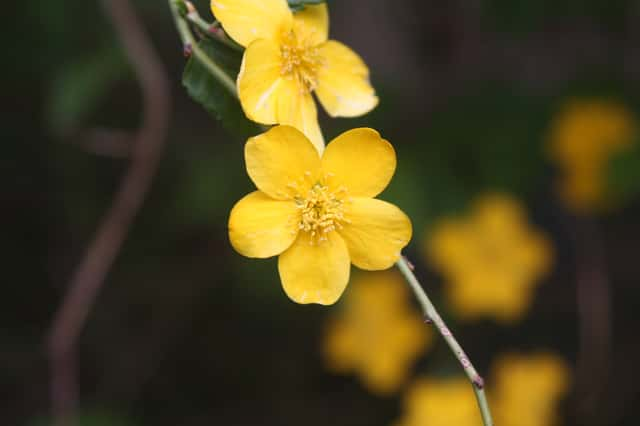
Japanese Kerria (Kerria japonica) is a easy-care plant from the Rosaceae family. Japanese Kerria (Kerria japonica) is a deciduous shrub native to the mountainous regions of China and Japan. It is celebrated for its brilliant golden-yellow flowers that bloom profusely in spring, covering its arching, bright green stems. A highly adaptable and low-maintenance plant, it thrives in...
Japanese Kerria grows up to 2.1m, spread of 270cm, watering every 9 days, -20°C – 35°C, 40–70% humidity. It is not suitable for indoor environments and safe for pets.
Unlike many tropical plants, Japanese Kerria tolerates watering mistakes. Best for beginners. Unlike many popular species, Japanese Kerria is safe to keep around pets.
How to Care for Japanese Kerria?
TLDR: Japanese Kerria needs Partial shade, watering every 9 days, and temperatures between -20-35°C with 40-70% humidity.
How Often Should You Water Japanese Kerria?
Water every 9 days, keeping soil evenly moist but never waterlogged. Japanese Kerria dislikes soggy soil, which leads to root rot. Reduce watering in winter when the plant is dormant.
How Much Light Does Japanese Kerria Need?
Prefers partial shade to full shade. Flowers fade quickly in direct sun. Ideal placement receives filtered light or 2-4 hours of gentle morning sun. It is one of the few shrubs that blooms reliably in shade.
What Is the Best Soil for Japanese Kerria?
Plant in loamy, moderately fertile, well-drained soil. Avoid heavy clay. Amend with compost to improve drainage and fertility. Ideal pH range is 6.0-7.0.
What Pot Should You Use for Japanese Kerria?
Garden shrub; also suitable for large containers and borders
Care Schedule
Fertilize
Every 90 days
What Is Japanese Kerria and Where Does It Come From?
Japanese Kerria (Kerria japonica) is a deciduous shrub native to the mountainous regions of China and Japan. It is celebrated for its brilliant golden-yellow flowers that bloom profusely in spring, covering its arching, bright green stems. A highly adaptable and low-maintenance plant, it thrives in shaded gardens and tolerates cold winters down to USDA Zone 4.
How to Propagate Japanese Kerria?
Stem Cutting
Take cuttings right after spring flowering for best results. Use clean, sharp tools to prevent disease.
- 1 Cut a young stem 15-20 cm long just after flowering
- 2 Remove leaves from the lower half of the cutting
- 3 Apply rooting hormone to the base
- 4 Plant in a moist, well-draining medium
- 5 Keep in a shaded, humid location until rooting occurs
Materials needed:
Division
Division is the easiest propagation method for Japanese Kerria and has a very high success rate.
- 1 In fall or early spring, dig up the parent plant
- 2 Divide the clumps with a sharp spade
- 3 Replant divisions in their final location with enriched soil
- 4 Water thoroughly after planting
Materials needed:
How Big Does Japanese Kerria Grow?
TLDR: Japanese Kerria can reach up to 2.1m tall with Medium growth rate.
Max height
2.1m
Spread
2.7m
Growth rate
Medium
Foliage
Deciduous
Plant Uses
Ornamental
Great for decoration
Is your plant showing symptoms?
Click on the symptom to discover possible causes:
What Diseases Commonly Affect Japanese Kerria?
TLDR: Japanese Kerria is susceptible to 5 known diseases. Monitor regularly for early detection.
Canker
Canker is a disease caused by various fungi and bacteria that create necrotic, sunken areas on bark of branches, stems, and trunks. Pathogens enter through wounds and natural openings, especially when plants are stressed. Canker can gradually weaken or kill branches by disrupting water and nutrient flow.
Leaf Spot
Leaf spot is a common fungal disease caused by various pathogens including Alternaria, Ascochyta, Colletotrichum, Septoria, and Venturia. It primarily affects leaves, causing discolored spots that can lead to premature leaf drop if left untreated.
Root Rot
Root rot is a serious fungal disease that affects the root system of plants, causing them to decay and die. It is primarily caused by overwatering, poor drainage, or soil-borne fungi such as Pythium, Phytophthora, Rhizoctonia, and Fusarium. The disease thrives in waterlogged conditions where roots are deprived of oxygen, making them susceptible to fungal infection.
Aphids
Aphids are small, soft-bodied, pear-shaped insects (1/16 to 1/8 inch long) that feed by sucking nutrient-rich sap from plants. They reproduce rapidly and can quickly weaken plants, causing distorted growth and transmitting plant viruses. Aphids come in various colors including green, black, red, yellow, brown, and gray. They secrete honeydew, a sticky substance that attracts ants and encourages sooty mold growth.
Meaning & Symbolism
A symbol of spring renewal and cheerfulness in East Asian gardens. In Japanese floral language (Hanakotoba), it represents joy and resilience.
Fun Facts
Kerria japonica is the only species in the genus Kerria, making it a botanical singleton in the Rosaceae family
Its bright green stems remain ornamental throughout winter, even after the leaves have fallen
The plant is named after William Kerr, the Scottish gardener who introduced it to Kew Gardens in 1804
The double-flowered cultivar 'Pleniflora' has pom-pom-like blooms and is even showier than the original species
Frequently asked questions
How often should I water Japanese Kerria?
Can Japanese Kerria grow in full shade?
When should I prune Japanese Kerria?
Is Japanese Kerria toxic to pets?
Why are the flowers on my Japanese Kerria fading?
Compare with similar plants
| Attribute | Difficulty | Light | Watering | Pet Safe |
|---|---|---|---|---|
| Field Maple | Easy | Bright indirect | 14d | ✓ |
| Silver Birch | Easy | Direct sun | 14d | ✓ |
| Common Blanketflower | Easy | Direct sun | 10d | ✓ |
| Cushion Bush | Easy | Direct sun | 14d | ✓ |





