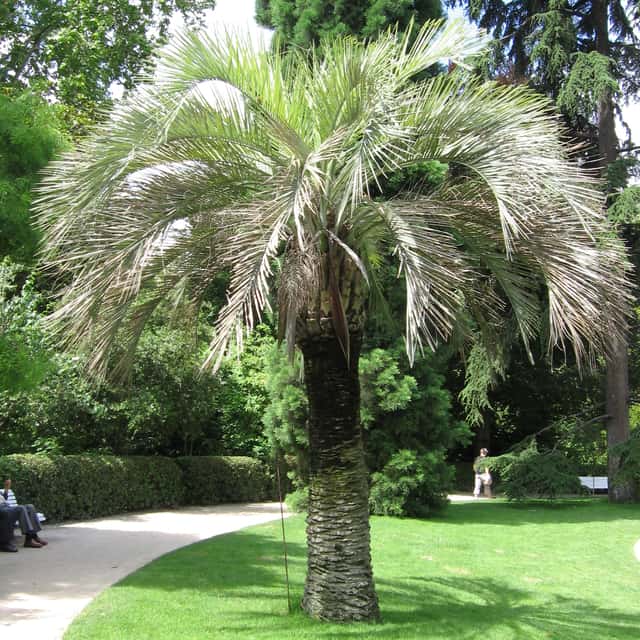
Arecaceae
Jelly Palm — The Hardy South American Feather Palm
Butia odorata
Very low maintenance. Plant in full sun with well-draining sandy or loamy soil. Water every 14 days; allow soil to dry between waterings. Extremely drought and cold tolerant. No misting or indoor placement needed.
Every 14 days
Direct sun
-12° - 40°C
40% - 70%
Categories
What is Jelly Palm?
Jelly Palm (Butia odorata) is a easy-care plant from the Arecaceae family. Butia odorata, commonly known as the Jelly Palm or Pindo Palm, is a hardy feather palm native to the grasslands of southern Brazil, Uruguay, and Argentina. It is one of the most cold-tolerant palms in the world, withstanding temperatures as low as -12°C (10°F). Its arching blue-green fronds and clus...
Jelly Palm grows up to 6.1m, spread of 300cm, watering every 14 days, -12°C – 40°C, 40–70% humidity. It is not suitable for indoor environments and safe for pets.
Unlike many tropical plants, Jelly Palm tolerates watering mistakes. Best for beginners. Unlike many popular species, Jelly Palm is safe to keep around pets.
How to Care for Jelly Palm?
TLDR: Jelly Palm needs Direct sun, watering every 14 days, and temperatures between -12-40°C with 40-70% humidity.
How Often Should You Water Jelly Palm?
Water deeply every 14 days in summer; reduce in winter. Always let the top 5–8 cm of soil dry before rewatering. Overwatering causes root rot — the main care mistake.
How Much Light Does Jelly Palm Need?
Full sun is essential: at least 6 hours of direct sunlight daily. More sun equals better growth and fruit production. Not suitable as a houseplant.
What Is the Best Soil for Jelly Palm?
Prefers sandy or loamy, well-drained soil with pH 5.5–7.5. Avoid waterlogged or heavily compacted clay soils.
What Pot Should You Use for Jelly Palm?
Large terracotta or concrete pot for container growing; ground planting strongly preferred
Care Schedule
Fertilize
Every 90 days
What Is Jelly Palm and Where Does It Come From?
Butia odorata, commonly known as the Jelly Palm or Pindo Palm, is a hardy feather palm native to the grasslands of southern Brazil, Uruguay, and Argentina. It is one of the most cold-tolerant palms in the world, withstanding temperatures as low as -12°C (10°F). Its arching blue-green fronds and clusters of edible orange-yellow fruits make it a prized ornamental and edible landscape tree.
How to Propagate Jelly Palm?
Seed
Germination is slow and irregular. Use fresh seeds for best results. Be patient — it can take several months.
- 1 Remove pulp from ripe fruits and wash seeds thoroughly
- 2 Stratify seeds for 30 days in a cool, moist environment
- 3 Plant in sandy, well-draining mix, barely covering the seed
- 4 Keep at 25-30°C with consistent moisture until germination
- 5 Transplant seedling to final location after 12 months
Materials needed:
How Big Does Jelly Palm Grow?
TLDR: Jelly Palm can reach up to 6.1m tall with Slow growth rate.
Max height
6.1m
Spread
3.0m
Growth rate
Slow
Foliage
Evergreen
Plant Uses
Ornamental
Great for decoration
Edible
Can be consumed
Culinary Uses
- Fruits used to make jelly palm liqueur, jam, ice cream, and juice
- Pulp is rich in vitamin C and antioxidants
Is your plant showing symptoms?
Click on the symptom to discover possible causes:
What Diseases Commonly Affect Jelly Palm?
TLDR: Jelly Palm is susceptible to 6 known diseases. Monitor regularly for early detection.
Root Rot
Root rot is a serious fungal disease that affects the root system of plants, causing them to decay and die. It is primarily caused by overwatering, poor drainage, or soil-borne fungi such as Pythium, Phytophthora, Rhizoctonia, and Fusarium. The disease thrives in waterlogged conditions where roots are deprived of oxygen, making them susceptible to fungal infection.
Scale Insects
Scale insects are small sap-sucking pests that appear as brown, shell-like bumps on plant stems and leaves. There are over 25 species, divided into armored (hard) and unarmored (soft) scales. They feed by piercing plant tissue and extracting sap, which weakens the plant and can lead to yellowing, stunted growth, and even death if left untreated. They also excrete honeydew, which attracts ants and promotes sooty mold growth.
Mealybugs
Mealybugs are small, soft-bodied insects covered with a white, waxy, cottony material. They are common pests of houseplants and outdoor plants in mild climates. These sap-sucking insects feed on plant tissue, causing damage, stunted growth, and can lead to plant death if left untreated. They produce sticky honeydew which attracts sooty mold.
Spider Mites
Spider mites are tiny arachnids (less than 1/20 inch long) related to spiders and ticks that feed on plant sap. They thrive in hot, dry conditions and can cause significant damage to ornamental and vegetable plants. During severe infestations, crop losses can reach 14% or higher as these pests disrupt vital plant processes including photosynthesis, carbon dioxide absorption, and transpiration.
Meaning & Symbolism
Strength, abundance, and cultural heritage of South America. The jelly palm is emblematic of the Pampas grasslands and gaucho tradition.
Fun Facts
Jelly Palms have been cultivated for over 2,000 years by indigenous peoples of southern Brazil and Uruguay
They can live over 100 years and reach up to 6 meters tall
The fruits feed over 20 species of wild birds and mammals in their native habitat
The species is considered threatened in Uruguay due to habitat loss
Frequently asked questions
How often should I water a Jelly Palm?
How cold can a Jelly Palm tolerate?
How long until a Jelly Palm fruits?
Is the Jelly Palm toxic to pets?
Can I grow a Jelly Palm indoors?
Compare with similar plants
| Attribute | Difficulty | Light | Watering | Pet Safe |
|---|---|---|---|---|
| Field Maple | Easy | Bright indirect | 14d | ✓ |
| Silver Birch | Easy | Direct sun | 14d | ✓ |
| Common Blanketflower | Easy | Direct sun | 10d | ✓ |
| Cushion Bush | Easy | Direct sun | 14d | ✓ |





