Iridaceae
Montbretia (Crocosmia crocosmiiflora): Complete Care Guide
Crocosmia crocosmiiflora
Montbretia is a low-maintenance plant that thrives in full sun with well-drained soil. Water weekly during the growing season, fertilize monthly in spring and summer, and divide clumps every few years to maintain vigor. It is largely pest and disease resistant.
Every 7 days
Bright indirect
-10° - 35°C
40% - 70%
Categories
What is Montbretia?
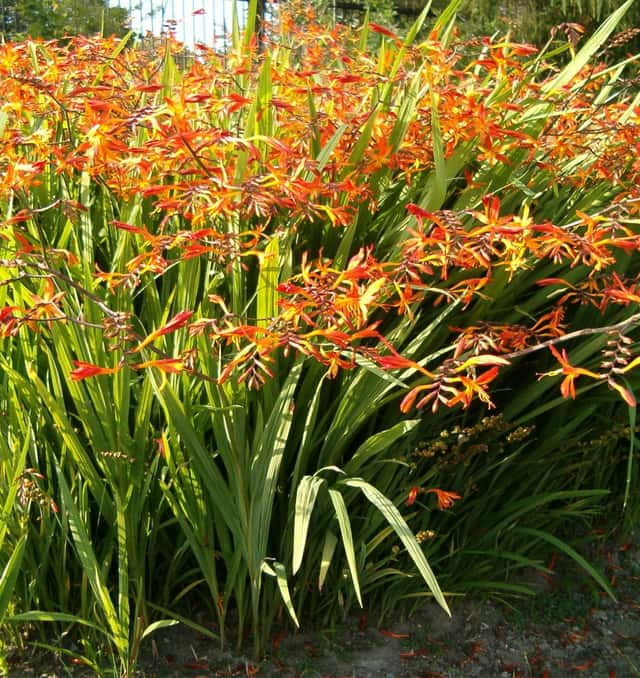
Montbretia (Crocosmia crocosmiiflora) is a easy-care plant from the Iridaceae family. Crocosmia crocosmiiflora, commonly known as Montbretia, is a vigorous cormous perennial from South Africa belonging to the Iridaceae family. It produces arching sprays of bright orange, red, and yellow tubular flowers in mid to late summer, making it a striking addition to borders and cottage garden...
Montbretia grows up to 90cm, spread of 45cm, watering every 7 days, -10°C – 35°C, 40–70% humidity. It is not suitable for indoor environments and not safe for pets.
Unlike many tropical plants, Montbretia tolerates watering mistakes. Best for beginners. Without precautions, ingestion can cause irritation in pets. Keep out of reach of cats and dogs.
How to Care for Montbretia?
TLDR: Montbretia needs Bright indirect, watering every 7 days, and temperatures between -10-35°C with 40-70% humidity.
How Often Should You Water Montbretia?
Water once a week during the growing season, keeping soil evenly moist. Reduce watering in autumn and allow the corms to dry slightly during winter dormancy. Avoid waterlogged conditions to prevent rhizome rot.
How Much Light Does Montbretia Need?
Plant in a position with full sun for best flowering. Montbretia tolerates partial shade, but blooms will be reduced. At least 6 hours of direct sunlight per day is ideal for optimal performance.
What Is the Best Soil for Montbretia?
Plant corms in fertile, humus-rich, well-drained soil. Improve heavy clay soils with grit or sand to enhance drainage. Tolerates a wide pH range from 6.0 to 8.0. Avoid waterlogged positions.
What Pot Should You Use for Montbretia?
Terracotta or ceramic pots with good drainage holes work best. Ensure the pot is at least 30 cm deep to accommodate the corm and root system.
Care Schedule
Fertilize
Every 30 days
What Is Montbretia and Where Does It Come From?
Crocosmia crocosmiiflora, commonly known as Montbretia, is a vigorous cormous perennial from South Africa belonging to the Iridaceae family. It produces arching sprays of bright orange, red, and yellow tubular flowers in mid to late summer, making it a striking addition to borders and cottage gardens. Its sword-like foliage remains attractive throughout the growing season, and the plant naturalizes readily, forming impressive clumps over time.
How to Propagate Montbretia?
Corm Division
Divide clumps every 3-4 years to prevent overcrowding and maintain vigorous flowering. Discard any soft or rotten corms.
- 1 Lift the clump carefully with a garden fork in early spring before new growth appears.
- 2 Separate the corms by hand or with a clean knife, ensuring each section has healthy roots.
- 3 Replant divisions 10 cm deep and 15 cm apart in prepared soil.
- 4 Water well after planting and keep moist until established.
Materials needed:
How Big Does Montbretia Grow?
TLDR: Montbretia can reach up to 90cm tall with Fast growth rate.
Max height
90cm
Spread
45cm
Growth rate
Fast
Foliage
Deciduous
Warning: Toxic Plant
This plant can be toxic if ingested. Keep out of reach of:
Plant Uses
Ornamental
Great for decoration
Is your plant showing symptoms?
Click on the symptom to discover possible causes:
What Diseases Commonly Affect Montbretia?
TLDR: Montbretia is susceptible to 4 known diseases. Monitor regularly for early detection.
Rust
Rust is a common fungal disease caused by fungi in the order Pucciniales that affects a wide variety of plants. The disease gets its name from the characteristic orange, yellow, or reddish-brown pustules that appear on leaves, resembling metal rust. This obligate fungal parasite requires living plants to survive and can cause significant economic losses in agricultural crops.
Root Rot
Root rot is a serious fungal disease that affects the root system of plants, causing them to decay and die. It is primarily caused by overwatering, poor drainage, or soil-borne fungi such as Pythium, Phytophthora, Rhizoctonia, and Fusarium. The disease thrives in waterlogged conditions where roots are deprived of oxygen, making them susceptible to fungal infection.
Spider Mites
Spider mites are tiny arachnids (less than 1/20 inch long) related to spiders and ticks that feed on plant sap. They thrive in hot, dry conditions and can cause significant damage to ornamental and vegetable plants. During severe infestations, crop losses can reach 14% or higher as these pests disrupt vital plant processes including photosynthesis, carbon dioxide absorption, and transpiration.
Thrips
Thrips are tiny cigar-shaped insects (1/25-inch long) that damage plants by sucking plant juices and scraping at fruits, flowers, and leaves. With over 6,000 species and rapid reproduction (lifecycle as short as 14 days), they can quickly infest plants and transmit viruses like tomato spotted wilt virus.
Meaning & Symbolism
Montbretia symbolizes vibrance, energy, and passion. Its fiery orange and red blooms are associated with courage, enthusiasm, and the warmth of summer.
Fun Facts
Crocosmia crocosmiiflora is a hybrid created in 1879 by French horticulturist Victor Lemoine by crossing Crocosmia aurea and Crocosmia pottsii.
Its flowers are highly attractive to hummingbirds and butterflies, making it excellent for wildlife gardens.
Montbretia has naturalized so successfully in parts of Europe and New Zealand that it is considered an invasive species in some regions.
The name "Crocosmia" comes from the Greek words for saffron and smell, as the dried flowers release a saffron-like scent when dipped in water.
Frequently asked questions
How often should I water Montbretia?
Is Montbretia toxic to cats and dogs?
How do I propagate Montbretia?
When does Montbretia flower?
Can Montbretia grow in shade?
Compare with similar plants
| Attribute | Difficulty | Light | Watering | Pet Safe |
|---|---|---|---|---|
| Field Maple | Easy | Bright indirect | 14d | ✓ |
| Silver Birch | Easy | Direct sun | 14d | ✓ |
| Common Blanketflower | Easy | Direct sun | 10d | ✓ |
| Cushion Bush | Easy | Direct sun | 14d | ✓ |





