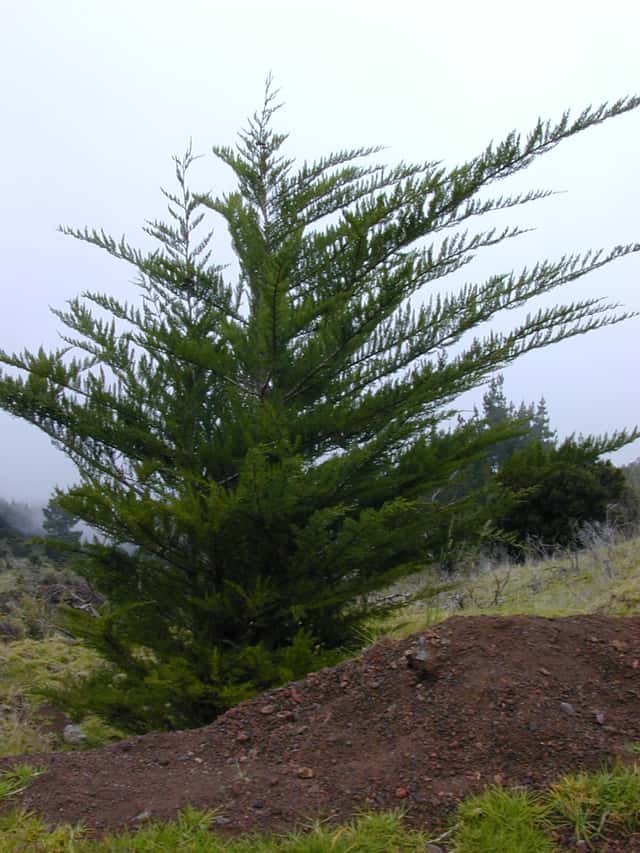
Cupressaceae
Monterey Cypress (Cupressus macrocarpa): Complete Care Guide
Cupressus macrocarpa
Plant in full sun with well-draining soil. Water regularly when young; once established, it is highly drought-tolerant. Minimal pruning needed. Feed annually in spring with a balanced slow-release fertilizer. Watch for cypress canker, especially in humid inland locations.
Every 14 days
Direct sun
-10° - 35°C
40% - 70%
Categories
What is Monterey Cypress?
Monterey Cypress (Cupressus macrocarpa) is a easy-care plant from the Cupressaceae family. Monterey Cypress (Cupressus macrocarpa) is a majestic evergreen conifer native to the central California coast. Famous for its dramatic windswept silhouette along the Monterey Peninsula, this fast-growing tree develops a broad, flat-topped crown in exposed coastal conditions. Its scale-like foliage...
Monterey Cypress grows up to 21.0m, spread of 2400cm, watering every 14 days, -10°C – 35°C, 40–70% humidity. It is not suitable for indoor environments and safe for pets.
Unlike many tropical plants, Monterey Cypress tolerates watering mistakes. Best for beginners. Unlike many popular species, Monterey Cypress is safe to keep around pets.
How to Care for Monterey Cypress?
TLDR: Monterey Cypress needs Direct sun, watering every 14 days, and temperatures between -10-35°C with 40-70% humidity.
How Often Should You Water Monterey Cypress?
Young trees need deep watering every 10–14 days during the first 2–3 years. Once established, Monterey Cypress is highly drought-tolerant and typically relies on natural rainfall. Avoid overwatering, as waterlogged soil promotes root rot and phytophthora.
How Much Light Does Monterey Cypress Need?
Requires full sun — at least 6 hours of direct sunlight daily. Does not tolerate shade. In coastal locations it thrives in wind and sea spray; in inland locations ensure good air circulation to reduce fungal disease risk.
What Is the Best Soil for Monterey Cypress?
Prefers well-draining soils including sandy, loamy, or clay-loam types. Tolerates a wide pH range from 5.5 to 8.0. Avoid heavy clay or poorly drained sites. Amend with organic matter to improve structure if needed.
What Pot Should You Use for Monterey Cypress?
Large outdoor planter (if growing as container specimen for patio). Otherwise direct in-ground planting is preferred. Use terracotta or concrete pots with ample drainage holes if container growing.
What Is Monterey Cypress and Where Does It Come From?
Monterey Cypress (Cupressus macrocarpa) is a majestic evergreen conifer native to the central California coast. Famous for its dramatic windswept silhouette along the Monterey Peninsula, this fast-growing tree develops a broad, flat-topped crown in exposed coastal conditions. Its scale-like foliage emits a pleasant lemony fragrance when crushed. Though its natural habitat is restricted to two small groves near Monterey, it has been widely planted worldwide as a specimen tree, hedge, windbreak, and coastal screen.
How to Propagate Monterey Cypress?
Seed propagation
Fresh seed has the best germination rate. Keep seed trays in a bright, warm location after stratification.
- 1 Collect ripe cones and allow them to dry until seeds are released
- 2 Cold-stratify seeds at 4°C for 30–60 days to break dormancy
- 3 Sow seeds in well-draining seed-raising mix and keep moist
- 4 Germination occurs in 2–4 weeks at 18–22°C
- 5 Transplant seedlings once they reach 10–15 cm tall
Materials needed:
Semi-hardwood cuttings
Mist cuttings regularly to maintain humidity. Bottom heat (20–22°C) significantly improves rooting success.
- 1 Take 10–15 cm semi-hardwood cuttings in mid-summer
- 2 Remove foliage from the lower half of the cutting
- 3 Dip cut end in rooting hormone powder
- 4 Insert into a mix of perlite and peat or coco coir
- 5 Keep in a warm, humid environment away from direct sun until rooted
Materials needed:
How Big Does Monterey Cypress Grow?
TLDR: Monterey Cypress can reach up to 21.0m tall with Fast growth rate.
Max height
21.0m
Spread
24.0m
Growth rate
Fast
Foliage
Evergreen
Plant Uses
Ornamental
Great for decoration
Is your plant showing symptoms?
Click on the symptom to discover possible causes:
What Diseases Commonly Affect Monterey Cypress?
TLDR: Monterey Cypress is susceptible to 6 known diseases. Monitor regularly for early detection.
Canker
Canker is a disease caused by various fungi and bacteria that create necrotic, sunken areas on bark of branches, stems, and trunks. Pathogens enter through wounds and natural openings, especially when plants are stressed. Canker can gradually weaken or kill branches by disrupting water and nutrient flow.
Root Rot
Root rot is a serious fungal disease that affects the root system of plants, causing them to decay and die. It is primarily caused by overwatering, poor drainage, or soil-borne fungi such as Pythium, Phytophthora, Rhizoctonia, and Fusarium. The disease thrives in waterlogged conditions where roots are deprived of oxygen, making them susceptible to fungal infection.
Phytophthora Root Rot
Disease caused by fungus-like organisms (oomycetes) that live in soil and can survive for years. It affects roots, stem, and crown of plants, being especially severe in waterlogged or poorly drained soils. It is the second most common cause of root rot in trees and shrubs.
Aphids
Aphids are small, soft-bodied, pear-shaped insects (1/16 to 1/8 inch long) that feed by sucking nutrient-rich sap from plants. They reproduce rapidly and can quickly weaken plants, causing distorted growth and transmitting plant viruses. Aphids come in various colors including green, black, red, yellow, brown, and gray. They secrete honeydew, a sticky substance that attracts ants and encourages sooty mold growth.
Meaning & Symbolism
A symbol of coastal resilience and longevity; the Monterey Cypress embodies endurance against harsh winds and salt spray.
Fun Facts
Monterey Cypress is one of the rarest trees in the world in its natural habitat, surviving only in two small groves on the Monterey Peninsula, California.
When crushed, the scale-like needles release a distinct lemony fragrance.
Despite its small native range, Monterey Cypress has been planted across the world and is especially common in New Zealand, Australia, and the UK.
The famous windswept shapes of old Monterey Cypress trees are sculpted by constant coastal winds over hundreds of years.
Frequently asked questions
How often should I water Monterey Cypress?
Can Monterey Cypress grow in containers?
Is Monterey Cypress toxic to pets?
Why are my Monterey Cypress branches turning brown and dying?
How fast does Monterey Cypress grow?
Compare with similar plants
| Attribute | Difficulty | Light | Watering | Pet Safe |
|---|---|---|---|---|
| Field Maple | Easy | Bright indirect | 14d | ✓ |
| Silver Birch | Easy | Direct sun | 14d | ✓ |
| Common Blanketflower | Easy | Direct sun | 10d | ✓ |
| Cushion Bush | Easy | Direct sun | 14d | ✓ |





