Lamiaceae
Oregano (Origanum vulgare): Complete Care Guide
Origanum vulgare
A tough, low-maintenance herb. Thrives in full sun with well-draining soil. Highly drought-tolerant — avoid overwatering. Suitable for containers, herb gardens, or rock gardens.
Every 7 days
Direct sun
-15° - 38°C
30% - 50%
Categories
What is Oregano?
Oregano (Origanum vulgare) is a easy-care plant from the Lamiaceae family. Oregano (Origanum vulgare) is an aromatic perennial herb native to the Mediterranean region, belonging to the Lamiaceae family. Known for its intensely fragrant leaves, it is one of the most widely used culinary herbs worldwide, essential in Italian, Greek, and Mexican cuisines. It forms low, bushy...
Oregano grows up to 90cm, spread of 60cm, watering every 7 days, -15°C – 38°C, 30–50% humidity. It is suitable for indoor environments and not safe for pets.
Unlike many tropical plants, Oregano tolerates watering mistakes. Best for beginners. Without precautions, ingestion can cause irritation in pets. Keep out of reach of cats and dogs. Without adequate drainage, root rot can develop within 14 days.
How to Care for Oregano?
TLDR: Oregano needs Direct sun, watering every 7 days, and temperatures between -15-38°C with 30-50% humidity.
How Often Should You Water Oregano?
Water approximately every 7 days, only when the top inch of soil is dry. Oregano is drought-tolerant; overwatering is the most common cause of death. Always ensure good drainage.
How Much Light Does Oregano Need?
Requires at least 6 hours of direct sunlight daily. Place near a south-facing window indoors, or grow in a sunny outdoor spot. Insufficient light reduces aromatic oil content.
What Is the Best Soil for Oregano?
Use well-draining, slightly sandy soil with pH 6.0–8.0. Avoid overly rich or heavy soils — they reduce essential oil concentration and encourage leggy growth.
What Pot Should You Use for Oregano?
Terracotta or ceramic pots with drainage holes are ideal. Shallow to medium depth pots work well as oregano has a moderately shallow root system.
Care Schedule
Fertilize
Every 60 days
Rotate
Every 14 days
Repot
Every 365 days
What Is Oregano and Where Does It Come From?
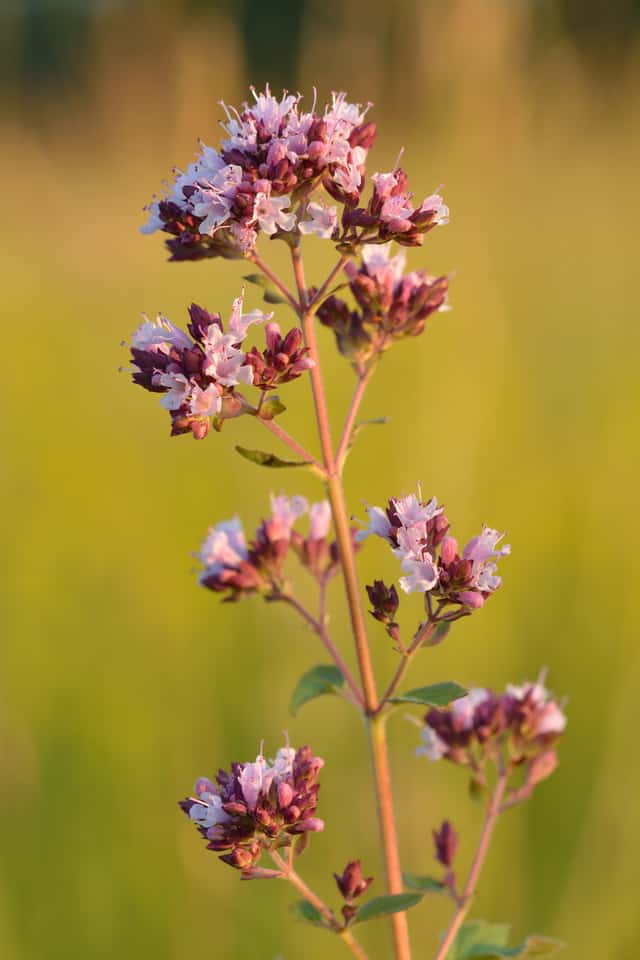
Oregano (Origanum vulgare) is an aromatic perennial herb native to the Mediterranean region, belonging to the Lamiaceae family. Known for its intensely fragrant leaves, it is one of the most widely used culinary herbs worldwide, essential in Italian, Greek, and Mexican cuisines. It forms low, bushy mounds and produces small pink, white, or purple flowers in summer.
How to Propagate Oregano?
Stem Cutting
Use clean, sharp scissors to avoid disease. Cuttings root readily in water or soil.
- 1 Cut a healthy stem 3-4 inches long just below a node
- 2 Remove the lower leaves
- 3 Plant in moist, well-draining potting mix
- 4 Keep in bright indirect light until roots establish
Materials needed:
Crown Division
Best done in spring when new growth begins.
- 1 Lift the plant from soil or pot
- 2 Separate clumps into sections, each with roots
- 3 Replant divisions in fresh well-draining soil
Materials needed:
Seed Sowing
Seeds are tiny — press gently onto soil surface without burying.
- 1 Surface-sow seeds on moist potting mix — do not cover
- 2 Keep warm and consistently moist
- 3 Transplant seedlings when 2 inches tall
Materials needed:
How Big Does Oregano Grow?
TLDR: Oregano can reach up to 90cm tall with Fast growth rate.
Max height
90cm
Spread
60cm
Growth rate
Fast
Foliage
Deciduous
Warning: Toxic Plant
This plant can be toxic if ingested. Keep out of reach of:
Plant Uses
Edible
Can be consumed
Medicinal
Medicinal properties
Aromatic
Pleasant fragrance
Ornamental
Great for decoration
Medicinal Uses
- Antimicrobial and antifungal properties from carvacrol and thymol
- Used in herbal medicine for digestive complaints and respiratory issues
- Rich in antioxidants — one of the highest among culinary herbs
Culinary Uses
- Essential in Italian, Greek, and Mediterranean cuisines
- Used fresh or dried on pizza, pasta sauces, and grilled meats
- Pairs excellently with tomatoes, garlic, olive oil, and lemon
Is your plant showing symptoms?
Click on the symptom to discover possible causes:
What Diseases Commonly Affect Oregano?
TLDR: Oregano is susceptible to 6 known diseases. Monitor regularly for early detection.
Root Rot
Root rot is a serious fungal disease that affects the root system of plants, causing them to decay and die. It is primarily caused by overwatering, poor drainage, or soil-borne fungi such as Pythium, Phytophthora, Rhizoctonia, and Fusarium. The disease thrives in waterlogged conditions where roots are deprived of oxygen, making them susceptible to fungal infection.
Powdery Mildew
Powdery mildew is a common fungal disease caused by various fungi species including Erysiphe, Podosphaera, Oïdium, and Leveillula. It affects over 10,000 plant species worldwide. The disease thrives in warm, dry climates with high humidity and appears as a distinctive white powdery coating on plant surfaces.
Gray Mold (Botrytis Blight)
Gray mold, caused by the fungus Botrytis cinerea, is a widespread necrotrophic pathogen affecting over 1,400 plant species. It thrives in cool, humid conditions and attacks weakened or aging plant tissues, causing soft rot and characteristic gray fuzzy growth.
Rust
Rust is a common fungal disease caused by fungi in the order Pucciniales that affects a wide variety of plants. The disease gets its name from the characteristic orange, yellow, or reddish-brown pustules that appear on leaves, resembling metal rust. This obligate fungal parasite requires living plants to survive and can cause significant economic losses in agricultural crops.
Meaning & Symbolism
In ancient Greece, oregano symbolized joy and happiness. It was woven into crowns for newlyweds and considered a sign of good fortune.
Fun Facts
The name "oregano" comes from the Greek words meaning "joy of the mountains"
Ancient Greeks crowned newlyweds with oregano wreaths as a symbol of happiness
Oregano has some of the highest antioxidant activity of any culinary herb
A single oregano plant can produce harvestable leaves for 3-4 years
Frequently asked questions
How often should I water oregano?
Can oregano be grown indoors?
Is oregano toxic to pets?
When does oregano flower?
How do I harvest oregano?
Compare with similar plants
| Attribute | Difficulty | Light | Watering | Pet Safe |
|---|---|---|---|---|
| Field Maple | Easy | Bright indirect | 14d | ✓ |
| Silver Birch | Easy | Direct sun | 14d | ✓ |
| Common Blanketflower | Easy | Direct sun | 10d | ✓ |
| Cushion Bush | Easy | Direct sun | 14d | ✓ |





