Gentianaceae
Persian Violet (Exacum affine) - Complete Care Guide
Exacum affine
Persian Violet thrives in bright indirect light with consistently moist soil. Keep humidity around 50-70% and temperatures between 15-27°C. Feed every two weeks during growing season. This plant is non-toxic and safe for pets.
Every 2 days
Partial shade
13° - 27°C
50% - 70%
Categories
What is Persian Violet?
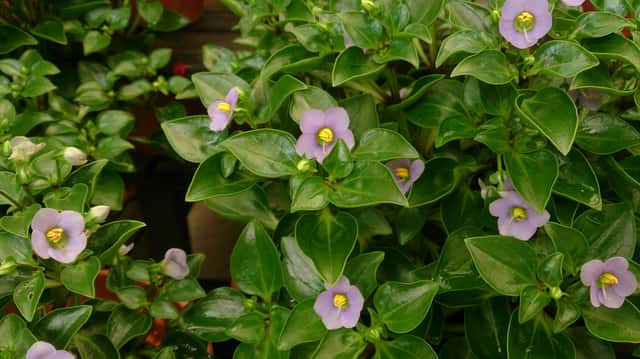
Persian Violet (Exacum affine) is a hard-care plant from the Gentianaceae family. Exacum affine, commonly known as Persian Violet, is a charming compact flowering plant native to the island of Socotra in Yemen. Prized for its profusion of small, fragrant blue-purple flowers with bright yellow centers, it belongs to the Gentianaceae family. Though often grown as an annual housepla...
Persian Violet grows up to 45cm, spread of 30cm, watering every 2 days, 13°C – 27°C, 50–70% humidity. It is suitable for indoor environments and safe for pets.
Unlike easy-care plants, Persian Violet demands constant attention to humidity and light. Not recommended for beginners. Unlike many popular species, Persian Violet is safe to keep around pets. Without adequate drainage, root rot can develop within 7 days.
How to Care for Persian Violet?
TLDR: Persian Violet needs Partial shade, watering every 2 days, and temperatures between 13-27°C with 50-70% humidity.
How Often Should You Water Persian Violet?
Keep the soil consistently moist but never waterlogged. Water when the top centimeter of soil feels dry. Use room-temperature water to avoid shocking the roots. Good drainage is essential to prevent root rot.
How Much Light Does Persian Violet Need?
Place in bright, indirect light near an east- or south-facing window. Avoid direct midday sun which can scorch the delicate leaves and flowers. A few hours of gentle morning sun is ideal.
What Is the Best Soil for Persian Violet?
Use a well-draining, slightly acidic mix of peat moss and perlite with a pH of 5.0-5.5. The soil should retain moisture without becoming soggy. An African violet potting mix works well.
What Pot Should You Use for Persian Violet?
Use a small to medium plastic or glazed ceramic pot with drainage holes. Plastic pots help retain moisture which this plant prefers. Avoid terracotta which dries out too quickly.
Care Schedule
Fertilize
Every 14 days
Misting
Every 3 days
What Is Persian Violet and Where Does It Come From?
Exacum affine, commonly known as Persian Violet, is a charming compact flowering plant native to the island of Socotra in Yemen. Prized for its profusion of small, fragrant blue-purple flowers with bright yellow centers, it belongs to the Gentianaceae family. Though often grown as an annual houseplant, it is actually a short-lived perennial in its native subtropical habitat. Its glossy, rounded foliage and sweet fragrance make it a delightful indoor companion during spring and summer.
How to Propagate Persian Violet?
Seed propagation
Seeds are extremely fine. Mix with sand for more even distribution. Bottom heat helps germination.
- 1 Sprinkle tiny seeds on the surface of moist seed-starting mix
- 2 Do not cover seeds as they need light to germinate
- 3 Cover the container with a humidity dome or plastic wrap
- 4 Maintain temperature between 22-26°C
- 5 Mist gently to keep soil moist
- 6 Remove cover once seedlings emerge after 2-3 weeks
Materials needed:
Stem tip cuttings
Use clean, sharp scissors. Maintain consistent moisture and warmth for best results.
- 1 Take 8-10 cm stem tip cuttings with at least two nodes
- 2 Remove the lower leaves
- 3 Dip the cut end in rooting hormone
- 4 Insert into a moist mix of peat and perlite
- 5 Cover with a plastic bag to maintain humidity
- 6 Place in bright indirect light and keep warm
Materials needed:
How Big Does Persian Violet Grow?
TLDR: Persian Violet can reach up to 45cm tall with Medium growth rate.
Max height
45cm
Spread
30cm
Growth rate
Medium
Foliage
Evergreen
Plant Uses
Ornamental
Great for decoration
Is your plant showing symptoms?
Click on the symptom to discover possible causes:
What Diseases Commonly Affect Persian Violet?
TLDR: Persian Violet is susceptible to 7 known diseases. Monitor regularly for early detection.
Root Rot
Root rot is a serious fungal disease that affects the root system of plants, causing them to decay and die. It is primarily caused by overwatering, poor drainage, or soil-borne fungi such as Pythium, Phytophthora, Rhizoctonia, and Fusarium. The disease thrives in waterlogged conditions where roots are deprived of oxygen, making them susceptible to fungal infection.
Aphids
Aphids are small, soft-bodied, pear-shaped insects (1/16 to 1/8 inch long) that feed by sucking nutrient-rich sap from plants. They reproduce rapidly and can quickly weaken plants, causing distorted growth and transmitting plant viruses. Aphids come in various colors including green, black, red, yellow, brown, and gray. They secrete honeydew, a sticky substance that attracts ants and encourages sooty mold growth.
Spider Mites
Spider mites are tiny arachnids (less than 1/20 inch long) related to spiders and ticks that feed on plant sap. They thrive in hot, dry conditions and can cause significant damage to ornamental and vegetable plants. During severe infestations, crop losses can reach 14% or higher as these pests disrupt vital plant processes including photosynthesis, carbon dioxide absorption, and transpiration.
Whiteflies
Whiteflies are small, soft-bodied, winged insects closely related to aphids and mealybugs. They are moth-like in appearance, about 1/16 inch long, triangular in shape, and gray-white in color. These sap-sucking pests feed on plant tissue, causing yellowing, stunted growth, and wilting. They also excrete honeydew, which attracts ants and promotes sooty mold growth. Whiteflies can transmit serious plant viruses.
Meaning & Symbolism
Delicacy, refinement, and gentle beauty
Fun Facts
Persian Violet is native to the remote island of Socotra off the coast of Yemen, one of the most biodiverse places on Earth
Despite its common name, it is not related to true violets (Viola) or African violets (Streptocarpus)
The flowers produce a sweet, refreshing fragrance that is not overwhelming, making it popular as an indoor scented plant
Persian Violet belongs to the Gentianaceae family, the same family as the famous alpine gentian flowers
Frequently asked questions
How often should I water my Persian Violet?
Why is my Persian Violet dropping flowers?
Is Persian Violet toxic to cats and dogs?
Can I keep my Persian Violet alive after it finishes blooming?
Compare with similar plants
| Attribute | Difficulty | Light | Watering | Pet Safe |
|---|---|---|---|---|
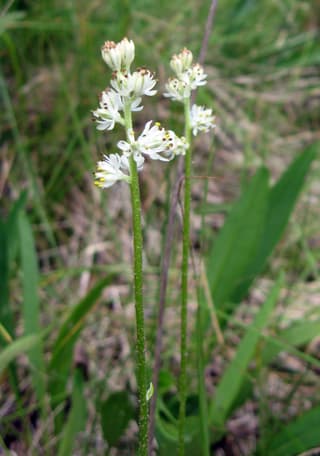
| Sticky false asphodel | Hard | Bright indirect | 1d | ✓ |
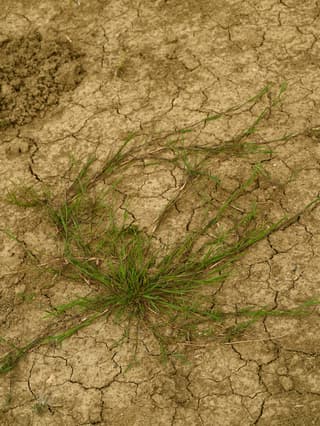
| Creeping bentgrass | Hard | Direct sun | 3d | ✓ |
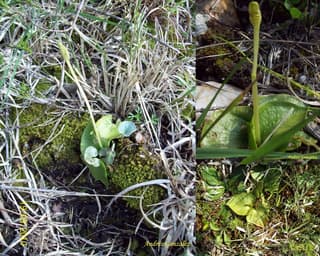
| Bulbous Adder's-tongue | Hard | Partial shade | 4d | ✓ |
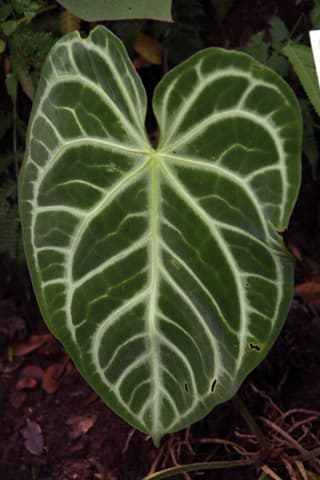
| Crystal Anthurium | Hard | Partial shade | 7d | ⚠️ |