Urticaceae
Depressa Pilea: Ground Cover Plant
Pilea depressa
An easy-care trailing plant that thrives in bright indirect light with consistently moist (never soggy) soil and high humidity. Water every 5–7 days when the top inch of soil feels dry. Mist leaves regularly or place near a humidifier to maintain the 60–75% humidity it loves.
Every 6 days
Partial shade
15° - 27°C
60% - 85%
Categories
What is Depressa Pilea?
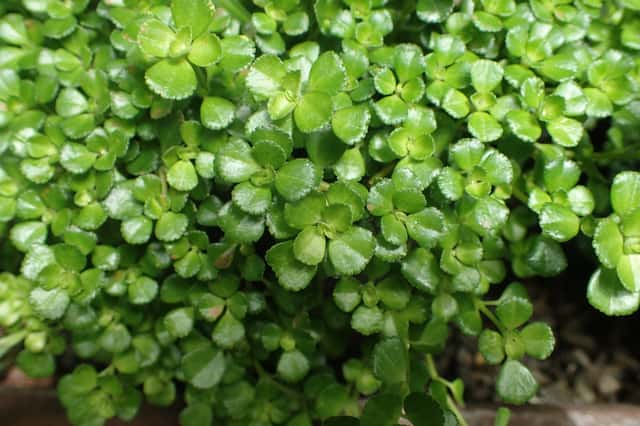
Depressa Pilea (Pilea depressa) is a easy-care plant from the Urticaceae family. Pilea depressa is a small, fast-growing creeping and trailing plant in the Urticaceae family, native to tropical regions of Central America and the Caribbean. Its tiny, round, glossy green leaves form dense mats that cascade beautifully from hanging baskets, drape over pot edges, or carpet terrarium...
Depressa Pilea grows up to 15cm, spread of 40cm, watering every 6 days, 15°C – 27°C, 60–85% humidity. It is suitable for indoor environments and safe for pets.
Unlike many tropical plants, Depressa Pilea tolerates watering mistakes. Best for beginners. Unlike many popular species, Depressa Pilea is safe to keep around pets. Without adequate drainage, root rot can develop within 12 days.
How to Care for Depressa Pilea?
TLDR: Depressa Pilea needs Partial shade, watering every 6 days, and temperatures between 15-27°C with 60-85% humidity.
How Often Should You Water Depressa Pilea?
Water every 5–7 days, letting the top 2.5 cm of soil dry out between waterings. Use filtered or rain water when possible — tap water chlorine can cause leaf tip browning. Never let the pot sit in standing water, as root rot is the primary threat to this plant.
How Much Light Does Depressa Pilea Need?
Place in bright indirect light near an east- or west-facing window. Avoid harsh midday direct sun which scorches the delicate foliage. Tolerates lower light but growth will slow considerably; supplemental grow lights work well for terrariums.
What Is the Best Soil for Depressa Pilea?
Use a well-draining mix of standard potting soil with 30% perlite or add coco coir for moisture retention. Target pH 5.0–6.0 (slightly acidic). Always use pots with drainage holes — waterlogged soil is the quickest path to root rot.
What Pot Should You Use for Depressa Pilea?
Terracotta or ceramic pots with drainage holes are ideal. For trailing effect, use hanging baskets. In terrariums, plant directly into substrate — no pot needed.
Care Schedule
Fertilize
Every 30 days
Misting
Every 2 days
Rotate
Every 14 days
Repot
Every 365 days
What Is Depressa Pilea and Where Does It Come From?
Pilea depressa is a small, fast-growing creeping and trailing plant in the Urticaceae family, native to tropical regions of Central America and the Caribbean. Its tiny, round, glossy green leaves form dense mats that cascade beautifully from hanging baskets, drape over pot edges, or carpet terrarium floors. It is completely non-toxic to humans, cats, and dogs, making it a popular choice for pet-friendly households.
How to Propagate Depressa Pilea?
Stem cutting
- 1 Take a 5–8 cm cutting with 2–3 nodes
- 2 Remove lower leaves
- 3 Root in water or moist soil
- 4 Keep in humid indirect light
- 5 Roots appear in 1–2 weeks; pot up when 2–3 cm long
Division
- 1 Gently unpot the plant
- 2 Separate clumps that already have roots attached
- 3 Pot each clump in fresh moist mix
- 4 Keep moist for first 2 weeks
How Big Does Depressa Pilea Grow?
TLDR: Depressa Pilea can reach up to 15cm tall with Fast growth rate.
Max height
15cm
Spread
40cm
Growth rate
Fast
Foliage
Evergreen
Plant Uses
Ornamental
Great for decoration
Ground Cover
Soil coverage
Is your plant showing symptoms?
Click on the symptom to discover possible causes:
What Diseases Commonly Affect Depressa Pilea?
TLDR: Depressa Pilea is susceptible to 7 known diseases. Monitor regularly for early detection.
Root Rot
Root rot is a serious fungal disease that affects the root system of plants, causing them to decay and die. It is primarily caused by overwatering, poor drainage, or soil-borne fungi such as Pythium, Phytophthora, Rhizoctonia, and Fusarium. The disease thrives in waterlogged conditions where roots are deprived of oxygen, making them susceptible to fungal infection.
Overwatering
Overwatering occurs when plants receive too much water, depriving roots of oxygen and causing root rot. This environmental stress is one of the most common causes of houseplant death, as waterlogged soil prevents roots from breathing and functioning properly.
Whiteflies
Whiteflies are small, soft-bodied, winged insects closely related to aphids and mealybugs. They are moth-like in appearance, about 1/16 inch long, triangular in shape, and gray-white in color. These sap-sucking pests feed on plant tissue, causing yellowing, stunted growth, and wilting. They also excrete honeydew, which attracts ants and promotes sooty mold growth. Whiteflies can transmit serious plant viruses.
Aphids
Aphids are small, soft-bodied, pear-shaped insects (1/16 to 1/8 inch long) that feed by sucking nutrient-rich sap from plants. They reproduce rapidly and can quickly weaken plants, causing distorted growth and transmitting plant viruses. Aphids come in various colors including green, black, red, yellow, brown, and gray. They secrete honeydew, a sticky substance that attracts ants and encourages sooty mold growth.
Meaning & Symbolism
Represents delicacy, gentle abundance, and the quiet beauty of small things. Its carpet of tiny leaves evokes peace, growth, and the vitality of tropical rainforest floors.
Compare with similar plants
| Attribute | Difficulty | Light | Watering | Pet Safe |
|---|---|---|---|---|
| Field Maple | Easy | Bright indirect | 14d | ✓ |
| Silver Birch | Easy | Direct sun | 14d | ✓ |
| Common Blanketflower | Easy | Direct sun | 10d | ✓ |
| Cushion Bush | Easy | Direct sun | 14d | ✓ |





