Brassicaceae
Radish (Raphanus sativus): Complete Growing Guide
Raphanus sativus
Radish is one of the easiest vegetables to grow. It prefers cool weather (10–18°C), full sun (6+ hours per day), and consistently moist, well-drained loamy soil. Plant seeds directly in the ground in spring or fall. Water every 2–3 days to keep the soil evenly moist. Harvest small varieties in 3–4 weeks; daikon types may take 60–70 days.
Every 3 days
Direct sun
4° - 24°C
40% - 70%
Categories
What is Radish?
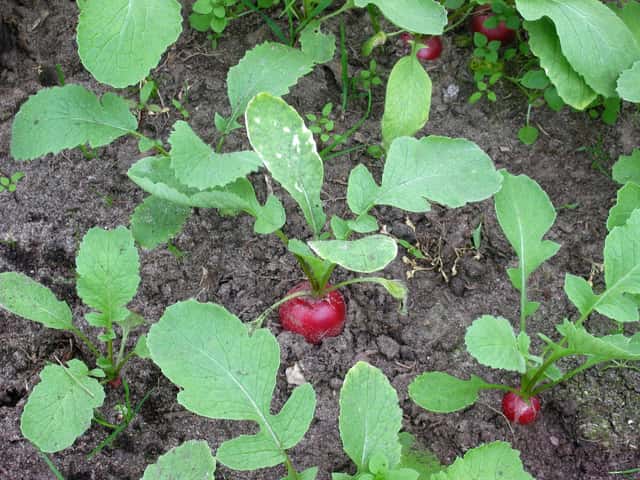
Radish (Raphanus sativus) is a easy-care plant from the Brassicaceae family. Raphanus sativus, commonly known as radish, is a fast-growing annual or biennial vegetable in the Brassicaceae family. Native to Asia, it has been cultivated for over 2,000 years across the world for its crisp, edible roots. The plant grows a rosette of pinnate leaves and produces white-to-purple fo...
Radish grows up to 60cm, spread of 45cm, watering every 3 days, 4°C – 24°C, 40–70% humidity. It is suitable for indoor environments and safe for pets.
Unlike many tropical plants, Radish tolerates watering mistakes. Best for beginners. Unlike many popular species, Radish is safe to keep around pets. Without adequate drainage, root rot can develop within 7 days.
How to Care for Radish?
TLDR: Radish needs Direct sun, watering every 3 days, and temperatures between 4-24°C with 40-70% humidity.
How Often Should You Water Radish?
Water radishes every 2–3 days to maintain consistent soil moisture. Uneven watering can cause the roots to crack or become pithy and bitter. Avoid waterlogged soil, which promotes root rot. In hot weather, check soil moisture daily.
How Much Light Does Radish Need?
Radishes thrive in full sun with at least 6 hours of direct sunlight per day. Partial shade is tolerated, but results in slower growth and less flavorful roots. Ensure good light exposure for compact, well-developed roots.
What Is the Best Soil for Radish?
Use a light, loose loamy or sandy soil with good drainage and a pH of 6.5–7.0. Avoid heavy clay soils that impede root development. Enrich soil with compost before planting. Loose soil produces smoother, more tender roots.
What Pot Should You Use for Radish?
Terracotta pots or wooden planter boxes work well for small radish varieties. Ensure a minimum depth of 30 cm for round types and 50 cm for daikon types. Avoid decorative pots without drainage holes.
Care Schedule
Fertilize
Every 30 days
What Is Radish and Where Does It Come From?
Raphanus sativus, commonly known as radish, is a fast-growing annual or biennial vegetable in the Brassicaceae family. Native to Asia, it has been cultivated for over 2,000 years across the world for its crisp, edible roots. The plant grows a rosette of pinnate leaves and produces white-to-purple four-petaled flowers. Varieties range from small round red types to long white daikon radishes. It is a cool-season crop beloved by gardeners for its quick harvest and ease of growing.
How to Propagate Radish?
Direct Sowing
Avoid transplanting as radishes dislike root disturbance. Stagger plantings every 2 weeks for continuous harvest. Do not plant in hot summer months as heat causes bolting.
- 1 Prepare a light, loose, well-drained soil enriched with compost.
- 2 Sow seeds directly at a depth of 1 cm, spacing 2–5 cm apart within rows 30 cm apart.
- 3 Water gently after sowing and keep soil consistently moist.
- 4 Thin seedlings to proper spacing once they reach 2–3 cm tall.
- 5 Harvest small varieties in 3–4 weeks; daikon types in 60–70 days.
Materials needed:
How Big Does Radish Grow?
TLDR: Radish can reach up to 60cm tall with Fast growth rate.
Max height
60cm
Spread
45cm
Growth rate
Fast
Foliage
Deciduous
Plant Uses
Edible
Can be consumed
Medicinal
Medicinal properties
Medicinal Uses
- Stimulates appetite and digestion
- Traditional use as a diuretic and liver tonic
- Extracts used in folk medicine for stomach disorders, urinary infections, and hepatic inflammation
- Antioxidant-rich roots support overall health
Culinary Uses
- Eaten raw in salads, as a crudité, or pickled
- Roots can be cooked in soups, stir-fries, and stews
- Leaves used as a leafy green (best cooked)
- Flowers are edible and add a spicy note to salads
- Seeds can be sprouted or cold-pressed for oil
Is your plant showing symptoms?
Click on the symptom to discover possible causes:
What Diseases Commonly Affect Radish?
TLDR: Radish is susceptible to 9 known diseases. Monitor regularly for early detection.
Downy Mildew
Downy mildew is a fungal-like disease caused by oomycetes (water molds) that thrives in cool, wet conditions. It affects a wide range of plants, causing yellowing leaves with fuzzy white-gray growth underneath, leading to defoliation and reduced yields if left untreated.
Alternaria Leaf Spot
Alternaria leaf spot is a common fungal disease caused by Alternaria solani and Alternaria alternata that affects a wide range of plants including tomatoes, potatoes, brassicas, and ornamentals. The disease thrives in warm, humid conditions and can cause significant crop damage if left untreated. Spores overwinter on plant debris and can attach to seeds, making complete elimination difficult.
Damping Off
Damping off is a soil-borne fungal disease that affects seeds and young seedlings, causing rotting of stem and root tissues at and below the soil line. It is caused by several fungi including Pythium, Rhizoctonia, Fusarium, and Phytophthora. The disease thrives in cold, wet conditions with poor air circulation.
Fusarium Wilt
Fusarium wilt is a serious fungal disease caused by the soil-borne fungus Fusarium oxysporum. The fungus invades roots and blocks the water-conducting vessels (xylem) of the plant, causing progressive wilting and eventual death. Host-specific forms of the pathogen exist that attack different plant species.
Meaning & Symbolism
The radish symbolizes vitality, quick reward, and abundance. In Japanese culture, large daikon radishes are carved at festivals to represent celebration and good fortune. The rapid growth of radishes also makes them a symbol of perseverance and fast results.
Fun Facts
Radishes can go from seed to harvest in as little as 3 weeks, making them one of the fastest-growing vegetables.
The entire radish plant is edible — roots, leaves, flowers, and seed pods all have culinary uses.
Ancient Egyptians paid workers building the pyramids partly with radishes, onions, and garlic.
Daikon radishes can grow up to 60 cm long and weigh several kilograms.
Frequently asked questions
How often should I water radishes?
How long does it take to harvest radishes?
Are radishes toxic to pets?
Can I grow radishes indoors?
Why are my radishes bolting (going to seed)?
Compare with similar plants
| Attribute | Difficulty | Light | Watering | Pet Safe |
|---|---|---|---|---|
| Field Maple | Easy | Bright indirect | 14d | ✓ |
| Silver Birch | Easy | Direct sun | 14d | ✓ |
| Common Blanketflower | Easy | Direct sun | 10d | ✓ |
| Cushion Bush | Easy | Direct sun | 14d | ✓ |





