Polygonaceae
Sea Grape (Coccoloba uvifera): Complete Care Guide
Coccoloba uvifera
Sea Grape is a low-maintenance, drought-tolerant tree ideal for tropical coastal gardens. Thrives in full sun and well-draining sandy soil. Requires regular watering only during establishment; very independent once mature.
Every 14 days
Bright indirect
10° - 38°C
50% - 90%
Categories
What is Sea Grape?
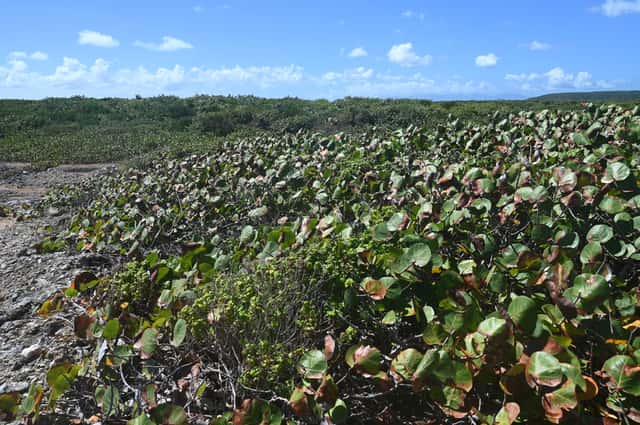
Sea Grape (Coccoloba uvifera) is a easy-care plant from the Polygonaceae family. Coccoloba uvifera, commonly known as Sea Grape, is a coastal tree or large shrub native to the tropical Americas, including the Caribbean, southern Florida, Mexico, and Central and South America. It features large, round, leathery leaves up to 25 cm in diameter with distinctive reddish veins. Female...
Sea Grape grows up to 15.0m, spread of 900cm, watering every 14 days, 10°C – 38°C, 50–90% humidity. It is not suitable for indoor environments and safe for pets.
Unlike many tropical plants, Sea Grape tolerates watering mistakes. Best for beginners. Unlike many popular species, Sea Grape is safe to keep around pets.
How to Care for Sea Grape?
TLDR: Sea Grape needs Bright indirect, watering every 14 days, and temperatures between 10-38°C with 50-90% humidity.
How Often Should You Water Sea Grape?
Water regularly during the first year until established. Once mature, Sea Grape is drought-tolerant and only needs watering when the soil is completely dry, approximately every 14 days. Avoid overwatering in poorly draining soils to prevent root rot.
How Much Light Does Sea Grape Need?
Sea Grape thrives in full sun, requiring 6 to 8 hours of direct sunlight daily. It can tolerate partial shade but will produce fewer fruits. Best placed in open, sunny positions, especially near coastal areas.
What Is the Best Soil for Sea Grape?
Prefers sandy, well-draining soil. Tolerates a wide pH range from 5.8 to 8.0, including alkaline and slightly acidic soils. Avoid waterlogged conditions. Excellent tolerance of salty and poor soils.
What Pot Should You Use for Sea Grape?
Use a large pot with drainage holes and a sandy/gritty mix for container growing. Best suited for in-ground planting in tropical climates due to its eventual large size.
Care Schedule
Fertilize
Every 90 days
What Is Sea Grape and Where Does It Come From?
Coccoloba uvifera, commonly known as Sea Grape, is a coastal tree or large shrub native to the tropical Americas, including the Caribbean, southern Florida, Mexico, and Central and South America. It features large, round, leathery leaves up to 25 cm in diameter with distinctive reddish veins. Female trees produce hanging clusters of purple, grape-like fruits that are edible and widely used in Caribbean cuisine. The plant is highly tolerant of salt spray, wind, and sandy soils, making it a cornerstone of tropical coastal landscapes.
How to Propagate Sea Grape?
Seed
Use fresh seeds for best germination rates. Keep substrate slightly moist but never waterlogged.
- 1 Collect ripe purple fruits and remove the pulp
- 2 Rinse seeds and allow to dry for 24 hours
- 3 Plant in moist sandy substrate 1 cm deep
- 4 Keep in a warm location with bright indirect light
- 5 Seeds germinate in 3-4 weeks; transplant when seedling reaches 15 cm
Materials needed:
Stem Cutting
Avoid direct sun during rooting. Check for roots after 4 weeks by gently tugging the stem.
- 1 Cut a semi-hardwood stem 10-15 cm long with at least 2 nodes
- 2 Remove lower leaves and dip the cut end in rooting hormone
- 3 Plant in moist sandy substrate
- 4 Cover with a plastic bag to retain humidity
- 5 Place in a warm spot with bright indirect light
Materials needed:
How Big Does Sea Grape Grow?
TLDR: Sea Grape can reach up to 15.0m tall with Medium growth rate.
Max height
15.0m
Spread
9.0m
Growth rate
Medium
Foliage
Evergreen
Plant Uses
Ornamental
Great for decoration
Edible
Can be consumed
Culinary Uses
- The ripe purple fruits are edible fresh off the tree or used to make jams, jellies, and wine popular in Caribbean communities.
Is your plant showing symptoms?
Click on the symptom to discover possible causes:
What Diseases Commonly Affect Sea Grape?
TLDR: Sea Grape is susceptible to 6 known diseases. Monitor regularly for early detection.
Root Rot
Root rot is a serious fungal disease that affects the root system of plants, causing them to decay and die. It is primarily caused by overwatering, poor drainage, or soil-borne fungi such as Pythium, Phytophthora, Rhizoctonia, and Fusarium. The disease thrives in waterlogged conditions where roots are deprived of oxygen, making them susceptible to fungal infection.
Scale Insects
Scale insects are small sap-sucking pests that appear as brown, shell-like bumps on plant stems and leaves. There are over 25 species, divided into armored (hard) and unarmored (soft) scales. They feed by piercing plant tissue and extracting sap, which weakens the plant and can lead to yellowing, stunted growth, and even death if left untreated. They also excrete honeydew, which attracts ants and promotes sooty mold growth.
Aphids
Aphids are small, soft-bodied, pear-shaped insects (1/16 to 1/8 inch long) that feed by sucking nutrient-rich sap from plants. They reproduce rapidly and can quickly weaken plants, causing distorted growth and transmitting plant viruses. Aphids come in various colors including green, black, red, yellow, brown, and gray. They secrete honeydew, a sticky substance that attracts ants and encourages sooty mold growth.
Spider Mites
Spider mites are tiny arachnids (less than 1/20 inch long) related to spiders and ticks that feed on plant sap. They thrive in hot, dry conditions and can cause significant damage to ornamental and vegetable plants. During severe infestations, crop losses can reach 14% or higher as these pests disrupt vital plant processes including photosynthesis, carbon dioxide absorption, and transpiration.
Meaning & Symbolism
A symbol of coastal resilience and tropical abundance, Sea Grape is iconic to Caribbean beaches and shorelines.
Fun Facts
Only female Sea Grape trees produce the famous clusters of edible purple fruits.
Sea Grape leaves can reach up to 25 cm in diameter, making them iconic symbols of Caribbean beaches.
It is one of the few trees that can grow directly in beach sand, tolerating constant salt spray and wind.
Sea Grape nectar is highly attractive to honeybees, and the resulting Caribbean honey is prized for its floral aroma.
Frequently asked questions
How often should I water Sea Grape?
Does Sea Grape produce edible fruit?
Is Sea Grape salt-tolerant?
Can I grow Sea Grape in a pot?
Is Sea Grape toxic to pets?
Compare with similar plants
| Attribute | Difficulty | Light | Watering | Pet Safe |
|---|---|---|---|---|
| Field Maple | Easy | Bright indirect | 14d | ✓ |
| Silver Birch | Easy | Direct sun | 14d | ✓ |
| Common Blanketflower | Easy | Direct sun | 10d | ✓ |
| Cushion Bush | Easy | Direct sun | 14d | ✓ |





