Vitaceae
Seasonvine: Medicinal Uses & Care Tips
Cissus verticillata
An easy-to-maintain plant that prefers bright indirect light and regular watering. It adapts well to both indoor and outdoor environments, provided it has support to climb.
Every 7 days
Partial shade
15° - 30°C
40% - 80%
Categories
What is Seasonvine?
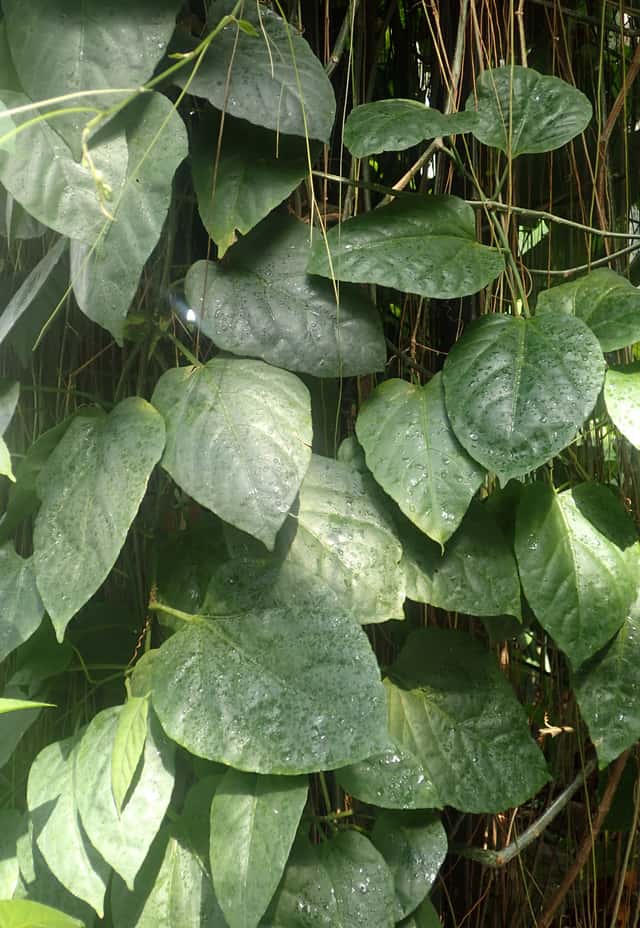
Seasonvine (Cissus verticillata) is a easy-care plant from the Vitaceae family. Cissus verticillata, popularly known as the Insulin Plant, is a vigorous perennial vine native to the Americas. Its leaves are green, oval, and glossy, but its most striking feature is the long, reddish aerial roots that descend from its branches, creating a natural curtain effect. It is an extremel...
Seasonvine grows up to 1.8m, spread of 183cm, watering every 7 days, 15°C – 30°C, 40–80% humidity. It is suitable for indoor environments and safe for pets.
Unlike many tropical plants, Seasonvine tolerates watering mistakes. Best for beginners. Unlike many popular species, Seasonvine is safe to keep around pets. Without adequate drainage, root rot can develop within 14 days.
How to Care for Seasonvine?
TLDR: Seasonvine needs Partial shade, watering every 7 days, and temperatures between 15-30°C with 40-80% humidity.
How Often Should You Water Seasonvine?
Keep the soil lightly moist during warmer months. Reduce watering in winter, allowing the top layer of soil to dry out between irrigations.
How Much Light Does Seasonvine Need?
Although it tolerates partial shade, it thrives best with abundant indirect light. Avoid direct sun during the hottest hours to prevent leaf burn.
What Is the Best Soil for Seasonvine?
Use a substrate rich in organic matter with excellent drainage to prevent root rot.
What Pot Should You Use for Seasonvine?
Hanging baskets to highlight the aerial roots, or large pots with trellises and climbing supports.
Care Schedule
Fertilize
Every 30 days
Misting
Every 14 days
Rotate
Every 14 days
Repot
Every 730 days
What Is Seasonvine and Where Does It Come From?
Cissus verticillata, popularly known as the Insulin Plant, is a vigorous perennial vine native to the Americas. Its leaves are green, oval, and glossy, but its most striking feature is the long, reddish aerial roots that descend from its branches, creating a natural curtain effect. It is an extremely resilient plant, capable of quickly covering fences, pergolas, and walls, and is also highly valued in traditional medicine.
How to Propagate Seasonvine?
Stem Cutting
- Keep the cutting in a bright location, but without direct sun during rooting.
- Change the water every two days if opting for water rooting.
- 1 Cutting Selection
Cut a healthy stem segment about 10 to 15 cm long, ensuring it has at least two or three nodes.
- 2 Preparation
Remove the leaves from the lower part of the cutting to prevent rot when it comes into contact with the rooting medium.
- 3 Rooting
Place the cutting in a container with water or directly into moist, organic-rich soil.
- 4 Transplanting
Once the roots reach about 5 cm, transfer to its permanent location.
Materials needed:
How Big Does Seasonvine Grow?
TLDR: Seasonvine can reach up to 1.8m tall with Fast growth rate.
Max height
1.8m
Spread
1.8m
Growth rate
Fast
Foliage
Evergreen
Plant Uses
Ornamental
Great for decoration
Medicinal
Medicinal properties
Medicinal Uses
- Assistance in controlling glycemic levels (diabetes)
- Treatment of inflammations and abscesses
- Antioxidant and hypotensive action
Is your plant showing symptoms?
Click on the symptom to discover possible causes:
What Diseases Commonly Affect Seasonvine?
TLDR: Seasonvine is susceptible to 9 known diseases. Monitor regularly for early detection.
Root Rot
Root rot is a serious fungal disease that affects the root system of plants, causing them to decay and die. It is primarily caused by overwatering, poor drainage, or soil-borne fungi such as Pythium, Phytophthora, Rhizoctonia, and Fusarium. The disease thrives in waterlogged conditions where roots are deprived of oxygen, making them susceptible to fungal infection.
Spider Mites
Spider mites are tiny arachnids (less than 1/20 inch long) related to spiders and ticks that feed on plant sap. They thrive in hot, dry conditions and can cause significant damage to ornamental and vegetable plants. During severe infestations, crop losses can reach 14% or higher as these pests disrupt vital plant processes including photosynthesis, carbon dioxide absorption, and transpiration.
Mealybugs
Mealybugs are small, soft-bodied insects covered with a white, waxy, cottony material. They are common pests of houseplants and outdoor plants in mild climates. These sap-sucking insects feed on plant tissue, causing damage, stunted growth, and can lead to plant death if left untreated. They produce sticky honeydew which attracts sooty mold.
Aphids
Aphids are small, soft-bodied, pear-shaped insects (1/16 to 1/8 inch long) that feed by sucking nutrient-rich sap from plants. They reproduce rapidly and can quickly weaken plants, causing distorted growth and transmitting plant viruses. Aphids come in various colors including green, black, red, yellow, brown, and gray. They secrete honeydew, a sticky substance that attracts ants and encourages sooty mold growth.
Meaning & Symbolism
It symbolizes healing, protection, and adaptability to various environments.
Compare with similar plants
| Attribute | Difficulty | Light | Watering | Pet Safe |
|---|---|---|---|---|
| Field Maple | Easy | Bright indirect | 14d | ✓ |
| Silver Birch | Easy | Direct sun | 14d | ✓ |
| Common Blanketflower | Easy | Direct sun | 10d | ✓ |
| Cushion Bush | Easy | Direct sun | 14d | ✓ |





