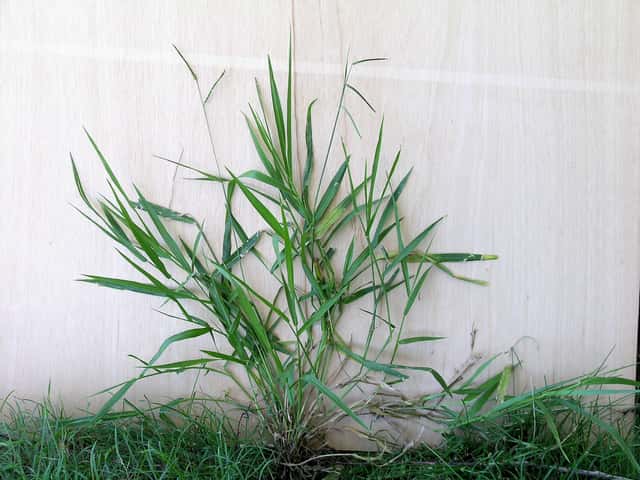
Poaceae
Signal Grass (Brachiaria decumbens): Everything You Need to Know
Brachiaria decumbens
A hardy, low-maintenance grass best suited for tropical outdoor environments. Thrives in full sun and well-drained soils. Drought-tolerant once established. Requires periodic mowing or grazing management to maintain nutritional quality. Not suitable for indoor cultivation.
Every 3 days
Direct sun
19° - 38°C
50% - 90%
Categories
What is Signal Grass?
Signal Grass (Brachiaria decumbens) is a easy-care plant from the Poaceae family. Signal grass (Brachiaria decumbens) is a vigorous perennial tropical grass native to central and east Africa, belonging to the Poaceae family. Widely naturalized across tropical regions, it is one of the most important pasture grasses in South America, particularly Brazil. It forms dense, fast-sprea...
Signal Grass grows up to 1.5m, spread of 200cm, watering every 3 days, 19°C – 38°C, 50–90% humidity. It is not suitable for indoor environments and safe for pets.
Unlike many tropical plants, Signal Grass tolerates watering mistakes. Best for beginners. Unlike many popular species, Signal Grass is safe to keep around pets.
How to Care for Signal Grass?
TLDR: Signal Grass needs Direct sun, watering every 3 days, and temperatures between 19-38°C with 50-90% humidity.
How Often Should You Water Signal Grass?
Signal grass tolerates dry seasons of 4-5 months once established, requiring a minimum of 800 mm of annual rainfall. Avoid waterlogged conditions — it does not tolerate standing water. In managed cultivation, water every 3-5 days during dry periods.
How Much Light Does Signal Grass Need?
Requires full sun for optimal growth. Tolerates light shade but growth is significantly reduced. Best suited for open pastures and large outdoor areas.
What Is the Best Soil for Signal Grass?
Thrives in acidic, low-fertility soils (pH 4.5-6.5) with high aluminum tolerance. Prefers well-drained conditions. Does not tolerate waterlogging.
Care Schedule
Fertilize
Every 180 days
What Is Signal Grass and Where Does It Come From?
Signal grass (Brachiaria decumbens) is a vigorous perennial tropical grass native to central and east Africa, belonging to the Poaceae family. Widely naturalized across tropical regions, it is one of the most important pasture grasses in South America, particularly Brazil. It forms dense, fast-spreading mats via stolons and rhizomes, tolerating poor, acidic soils and seasonal drought.
How to Propagate Signal Grass?
Seeding
Use seeds with at least 30% cultural value. Freshly harvested seeds may be dormant — use seeds stored for at least 6 months or treat with acid scarification to improve germination rates.
- 1 Prepare soil by tilling and apply lime if pH is below 5.0
- 2 Broadcast or drill seeds at 2-3 cm depth
- 3 Keep soil moist until germination
- 4 Allow first grazing when plants reach 30-40 cm
Materials needed:
Clump division
Ideal for repairing bare patches in pastures. Ensure each piece has at least 2-3 nodes to guarantee establishment.
- 1 Cut established clumps with a machete or hoe
- 2 Plant pieces in holes spaced 50 cm apart
- 3 Water immediately after planting
- 4 Keep moist until fully rooted
Materials needed:
How Big Does Signal Grass Grow?
TLDR: Signal Grass can reach up to 1.5m tall with Fast growth rate.
Max height
1.5m
Spread
2.0m
Growth rate
Fast
Foliage
Evergreen
Plant Uses
Ground Cover
Soil coverage
Is your plant showing symptoms?
Click on the symptom to discover possible causes:
What Diseases Commonly Affect Signal Grass?
TLDR: Signal Grass is susceptible to 5 known diseases. Monitor regularly for early detection.
Rust
Rust is a common fungal disease caused by fungi in the order Pucciniales that affects a wide variety of plants. The disease gets its name from the characteristic orange, yellow, or reddish-brown pustules that appear on leaves, resembling metal rust. This obligate fungal parasite requires living plants to survive and can cause significant economic losses in agricultural crops.
Caterpillars
Caterpillars are the larval stage of moths and butterflies that feed voraciously on plant foliage, stems, flowers, and fruits. Common species include cabbage loopers, tomato hornworms, armyworms, and cutworms. These pests can cause extensive damage by consuming large amounts of plant tissue in a short time. They vary in size from small (1/4 inch) to large (5 inches), with colors ranging from green to brown, often featuring stripes or spots. Caterpillars are highly mobile and can quickly spread throughout gardens, making them one of the most destructive common pests.
Root Rot
Root rot is a serious fungal disease that affects the root system of plants, causing them to decay and die. It is primarily caused by overwatering, poor drainage, or soil-borne fungi such as Pythium, Phytophthora, Rhizoctonia, and Fusarium. The disease thrives in waterlogged conditions where roots are deprived of oxygen, making them susceptible to fungal infection.
Nitrogen Deficiency
Nitrogen deficiency occurs when plants lack sufficient nitrogen, an essential macronutrient needed for chlorophyll production and overall growth. This deficiency typically manifests as yellowing leaves, starting with older foliage and progressing to newer growth if left untreated.
Fun Facts
Signal grass can cover the ground completely within just 90 days of seeding
Its roots can reach up to 2 meters deep, making it exceptionally drought-resistant
It is one of the most widely planted forage grasses in the world, with tens of millions of hectares in Brazil alone
Despite being toxic to ruminants under certain conditions, it poses no risk to humans, dogs, or cats
Frequently asked questions
Is signal grass toxic to cattle?
Is signal grass toxic to humans, dogs, or cats?
How often should signal grass be mowed?
How drought-tolerant is signal grass?
What soil pH is best for signal grass?
Compare with similar plants
| Attribute | Difficulty | Light | Watering | Pet Safe |
|---|---|---|---|---|
| Field Maple | Easy | Bright indirect | 14d | ✓ |
| Muriel's Bamboo | Medium | Partial shade | 3d | ✓ |
| Silver Birch | Easy | Direct sun | 14d | ✓ |
| Common Blanketflower | Easy | Direct sun | 10d | ✓ |





