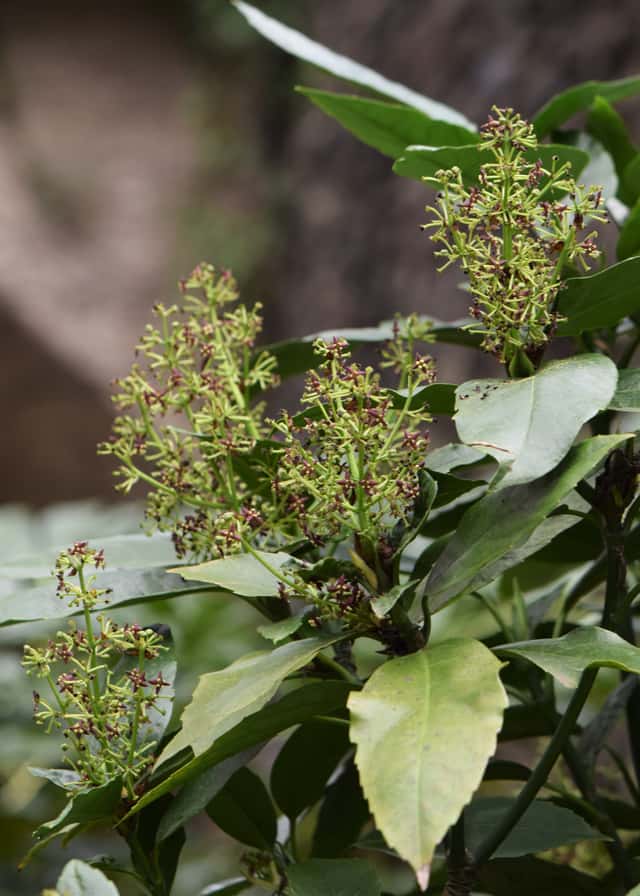
Garryaceae
Spotted Laurel (Aucuba japonica): Complete Care Guide
Aucuba japonica
Spotted Laurel is one of the easiest shrubs to grow. It tolerates deep shade, pollution, and neglect, making it ideal for difficult garden spots. Water moderately — allow the top layer of soil to dry between waterings. Feed once in spring with a balanced fertiliser. Prune in spring to shape. Repot container specimens every 2 years.
Every 10 days
Low light
-5° - 35°C
40% - 70%
Categories
What is Spotted Laurel?
Spotted Laurel (Aucuba japonica) is a easy-care plant from the Garryaceae family. Aucuba japonica, commonly known as Spotted Laurel or Japanese Laurel, is a robust evergreen shrub native to Japan, China, and the Himalayas. Famous for its glossy, leathery leaves — often boldly spotted or mottled with gold in variegated cultivars — it thrives in deep shade where few other shrubs fl...
Spotted Laurel grows up to 3.0m, spread of 180cm, watering every 10 days, -5°C – 35°C, 40–70% humidity. It is suitable for indoor environments and not safe for pets.
Unlike many tropical plants, Spotted Laurel tolerates watering mistakes. Best for beginners. Without precautions, ingestion can cause irritation in pets. Keep out of reach of cats and dogs. Without adequate drainage, root rot can develop within 20 days.
How to Care for Spotted Laurel?
TLDR: Spotted Laurel needs Low light, watering every 10 days, and temperatures between -5-35°C with 40-70% humidity.
How Often Should You Water Spotted Laurel?
Water every 7–14 days, allowing the top 2–3 cm of soil to dry between sessions. Reduce watering in winter. Avoid waterlogged soil, which rapidly causes root rot. Established outdoor plants have good drought tolerance.
How Much Light Does Spotted Laurel Need?
Spotted Laurel excels in partial to full shade. Avoid direct midday sun, which causes leaf scorch — especially on variegated varieties. It can tolerate morning sun. Indoors, a bright spot away from direct rays is ideal.
What Is the Best Soil for Spotted Laurel?
Use a fertile, moisture-retentive but well-drained loamy soil. Amend with organic matter if your soil is sandy or compacted. Tolerates a wide pH range (5.5–7.0). Avoid waterlogged or clay-heavy soils without drainage.
What Pot Should You Use for Spotted Laurel?
Use a heavy ceramic or terracotta pot with drainage holes for containers. These provide stability for a top-heavy shrub and allow the soil to breathe. Avoid plastic pots that retain excess moisture.
Care Schedule
Fertilize
Every 60 days
Repot
Every 730 days
What Is Spotted Laurel and Where Does It Come From?
Aucuba japonica, commonly known as Spotted Laurel or Japanese Laurel, is a robust evergreen shrub native to Japan, China, and the Himalayas. Famous for its glossy, leathery leaves — often boldly spotted or mottled with gold in variegated cultivars — it thrives in deep shade where few other shrubs flourish. Female plants produce striking bright red berries in autumn that persist through winter, adding seasonal interest.
How to Propagate Spotted Laurel?
Semi-hardwood cutting
Late summer cuttings have the highest success rate. Keep the compost moist but not wet. Bottom heat (around 20°C) speeds rooting.
- 1 Take a 10–15 cm semi-hardwood cutting in late summer
- 2 Remove lower leaves, keeping 2–3 at the tip
- 3 Dip the cut end in rooting hormone powder
- 4 Insert into a pot with moist, well-draining compost
- 5 Cover with a plastic bag to retain humidity
- 6 Keep in a warm, bright spot out of direct sun
- 7 Roots should form in 4–6 weeks — check by gently tugging
Materials needed:
How Big Does Spotted Laurel Grow?
TLDR: Spotted Laurel can reach up to 3.0m tall with Slow growth rate.
Max height
3.0m
Spread
1.8m
Growth rate
Slow
Foliage
Evergreen
Warning: Toxic Plant
This plant can be toxic if ingested. Keep out of reach of:
Plant Uses
Ornamental
Great for decoration
Is your plant showing symptoms?
Click on the symptom to discover possible causes:
What Diseases Commonly Affect Spotted Laurel?
TLDR: Spotted Laurel is susceptible to 12 known diseases. Monitor regularly for early detection.
Root Rot
Root rot is a serious fungal disease that affects the root system of plants, causing them to decay and die. It is primarily caused by overwatering, poor drainage, or soil-borne fungi such as Pythium, Phytophthora, Rhizoctonia, and Fusarium. The disease thrives in waterlogged conditions where roots are deprived of oxygen, making them susceptible to fungal infection.
Phytophthora Root Rot
Disease caused by fungus-like organisms (oomycetes) that live in soil and can survive for years. It affects roots, stem, and crown of plants, being especially severe in waterlogged or poorly drained soils. It is the second most common cause of root rot in trees and shrubs.
Leaf Spot
Leaf spot is a common fungal disease caused by various pathogens including Alternaria, Ascochyta, Colletotrichum, Septoria, and Venturia. It primarily affects leaves, causing discolored spots that can lead to premature leaf drop if left untreated.
Cercospora Leaf Spot
Cercospora leaf spot is a common fungal disease caused by Cercospora species that affects many plant types, particularly beets, roses, and leafy vegetables. The disease thrives in warm, humid conditions and can cause significant defoliation, reducing plant vigor and yield. It spreads rapidly through water splash, wind, and contaminated tools.
Meaning & Symbolism
In Japanese culture, Aucuba japonica symbolises longevity and resilience. Its ability to thrive in the darkest corners of gardens made it a prized plant near temples and traditional homes, representing endurance and good fortune.
Fun Facts
Aucuba japonica can produce both male and female plants, but only females bear the vivid red berries — you need at least one male nearby to pollinate them.
Its common name 'Gold Dust Plant' comes from the popular variegated cultivar 'Variegata,' whose leaves are heavily speckled with golden-yellow spots.
Spotted Laurel is one of the few shrubs that thrives in deep, dry shade under large tree canopies where virtually nothing else will grow.
The plant contains aucubin, a natural glycoside that has been studied for potential anti-inflammatory and liver-protective properties in traditional Japanese herbal medicine.
Frequently asked questions
How often should I water my Spotted Laurel?
Can Spotted Laurel grow indoors?
Is Spotted Laurel toxic to pets?
Why are my Spotted Laurel leaves turning black?
How fast does Spotted Laurel grow?
Compare with similar plants
| Attribute | Difficulty | Light | Watering | Pet Safe |
|---|---|---|---|---|
| Field Maple | Easy | Bright indirect | 14d | ✓ |
| Silver Birch | Easy | Direct sun | 14d | ✓ |
| Common Blanketflower | Easy | Direct sun | 10d | ✓ |
| Cushion Bush | Easy | Direct sun | 14d | ✓ |





