Anacardiaceae
Sumac (Rhus): The Genus Behind Autumn's Most Brilliant Red
Rhus
Sumac is a tough, low-maintenance shrub once established. It thrives in full sun and is highly drought-tolerant. Requires well-draining soil — waterlogged conditions are the primary cause of failure. Spreads by root suckers; consider installing root barriers if needed.
Every 14 days
Bright indirect
-30° - 35°C
30% - 60%
Categories
What is Sumac?
Sumac (Rhus) is a easy-care plant from the Anacardiaceae family. Sumac (Rhus) is a genus of approximately 35 species of shrubs and small trees in the family Anacardiaceae, distributed across temperate and subtropical regions of the Northern Hemisphere. They are celebrated for their spectacular autumn foliage, which transitions from green to brilliant shades of or...
Sumac grows up to 9.0m, spread of 600cm, watering every 14 days, -30°C – 35°C, 30–60% humidity. It is not suitable for indoor environments and safe for pets.
Unlike many tropical plants, Sumac tolerates watering mistakes. Best for beginners. Unlike many popular species, Sumac is safe to keep around pets.
How to Care for Sumac?
TLDR: Sumac needs Bright indirect, watering every 14 days, and temperatures between -30-35°C with 30-60% humidity.
How Often Should You Water Sumac?
Water deeply but infrequently — approximately every 2 weeks during the growing season. Once established (2-3 years), sumac is extremely drought-tolerant and rarely needs supplemental watering except during prolonged dry spells.
How Much Light Does Sumac Need?
Plant in full sun (at least 6 hours of direct sunlight daily). Full sun is essential for the most vibrant autumn color display and to keep the plant healthy and compact.
What Is the Best Soil for Sumac?
Prefers well-drained soil and tolerates a wide range — sandy, loamy, clay, or rocky soils. Avoid waterlogged or poorly drained sites, which are the leading cause of root rot in sumac. Ideal pH: 5.5–7.5.
What Pot Should You Use for Sumac?
Terracotta pot with generous drainage holes for smaller species. Larger species like R. typhina are not suitable for containers — plant directly in the garden.
Care Schedule
Fertilize
Every 90 days
What Is Sumac and Where Does It Come From?
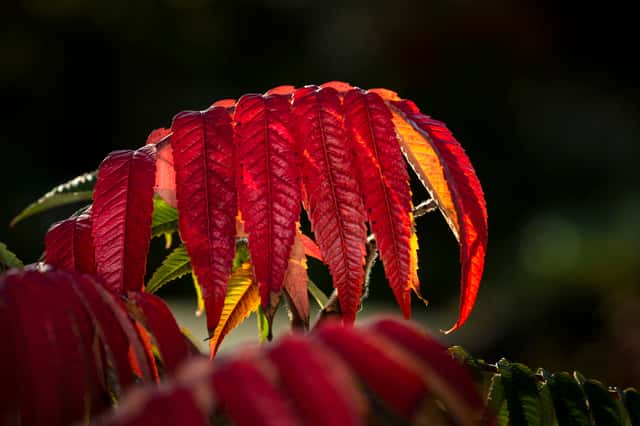
Sumac (Rhus) is a genus of approximately 35 species of shrubs and small trees in the family Anacardiaceae, distributed across temperate and subtropical regions of the Northern Hemisphere. They are celebrated for their spectacular autumn foliage, which transitions from green to brilliant shades of orange, red, and scarlet — among the most vibrant fall colors of any woody plant. Some species like Rhus typhina (staghorn sumac) grow as large multi-stemmed shrubs or small trees, while others like R. aromatica serve as ground cover. Note: R. radicans (poison ivy) has been reclassified to the genus Toxicodendron.
How to Propagate Sumac?
Seed Propagation
Scarification is essential as seeds have a hard seed coat. Cold stratification significantly improves germination rates. Be patient — germination can be slow.
- 1 Collect ripe seeds in autumn
- 2 Scarify seeds mechanically with sandpaper or soak in hot water
- 3 Cold-stratify for 30-60 days in the refrigerator
- 4 Sow in well-draining mix in spring
- 5 Keep moist until germination occurs
Materials needed:
Stem Cuttings
Late spring cuttings yield the best results. Maintain moderate humidity with a plastic bag tent. Avoid direct sun until established.
- 1 Take 15-20 cm semi-hardwood cuttings in late spring to early summer
- 2 Remove lower leaves, leaving 2-3 at the tip
- 3 Dip base in rooting hormone powder
- 4 Plant in moist, well-draining rooting medium
- 5 Keep in bright indirect light until rooted
Materials needed:
How Big Does Sumac Grow?
TLDR: Sumac can reach up to 9.0m tall with Medium growth rate.
Max height
9.0m
Spread
6.0m
Growth rate
Medium
Foliage
Deciduous
Warning: Toxic Plant
This plant can be toxic if ingested. Keep out of reach of:
Plant Uses
Ornamental
Great for decoration
Medicinal Uses
- Leaves and bark used in traditional medicine as an astringent and anti-inflammatory
- Root bark used in Native American medicine for sore throats and fever
- Tannins from bark and galls used for tanning leather
Culinary Uses
- Sour red berries (drupes) used to make sumac spice, a staple in Middle Eastern cuisine
- Rhus coriaria fruit ground into a tangy spice used in za'atar blends and as a lemon substitute
- Berries used to make a tart lemonade-like drink called sumac-ade
Is your plant showing symptoms?
Click on the symptom to discover possible causes:
What Diseases Commonly Affect Sumac?
TLDR: Sumac is susceptible to 9 known diseases. Monitor regularly for early detection.
Leaf Spot
Leaf spot is a common fungal disease caused by various pathogens including Alternaria, Ascochyta, Colletotrichum, Septoria, and Venturia. It primarily affects leaves, causing discolored spots that can lead to premature leaf drop if left untreated.
Rust
Rust is a common fungal disease caused by fungi in the order Pucciniales that affects a wide variety of plants. The disease gets its name from the characteristic orange, yellow, or reddish-brown pustules that appear on leaves, resembling metal rust. This obligate fungal parasite requires living plants to survive and can cause significant economic losses in agricultural crops.
Scale Insects
Scale insects are small sap-sucking pests that appear as brown, shell-like bumps on plant stems and leaves. There are over 25 species, divided into armored (hard) and unarmored (soft) scales. They feed by piercing plant tissue and extracting sap, which weakens the plant and can lead to yellowing, stunted growth, and even death if left untreated. They also excrete honeydew, which attracts ants and promotes sooty mold growth.
Aphids
Aphids are small, soft-bodied, pear-shaped insects (1/16 to 1/8 inch long) that feed by sucking nutrient-rich sap from plants. They reproduce rapidly and can quickly weaken plants, causing distorted growth and transmitting plant viruses. Aphids come in various colors including green, black, red, yellow, brown, and gray. They secrete honeydew, a sticky substance that attracts ants and encourages sooty mold growth.
Meaning & Symbolism
Symbol of resilience and seasonal transformation; the blazing scarlet autumn foliage represents the cycle of life and renewal.
Fun Facts
Staghorn sumac (R. typhina) gets its name from the velvety young branches that resemble deer antlers in velvet
Sumac berries have been used for centuries in Middle Eastern cuisine as a souring agent — a sustainable alternative to lemon juice
The genus Rhus once included over 250 species; modern taxonomy has reduced it to about 35 after splitting off Toxicodendron and others
Native American tribes used sumac bark tannins to tan leather and produced red dye from the berries
Frequently asked questions
Is sumac toxic to pets or humans?
When does sumac change color in autumn?
How often should I water my sumac?
Does sumac spread aggressively?
What is the difference between sumac and poison ivy?
Compare with similar plants
| Attribute | Difficulty | Light | Watering | Pet Safe |
|---|---|---|---|---|
| Field Maple | Easy | Bright indirect | 14d | ✓ |
| Silver Birch | Easy | Direct sun | 14d | ✓ |
| Common Blanketflower | Easy | Direct sun | 10d | ✓ |
| Cushion Bush | Easy | Direct sun | 14d | ✓ |





