Araliaceae
Umbrella Tree (Heptapleurum actinophyllum / Schefflera)
Heptapleurum actinophyllum
Easy-care tropical tree thriving in bright indirect light. Water every 7–10 days, allowing soil to partially dry between waterings. Tolerates low light but grows best near a bright window. Avoid overwatering to prevent root rot. Feed monthly during the growing season.
Every 10 days
Partial shade
10° - 27°C
50% - 75%
Categories
What is Umbrella Tree?
Umbrella Tree (Heptapleurum actinophyllum) is a easy-care plant from the Araliaceae family. The Umbrella Tree (Heptapleurum actinophyllum), also widely known by its synonym Schefflera actinophylla, is a dramatic tropical tree native to Australia and New Guinea. Its large, glossy, palmate leaves radiate from central stems like the spokes of an umbrella, making it one of the most recognizabl...
Umbrella Tree grows up to 12.0m, spread of 400cm, watering every 10 days, 10°C – 27°C, 50–75% humidity. It is suitable for indoor environments and not safe for pets.
Unlike many tropical plants, Umbrella Tree tolerates watering mistakes. Best for beginners. Without precautions, ingestion can cause irritation in pets. Keep out of reach of cats and dogs. Without adequate drainage, root rot can develop within 20 days.
How to Care for Umbrella Tree?
TLDR: Umbrella Tree needs Partial shade, watering every 10 days, and temperatures between 10-27°C with 50-75% humidity.
How Often Should You Water Umbrella Tree?
Water thoroughly every 7–10 days, allowing the top 50–75% of soil to dry out between waterings. Always discard excess water from the saucer. The Umbrella Tree is drought-tolerant, so erring on the side of underwatering is safer than overwatering.
How Much Light Does Umbrella Tree Need?
Place in bright indirect light — near an east or north-facing window is ideal indoors. It tolerates medium light but may become leggy in low light. Avoid harsh direct afternoon sun which can scorch the large leaves.
What Is the Best Soil for Umbrella Tree?
Use a well-draining potting mix rich in organic matter. A blend of perlite, coco coir and compost works well. Ensure the pot has drainage holes to prevent waterlogging.
What Pot Should You Use for Umbrella Tree?
Choose a sturdy, heavy pot to balance the tall growth — terracotta or ceramic pots work well as they add weight and improve drainage. Ensure drainage holes are present. Repot every 2 years or when roots emerge from drainage holes.
Care Schedule
Fertilize
Every 30 days
Rotate
Every 30 days
Repot
Every 730 days
What Is Umbrella Tree and Where Does It Come From?
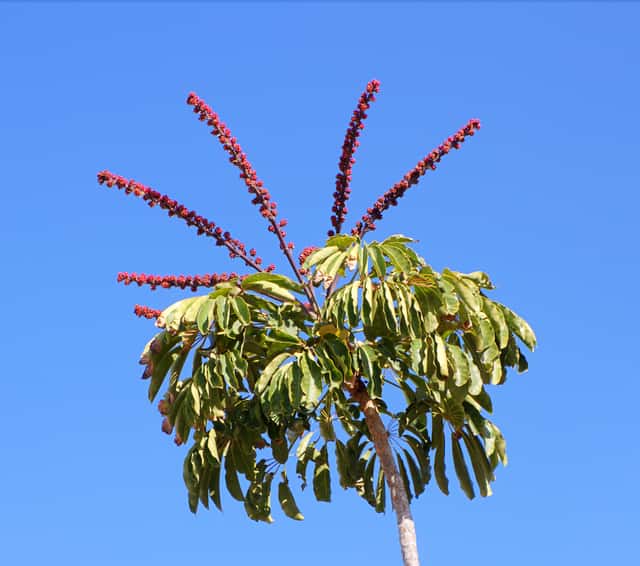
The Umbrella Tree (Heptapleurum actinophyllum), also widely known by its synonym Schefflera actinophylla, is a dramatic tropical tree native to Australia and New Guinea. Its large, glossy, palmate leaves radiate from central stems like the spokes of an umbrella, making it one of the most recognizable indoor and outdoor trees in the world. Outdoors it can reach 40 feet; indoors it stays a manageable 6–10 feet. The plant produces striking red-pink flower spikes in summer and autumn when mature.
How to Propagate Umbrella Tree?
Stem Cutting
Use a clear plastic bag to create a mini greenhouse over the cutting to retain humidity. Change water weekly if rooting in water.
- 1 Take a 10–15 cm cutting from a healthy stem just below a node
- 2 Remove lower leaves leaving 2–3 at the top
- 3 Dip the cut end in rooting hormone powder
- 4 Plant in a moist mix of perlite and potting soil
- 5 Keep in bright indirect light and maintain warmth around 22°C
- 6 Roots should develop in 4–6 weeks
Materials needed:
Air Layering
Keep the sphagnum moss consistently moist throughout the process.
- 1 Select a healthy stem section about 30–45 cm from the tip
- 2 Make a small upward cut or ring-bark a 3 cm section of stem
- 3 Apply rooting hormone to the wounded area
- 4 Wrap with moist sphagnum moss and cover with clear plastic wrap
- 5 Secure both ends tightly with tape
- 6 Once roots are visible through the plastic, cut below the root ball and pot up
Materials needed:
How Big Does Umbrella Tree Grow?
TLDR: Umbrella Tree can reach up to 12.0m tall with Fast growth rate.
Max height
12.0m
Spread
4.0m
Growth rate
Fast
Foliage
Evergreen
Warning: Toxic Plant
This plant can be toxic if ingested. Keep out of reach of:
Plant Uses
Ornamental
Great for decoration
Air Purifying
Improves air quality
Is your plant showing symptoms?
Click on the symptom to discover possible causes:
What Diseases Commonly Affect Umbrella Tree?
TLDR: Umbrella Tree is susceptible to 13 known diseases. Monitor regularly for early detection.
Root Rot
Root rot is a serious fungal disease that affects the root system of plants, causing them to decay and die. It is primarily caused by overwatering, poor drainage, or soil-borne fungi such as Pythium, Phytophthora, Rhizoctonia, and Fusarium. The disease thrives in waterlogged conditions where roots are deprived of oxygen, making them susceptible to fungal infection.
Spider Mites
Spider mites are tiny arachnids (less than 1/20 inch long) related to spiders and ticks that feed on plant sap. They thrive in hot, dry conditions and can cause significant damage to ornamental and vegetable plants. During severe infestations, crop losses can reach 14% or higher as these pests disrupt vital plant processes including photosynthesis, carbon dioxide absorption, and transpiration.
Mealybugs
Mealybugs are small, soft-bodied insects covered with a white, waxy, cottony material. They are common pests of houseplants and outdoor plants in mild climates. These sap-sucking insects feed on plant tissue, causing damage, stunted growth, and can lead to plant death if left untreated. They produce sticky honeydew which attracts sooty mold.
Aphids
Aphids are small, soft-bodied, pear-shaped insects (1/16 to 1/8 inch long) that feed by sucking nutrient-rich sap from plants. They reproduce rapidly and can quickly weaken plants, causing distorted growth and transmitting plant viruses. Aphids come in various colors including green, black, red, yellow, brown, and gray. They secrete honeydew, a sticky substance that attracts ants and encourages sooty mold growth.
Meaning & Symbolism
The Umbrella Tree symbolizes abundance, tropical vitality and sheltering strength — its broad canopy of leaves evoking the image of a protective umbrella.
Fun Facts
Outdoors in its native Australia, the Umbrella Tree can tower up to 12 metres tall — a true giant of the tropical canopy
Its synonym Schefflera actinophylla is so widely used that many growers still do not know the plant was reclassified to Heptapleurum
The striking red flower spikes that give it the nickname "Octopus Tree" can reach up to 1 metre in length
Despite its tropical appearance, it is one of the most adaptable houseplants and can tolerate indoor conditions better than most large-leafed trees
Frequently asked questions
How often should I water my Umbrella Tree?
Is the Umbrella Tree (Schefflera actinophylla) toxic to pets?
Why is my Umbrella Tree dropping leaves?
How big does a Schefflera actinophylla get indoors?
What light does the Umbrella Tree need?
Compare with similar plants
| Attribute | Difficulty | Light | Watering | Pet Safe |
|---|---|---|---|---|
| Field Maple | Easy | Bright indirect | 14d | ✓ |
| Silver Birch | Easy | Direct sun | 14d | ✓ |
| Common Blanketflower | Easy | Direct sun | 10d | ✓ |
| Cushion Bush | Easy | Direct sun | 14d | ✓ |





