Vitaceae
Virginia Creeper – A Complete Growing and Care Guide
Parthenocissus quinquefolia
Virginia Creeper is an easy-care, fast-growing outdoor vine best suited for covering walls, fences, and trellises. It thrives in full sun to partial shade, tolerates drought once established, and requires minimal fertilizing. Prune annually in late winter to keep it in check. It is highly cold-hardy (zones 3–9) and largely disease-resistant.
Every 10 days
Bright indirect
-35° - 38°C
40% - 70%
Categories
What is Virginia Creeper?
Virginia Creeper (Parthenocissus quinquefolia) is a easy-care plant from the Vitaceae family. Virginia Creeper (Parthenocissus quinquefolia) is a vigorous deciduous climbing vine native to Eastern North America. Belonging to the grape family Vitaceae, it is celebrated for its stunning five-lobed leaves that transform from lush green in summer to a brilliant crimson in autumn. A fast-growing...
Virginia Creeper grows up to 30.0m, spread of 800cm, watering every 10 days, -35°C – 38°C, 40–70% humidity. It is not suitable for indoor environments and not safe for pets.
Unlike many tropical plants, Virginia Creeper tolerates watering mistakes. Best for beginners. Without precautions, ingestion can cause irritation in pets. Keep out of reach of cats and dogs.
How to Care for Virginia Creeper?
TLDR: Virginia Creeper needs Bright indirect, watering every 10 days, and temperatures between -35-38°C with 40-70% humidity.
How Often Should You Water Virginia Creeper?
Water young plants regularly to establish roots. Once established, Virginia Creeper is drought-tolerant and typically needs watering only every 7–14 days during dry spells. Avoid overwatering, as root rot is the most common problem. Reduce watering frequency in autumn and winter.
How Much Light Does Virginia Creeper Need?
Virginia Creeper performs best in full sun (6+ hours daily), which also ensures the most vibrant red autumn color. It tolerates partial shade but may produce less impressive fall foliage. Avoid deep shade.
What Is the Best Soil for Virginia Creeper?
Plant in well-draining soil with a pH of 5.5–7.5. Virginia Creeper tolerates a wide range of soil types including sandy, loamy, and clay soils. Amend heavy clay soils with organic matter to improve drainage.
What Pot Should You Use for Virginia Creeper?
Virginia Creeper is an outdoor plant and does not suit container growing long-term. For young plants or temporary container culture, use a large pot (at least 30cm diameter) with excellent drainage holes.
Care Schedule
Fertilize
Every 30 days
What Is Virginia Creeper and Where Does It Come From?
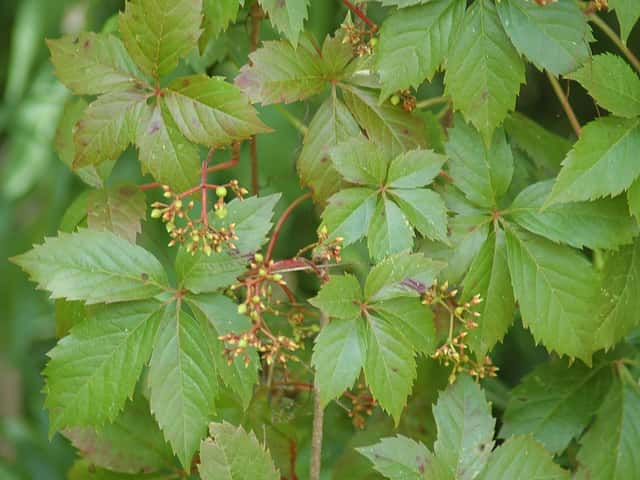
Virginia Creeper (Parthenocissus quinquefolia) is a vigorous deciduous climbing vine native to Eastern North America. Belonging to the grape family Vitaceae, it is celebrated for its stunning five-lobed leaves that transform from lush green in summer to a brilliant crimson in autumn. A fast-growing vine, it can reach up to 30 meters in the wild and clings to walls and trellises using adhesive-tipped tendrils. Its small dark blue-black berries attract birds, making it a valuable wildlife plant.
How to Propagate Virginia Creeper?
Stem Cutting
Use sharp, clean secateurs. Place a plastic bag over the cutting to maintain humidity. Check for root development by gently tugging after 4 weeks.
- 1 Take a 15–20 cm semi-hardwood cutting from new growth in summer
- 2 Remove lower leaves, leaving 2–3 leaves at the tip
- 3 Dip the cut end in rooting hormone powder
- 4 Insert into a pot with well-draining potting mix
- 5 Keep soil consistently moist and place in bright indirect light
- 6 Roots will develop in 4–6 weeks
Materials needed:
Ground Layering
Layering in autumn takes advantage of the plant going dormant, directing energy to root growth.
- 1 Select a long, flexible stem close to the ground
- 2 Wound the stem slightly at a node by scraping the bark
- 3 Bend the wounded section down to the soil and pin it down with a U-shaped wire
- 4 Cover with soil, leaving the stem tip exposed
- 5 Keep the soil moist until roots develop
- 6 Sever from the parent plant and transplant
Materials needed:
How Big Does Virginia Creeper Grow?
TLDR: Virginia Creeper can reach up to 30.0m tall with Fast growth rate.
Max height
30.0m
Spread
8.0m
Growth rate
Fast
Foliage
Deciduous
Warning: Toxic Plant
This plant can be toxic if ingested. Keep out of reach of:
Plant Uses
Ornamental
Great for decoration
Ground Cover
Soil coverage
Is your plant showing symptoms?
Click on the symptom to discover possible causes:
What Diseases Commonly Affect Virginia Creeper?
TLDR: Virginia Creeper is susceptible to 9 known diseases. Monitor regularly for early detection.
Anthracnose
Anthracnose is a fungal disease caused by fungi in the genus Colletotrichum that affects many plants, including vegetables, fruits, and trees. The disease thrives in cool, wet conditions, causing dark, sunken lesions on leaves, stems, flowers, and fruits.
Canker
Canker is a disease caused by various fungi and bacteria that create necrotic, sunken areas on bark of branches, stems, and trunks. Pathogens enter through wounds and natural openings, especially when plants are stressed. Canker can gradually weaken or kill branches by disrupting water and nutrient flow.
Leaf Spot
Leaf spot is a common fungal disease caused by various pathogens including Alternaria, Ascochyta, Colletotrichum, Septoria, and Venturia. It primarily affects leaves, causing discolored spots that can lead to premature leaf drop if left untreated.
Powdery Mildew
Powdery mildew is a common fungal disease caused by various fungi species including Erysiphe, Podosphaera, Oïdium, and Leveillula. It affects over 10,000 plant species worldwide. The disease thrives in warm, dry climates with high humidity and appears as a distinctive white powdery coating on plant surfaces.
Meaning & Symbolism
Virginia Creeper symbolizes freedom, resilience, and transformation. Its dramatic shift from green to fiery red in autumn represents the beauty of change and the passage of time. In American culture, it is associated with the wild spirit of the East Coast landscape.
Fun Facts
Virginia Creeper can cover an entire building facade within a few years, reaching lengths of 20–30 meters in the wild
Its adhesive tendril tips function like tiny suction cups, allowing it to climb smooth glass and masonry without any support
The dark blue-black berries are an important food source for over 35 bird species, including woodpeckers and thrushes
Despite its name, Virginia Creeper is native to a vast region from eastern Canada to Mexico and is not invasive in its native range
Frequently asked questions
Is Virginia Creeper toxic?
How fast does Virginia Creeper grow?
Does Virginia Creeper damage walls?
When should I prune Virginia Creeper?
Why is my Virginia Creeper not turning red in autumn?
Compare with similar plants
| Attribute | Difficulty | Light | Watering | Pet Safe |
|---|---|---|---|---|
| Field Maple | Easy | Bright indirect | 14d | ✓ |
| Silver Birch | Easy | Direct sun | 14d | ✓ |
| Common Blanketflower | Easy | Direct sun | 10d | ✓ |
| Cushion Bush | Easy | Direct sun | 14d | ✓ |





