Commelinaceae
Virginia Spiderwort (Tradescantia virginiana)
Tradescantia virginiana
Virginia Spiderwort is an easy-care native perennial that thrives with minimal attention. Water weekly, provide partial to full sun, and enjoy prolific blooms from spring through early summer. Cut back in midsummer when foliage becomes untidy to encourage fresh growth. Divide clumps every 2–3 years to maintain vigor.
Every 7 days
Bright indirect
10° - 32°C
40% - 70%
Categories
What is Virginia Spiderwort?
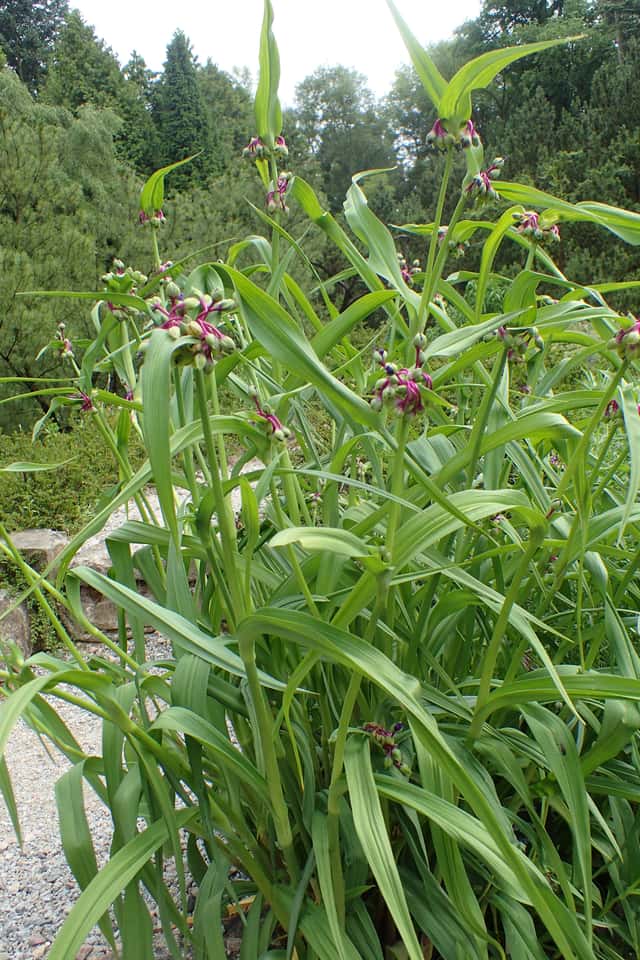
Virginia Spiderwort (Tradescantia virginiana) is a easy-care plant from the Commelinaceae family. Tradescantia virginiana, commonly known as Virginia Spiderwort, is a hardy native perennial from Eastern North America. It produces clumps of arching grass-like foliage and bears charming 3-petaled flowers in shades of blue, purple, pink, or white that open in the morning and close by afternoon. A r...
Virginia Spiderwort grows up to 90cm, spread of 45cm, watering every 7 days, 10°C – 32°C, 40–70% humidity. It is suitable for indoor environments and not safe for pets.
Unlike many tropical plants, Virginia Spiderwort tolerates watering mistakes. Best for beginners. Without precautions, ingestion can cause irritation in pets. Keep out of reach of cats and dogs. Without adequate drainage, root rot can develop within 14 days.
How to Care for Virginia Spiderwort?
TLDR: Virginia Spiderwort needs Bright indirect, watering every 7 days, and temperatures between 10-32°C with 40-70% humidity.
How Often Should You Water Virginia Spiderwort?
Water once a week or whenever the top inch of soil is dry. Tradescantia virginiana tolerates moist soils and wet conditions, making it ideal for rain gardens. Avoid prolonged drought, which causes leaf tip browning.
How Much Light Does Virginia Spiderwort Need?
Thrives in partial shade to full sun. In hotter climates, afternoon shade prolongs blooming and prevents leaf scorch. At least 3–4 hours of sunlight daily ensures healthy flowering.
What Is the Best Soil for Virginia Spiderwort?
Prefers loamy, fertile soil rich in organic matter with a pH of 6.0–8.0. Adapts well to clay and sandy soils. Ensure good drainage while maintaining consistent moisture.
What Pot Should You Use for Virginia Spiderwort?
Terracotta or ceramic pot with drainage holes; wide shallow containers suit its spreading habit outdoors.
Care Schedule
Fertilize
Every 30 days
Repot
Every 730 days
What Is Virginia Spiderwort and Where Does It Come From?
Tradescantia virginiana, commonly known as Virginia Spiderwort, is a hardy native perennial from Eastern North America. It produces clumps of arching grass-like foliage and bears charming 3-petaled flowers in shades of blue, purple, pink, or white that open in the morning and close by afternoon. A resilient groundcover perfect for naturalized gardens, shade gardens, rain gardens, and pollinator-friendly spaces.
How to Propagate Virginia Spiderwort?
Clump Division
Divide every 2-3 years to prevent overcrowding and maintain vigorous blooming.
- 1 Dig up the entire clump in early spring before new growth begins
- 2 Use a sharp spade to divide the clump into sections, each with several shoots and roots
- 3 Replant divisions at the same depth in prepared soil
- 4 Water thoroughly and keep moist until established
Materials needed:
Seed Propagation
Self-seeding is prolific — deadhead spent flowers to control spread.
- 1 Collect seeds after flowering in summer
- 2 Sow seeds in the garden in fall or stratify for 4-6 weeks in the refrigerator before spring sowing
- 3 Keep soil moist until germination
- 4 Thin seedlings to 12-18 inches apart
Materials needed:
How Big Does Virginia Spiderwort Grow?
TLDR: Virginia Spiderwort can reach up to 90cm tall with Medium growth rate.
Max height
90cm
Spread
45cm
Growth rate
Medium
Foliage
Deciduous
Warning: Toxic Plant
This plant can be toxic if ingested. Keep out of reach of:
Plant Uses
Ornamental
Great for decoration
Ground Cover
Soil coverage
Culinary Uses
- Young leaves and shoots can be eaten raw in salads or lightly cooked as a green vegetable
Is your plant showing symptoms?
Click on the symptom to discover possible causes:
What Diseases Commonly Affect Virginia Spiderwort?
TLDR: Virginia Spiderwort is susceptible to 8 known diseases. Monitor regularly for early detection.
Root Rot
Root rot is a serious fungal disease that affects the root system of plants, causing them to decay and die. It is primarily caused by overwatering, poor drainage, or soil-borne fungi such as Pythium, Phytophthora, Rhizoctonia, and Fusarium. The disease thrives in waterlogged conditions where roots are deprived of oxygen, making them susceptible to fungal infection.
Powdery Mildew
Powdery mildew is a common fungal disease caused by various fungi species including Erysiphe, Podosphaera, Oïdium, and Leveillula. It affects over 10,000 plant species worldwide. The disease thrives in warm, dry climates with high humidity and appears as a distinctive white powdery coating on plant surfaces.
Leaf Spot
Leaf spot is a common fungal disease caused by various pathogens including Alternaria, Ascochyta, Colletotrichum, Septoria, and Venturia. It primarily affects leaves, causing discolored spots that can lead to premature leaf drop if left untreated.
Aphids
Aphids are small, soft-bodied, pear-shaped insects (1/16 to 1/8 inch long) that feed by sucking nutrient-rich sap from plants. They reproduce rapidly and can quickly weaken plants, causing distorted growth and transmitting plant viruses. Aphids come in various colors including green, black, red, yellow, brown, and gray. They secrete honeydew, a sticky substance that attracts ants and encourages sooty mold growth.
Meaning & Symbolism
Virginia Spiderwort represents fleeting beauty and the ephemeral nature of life — each flower lasts only a single morning, a reminder to cherish the present moment.
Fun Facts
Each flower of Virginia Spiderwort lasts only a single morning — a trait so distinctive it earned the Dutch name \"Eendagsbloem,\" meaning \"one-day flower\"
Virginia Spiderwort is native to Eastern North America and was one of the first American plants introduced to European gardens in the 1600s
The stamens of Tradescantia have been used by scientists to study the effects of radiation and environmental pollution, as mutations in their hair cells are clearly visible
Virginia Spiderwort attracts native bees, bumblebees, and other pollinators, making it a valuable plant for wildlife gardens
Frequently asked questions
How often should I water Virginia Spiderwort?
Does Virginia Spiderwort spread aggressively?
Is Virginia Spiderwort toxic to pets?
When does Virginia Spiderwort bloom?
Can I grow Virginia Spiderwort indoors?
Compare with similar plants
| Attribute | Difficulty | Light | Watering | Pet Safe |
|---|---|---|---|---|
| Field Maple | Easy | Bright indirect | 14d | ✓ |
| Silver Birch | Easy | Direct sun | 14d | ✓ |
| Common Blanketflower | Easy | Direct sun | 10d | ✓ |
| Cushion Bush | Easy | Direct sun | 14d | ✓ |





