Rosaceae
Virginia Strawberry (Fragaria virginiana) - Native Edible Groundcover
Fragaria virginiana
Virginia Strawberry is a low-maintenance native perennial. Water every 2-3 days during dry spells, keep soil moist but well-drained, and fertilize lightly in spring. It spreads naturally via runners — simply remove them to control spread. Mulch around plants to retain moisture and suppress weeds.
Every 3 days
Bright indirect
-20° - 30°C
40% - 70%
Categories
What is Virginia Strawberry?
Virginia Strawberry (Fragaria virginiana) is a easy-care plant from the Rosaceae family. Fragaria virginiana, commonly known as the Virginia Strawberry or Wild Strawberry, is a native North American perennial groundcover belonging to the Rosaceae family. Found from Newfoundland to Georgia and westward to Oklahoma, it is one of the two parent species of the modern cultivated strawberry (...
Virginia Strawberry grows up to 23cm, spread of 60cm, watering every 3 days, -20°C – 30°C, 40–70% humidity. It is not suitable for indoor environments and safe for pets.
Unlike many tropical plants, Virginia Strawberry tolerates watering mistakes. Best for beginners. Unlike many popular species, Virginia Strawberry is safe to keep around pets.
How to Care for Virginia Strawberry?
TLDR: Virginia Strawberry needs Bright indirect, watering every 3 days, and temperatures between -20-30°C with 40-70% humidity.
How Often Should You Water Virginia Strawberry?
Water every 2-3 days during dry periods. Avoid overhead watering to prevent fungal diseases. Deep, infrequent watering encourages deeper root systems and greater drought tolerance. Keep soil consistently moist but never waterlogged.
How Much Light Does Virginia Strawberry Need?
Plant in full sun for best fruiting, though partial shade is tolerated. In hot climates, afternoon shade helps prevent summer dormancy and prolongs the productive season.
What Is the Best Soil for Virginia Strawberry?
Prefers organically rich, sandy loam or fertile loamy soil. Ensure good drainage to prevent root rot. Amend with compost before planting and mulch the surface to retain moisture and regulate soil temperature.
What Pot Should You Use for Virginia Strawberry?
Terracotta or ceramic containers with drainage holes work well for container growing. In garden beds, no pot is needed — allow runners to spread freely as groundcover.
Care Schedule
Fertilize
Every 60 days
What Is Virginia Strawberry and Where Does It Come From?
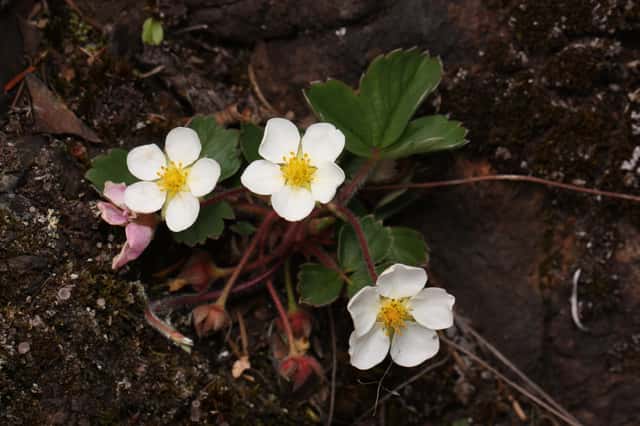
Fragaria virginiana, commonly known as the Virginia Strawberry or Wild Strawberry, is a native North American perennial groundcover belonging to the Rosaceae family. Found from Newfoundland to Georgia and westward to Oklahoma, it is one of the two parent species of the modern cultivated strawberry (Fragaria × ananassa). It forms low-growing colonies via stolons, producing small but intensely flavored red berries and delicate five-petaled white flowers in spring. It thrives in full sun to partial shade and is highly valued for erosion control, pollinator support, and edible landscaping.
How to Propagate Virginia Strawberry?
Runner Division
Divide in spring or early fall. Keep transplanted runners moist for the first two weeks. Runners root easily without any special treatment.
- 1 Identify healthy runners extending from the mother plant
- 2 Pin the runner node to moist soil with a small stake or stone
- 3 Wait 1-2 weeks until the new plantlet has rooted
- 4 Sever the runner from the mother plant and transplant if desired
Materials needed:
How Big Does Virginia Strawberry Grow?
TLDR: Virginia Strawberry can reach up to 23cm tall with Medium growth rate.
Max height
23cm
Spread
60cm
Growth rate
Medium
Foliage
Semi-evergreen
Plant Uses
Ornamental
Great for decoration
Edible
Can be consumed
Ground Cover
Soil coverage
Culinary Uses
- Small red berries are edible fresh and can be used in jams, preserves, desserts, salads, and infusions. The leaves can be dried and used to brew a mild herbal tea rich in vitamin C.
Is your plant showing symptoms?
Click on the symptom to discover possible causes:
What Diseases Commonly Affect Virginia Strawberry?
TLDR: Virginia Strawberry is susceptible to 9 known diseases. Monitor regularly for early detection.
Leaf Spot
Leaf spot is a common fungal disease caused by various pathogens including Alternaria, Ascochyta, Colletotrichum, Septoria, and Venturia. It primarily affects leaves, causing discolored spots that can lead to premature leaf drop if left untreated.
Gray Mold (Botrytis Blight)
Gray mold, caused by the fungus Botrytis cinerea, is a widespread necrotrophic pathogen affecting over 1,400 plant species. It thrives in cool, humid conditions and attacks weakened or aging plant tissues, causing soft rot and characteristic gray fuzzy growth.
Root Rot
Root rot is a serious fungal disease that affects the root system of plants, causing them to decay and die. It is primarily caused by overwatering, poor drainage, or soil-borne fungi such as Pythium, Phytophthora, Rhizoctonia, and Fusarium. The disease thrives in waterlogged conditions where roots are deprived of oxygen, making them susceptible to fungal infection.
Anthracnose
Anthracnose is a fungal disease caused by fungi in the genus Colletotrichum that affects many plants, including vegetables, fruits, and trees. The disease thrives in cool, wet conditions, causing dark, sunken lesions on leaves, stems, flowers, and fruits.
Meaning & Symbolism
In folklore, the wild strawberry symbolizes purity, righteousness, and the sweet rewards of virtue. Its heart-shaped fruits have made it an emblem of love and abundance in many cultures.
Fun Facts
Fragaria virginiana is one of the two wild species that gave rise to the modern cultivated strawberry, Fragaria × ananassa, through a natural hybrid with Fragaria chiloensis.
Its tiny fruits pack far more flavor intensity than commercial strawberries despite being only half an inch in diameter.
Wild Strawberry supports specialized native bees such as Andrena melanochroa that depend on it as a primary pollen source.
The plant can be used for erosion control on slopes and banks, forming dense colonies that stabilize soil through its stoloniferous growth.
Frequently asked questions
How often should I water Virginia Strawberry?
Is Virginia Strawberry toxic to pets?
How does Virginia Strawberry spread?
Can I grow Virginia Strawberry indoors?
When does Virginia Strawberry produce fruit?
Compare with similar plants
| Attribute | Difficulty | Light | Watering | Pet Safe |
|---|---|---|---|---|
| Field Maple | Easy | Bright indirect | 14d | ✓ |
| Silver Birch | Easy | Direct sun | 14d | ✓ |
| Common Blanketflower | Easy | Direct sun | 10d | ✓ |
| Cushion Bush | Easy | Direct sun | 14d | ✓ |





