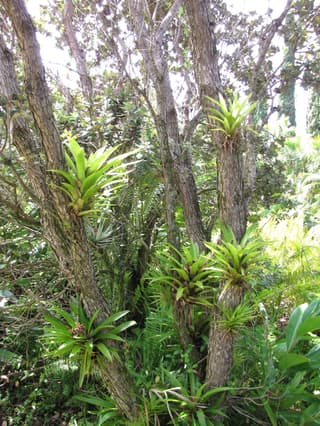
West Indian Tufted Airplant with Leaf Spots: Pet-Safe Treatment
Guzmania monostachia
West Indian Tufted Airplant is a plant that needs bright light and moderate watering. When showing leaf spots, it may indicate issues related to its environment or care.
Is your West Indian Tufted Airplant showing leaf spots? Discover 5 possible causes and how to treat them.
🔍 Possible Causes (5)
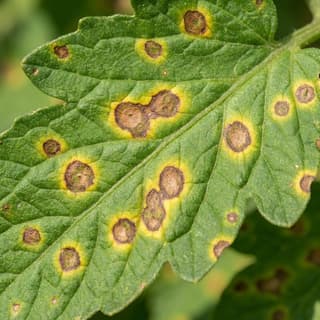
Leaf Spot
Leaf spot is a common fungal disease caused by various pathogens including Alternaria, Ascochyta, Colletotrichum, Septoria, and Venturia. It primarily affects leaves, causing discolored spots that can lead to premature leaf drop if left untreated.
✓ Related symptoms:
- • Circular brown, gray, black, or yellow spots on leaves
- • Spots with concentric rings or dark margins
- • Yellow halo surrounding spots
⚡ Quick Fixes:
Remove all visibly infected leaves
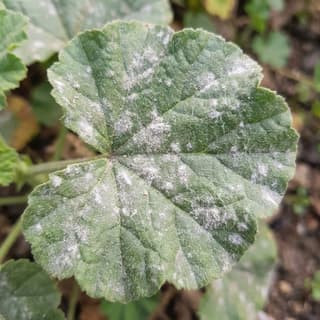
Powdery Mildew
Powdery mildew is a common fungal disease caused by various fungi species including Erysiphe, Podosphaera, Oïdium, and Leveillula. It affects over 10,000 plant species worldwide. The disease thrives in warm, dry climates with high humidity and appears as a distinctive white powdery coating on plant surfaces.
✓ Related symptoms:
- • White to gray powdery spots on leaves, stems, and buds
⚡ Quick Fixes:
Remove heavily infected areas
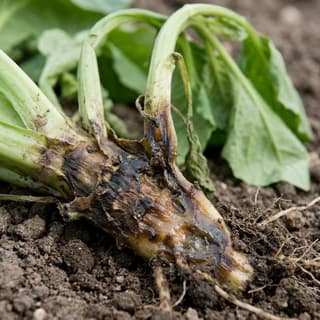
Crown Rot
Crown rot is a serious fungal disease that attacks the crown (base) of the plant where the stem meets the soil. It is caused by various fungal pathogens including Phytophthora, Fusarium, and Rhizoctonia. The disease thrives in waterlogged conditions and can quickly spread to kill the entire plant if not addressed promptly.
✓ Related symptoms:
- • Dark brown lesion girdling the main stem just above soil line
⚡ Quick Fixes:
Immediate unpotting
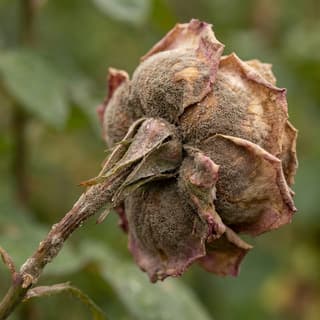
Gray Mold (Botrytis Blight)
Gray mold, caused by the fungus Botrytis cinerea, is one of the most common fungal diseases in plants. It affects over 200 plant species, including ornamentals, vegetables, fruits, and houseplants. The disease thrives in cool, humid conditions with poor air circulation, causing grayish spots and soft rot on infected tissues.
✓ Related symptoms:
- • Grayish colored soft, mushy spots on leaves, stems, and flowers
- • Brown to gray circular spots on leaves and petals
- • Water-soaked lesions that expand rapidly
⚡ Quick Fixes:
Remove and dispose of all visibly infected parts
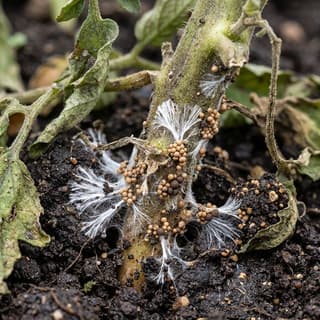
Southern Blight
Southern blight is a devastating soilborne fungal disease caused by Athelia rolfsii (formerly Sclerotium rolfsii), affecting over 500 plant species including vegetables, ornamentals, and fruit crops. The fungus survives in soil through resting structures called sclerotia that resemble mustard seeds and can remain viable for years.
✓ Related symptoms:
- • Brown to black lesions on stem near soil line
- • On fruits: sunken yellow lesions turning water-soaked
⚡ Quick Fixes:
Step 1