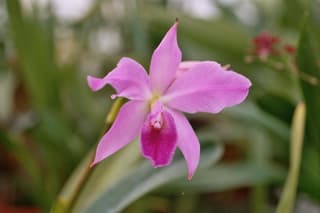
Cattleya Orchid with Root Rot: Pet-Safe Treatment
Cattleya spp
Cattleya Orchid is a plant that needs bright light and moderate watering. When showing root rot, it may indicate issues related to its environment or care.
Is your Cattleya Orchid showing root rot? Discover 7 possible causes and how to treat them.
🔍 Possible Causes (7)
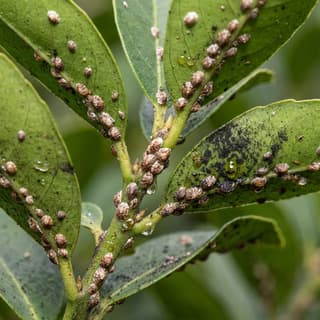
Scale Insects
Scale insects are small sap-sucking pests that appear as brown, shell-like bumps on plant stems and leaves. There are over 25 species, divided into armored (hard) and unarmored (soft) scales. They feed by piercing plant tissue and extracting sap, which weakens the plant and can lead to yellowing, stunted growth, and even death if left untreated. They also excrete honeydew, which attracts ants and promotes sooty mold growth.
✓ Related symptoms:
- • Yellowing or chlorotic (pale) leaves
⚡ Quick Fixes:
Step 1

Root Rot
Root rot is a serious fungal disease that affects the root system of plants, causing them to decay and die. It is primarily caused by overwatering, poor drainage, or soil-borne fungi such as Pythium, Phytophthora, Rhizoctonia, and Fusarium. The disease thrives in waterlogged conditions where roots are deprived of oxygen, making them susceptible to fungal infection.
✓ Related symptoms:
- • Foul, rotting odor from the root zone
⚡ Quick Fixes:
Emergency unpotting
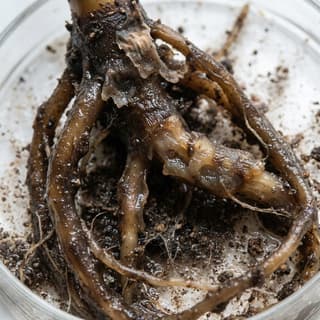
Pythium Root Rot
Pythium root rot is a serious fungal disease caused by various Pythium species including P. aphanidermatum, P. ultimum, and P. irregulare. These water molds are present in practically all cultivated soils and attack plant roots under wet conditions, causing rapid wet rot that can extend into the stem. The disease is favored by poor drainage, overwatering, and specific temperatures depending on the species.
✓ Related symptoms:
- • Dark brown to black wet rot of roots
- • Crown may turn brown-black with soft rot
⚡ Quick Fixes:
Step 1
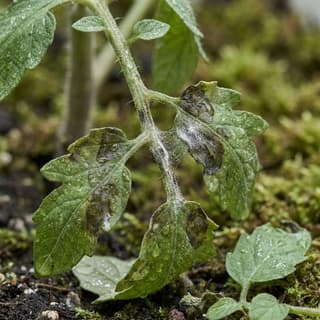
Phytophthora Blight
Devastating fungal disease caused by Phytophthora species (primarily P. capsici and P. infestans), famously responsible for the Irish Potato Famine in the 1840s. Affects all plant parts including roots, stems, leaves, and fruits in warm, wet conditions. The pathogen is technically an oomycete (water mold) that thrives in saturated soils and can survive in soil for 5+ years.
✓ Related symptoms:
- • Soft, water-soaked rot on fruit
- • Buckeye rot on tomatoes with concentric target-like pattern
⚡ Quick Fixes:
Immediately apply systemic fungicide (mefenoxam) as soil drench
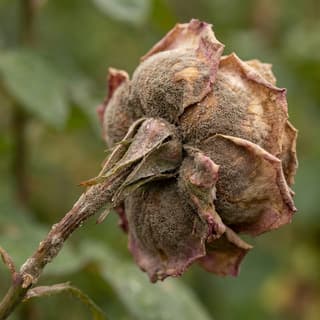
Gray Mold (Botrytis Blight)
Gray mold, caused by the fungus Botrytis cinerea, is one of the most common fungal diseases in plants. It affects over 200 plant species, including ornamentals, vegetables, fruits, and houseplants. The disease thrives in cool, humid conditions with poor air circulation, causing grayish spots and soft rot on infected tissues.
✓ Related symptoms:
- • Shriveled and rotted fruit or plant parts
- • Black, stone-like sclerotia under rotted parts
⚡ Quick Fixes:
Remove and dispose of all visibly infected parts
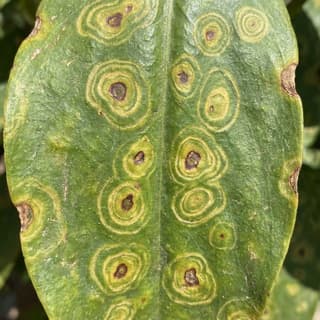
Ringspot Virus
Ringspot virus is a viral disease affecting various plant species, causing distinctive circular or ring-shaped chlorotic patterns on leaves and fruits. Transmitted primarily by aphids, nematodes, or through contaminated tools, this virus cannot be cured and infected plants must be managed carefully to prevent spread. The virus weakens plants, reduces yield, and can spread rapidly in gardens if not properly contained.
✓ Related symptoms:
- • Circular yellow or chlorotic rings on leaves (1/8" to 1/4" diameter)
- • Ring patterns that start pale yellow and may turn necrotic brown
⚡ Quick Fixes:
Emergency isolation NOW
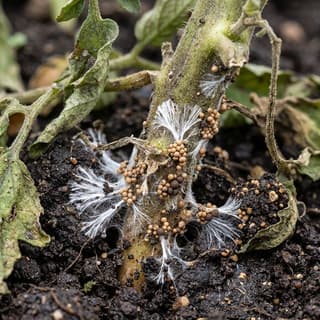
Southern Blight
Southern blight is a devastating soilborne fungal disease caused by Athelia rolfsii (formerly Sclerotium rolfsii), affecting over 500 plant species including vegetables, ornamentals, and fruit crops. The fungus survives in soil through resting structures called sclerotia that resemble mustard seeds and can remain viable for years.
✓ Related symptoms:
- • Spherical tan to reddish-brown sclerotia (1-2mm)
- • Crown and root rot
⚡ Quick Fixes:
Step 1