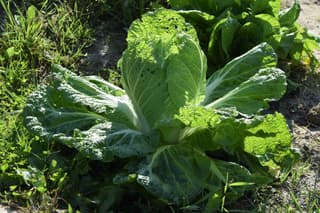
Chinese Cabbage with Leaf Spots: Pet-Safe Treatment
Brassica rapa pekinensis
Chinese Cabbage is a plant that needs bright light and frequent watering. When showing leaf spots, it may indicate issues related to its environment or care.
Is your Chinese Cabbage showing leaf spots? Discover 7 possible causes and how to treat them.
🔍 Possible Causes (7)
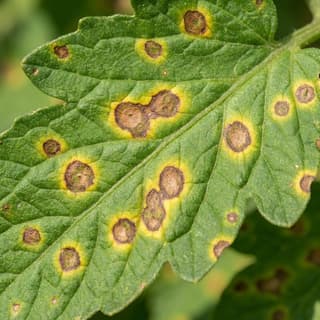
Leaf Spot
Leaf spot is a common fungal disease caused by various pathogens including Alternaria, Ascochyta, Colletotrichum, Septoria, and Venturia. It primarily affects leaves, causing discolored spots that can lead to premature leaf drop if left untreated.
✓ Related symptoms:
- • Circular brown, gray, black, or yellow spots on leaves
- • Spots with concentric rings or dark margins
- • Yellow halo surrounding spots
⚡ Quick Fixes:
Remove all visibly infected leaves
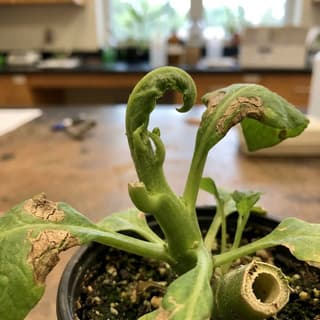
Boron Deficiency
Boron deficiency is a nutrient disorder that affects plant growth and development, particularly at growing points. Boron is essential for cell wall formation, reproductive development, and carbohydrate transport. While critical for plant health, boron has a narrow range between deficiency and toxicity, requiring careful management.
✓ Related symptoms:
- • Brown necrotic spots on leaf tips and margins
⚡ Quick Fixes:
Identify symptoms quickly
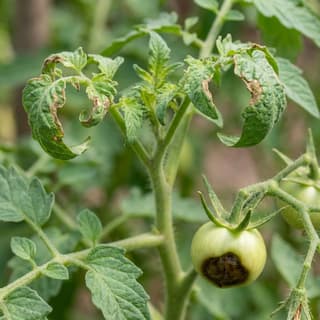
Calcium Deficiency
Calcium deficiency is a common plant disorder caused by insufficient bioavailable calcium in the growing medium or, more frequently, by low transpiration rates that prevent proper calcium transport to new growth. It manifests as necrotic leaf margins, curling of young leaves, stunted growth, and in severe cases, conditions like blossom end rot in fruits. The disorder primarily affects rapidly growing tissues where calcium demand is highest.
✓ Related symptoms:
- • Bitter pit on apples with brown spots
- • Cavity spot on carrots and root vegetables
⚡ Quick Fixes:
Step 1
Potassium Deficiency
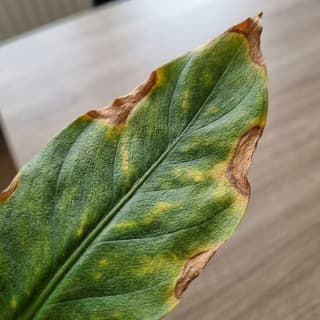
Potassium deficiency is a nutritional disorder that affects a plant's ability to regulate stomatal opening and closing, resulting in characteristic leaf edge burn. Potassium is a mobile nutrient, so symptoms first appear on older, lower leaves.
✓ Related symptoms:
- • Purple spots on leaf undersides
⚡ Quick Fixes:
Step 1
Damping Off
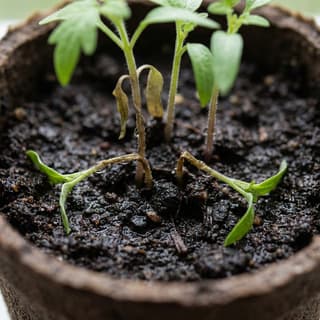
Damping off is a soil-borne fungal disease that affects seeds and young seedlings, causing rotting of stem and root tissues at and below the soil line. It is caused by several fungi including Pythium, Rhizoctonia, Fusarium, and Phytophthora. The disease thrives in cold, wet conditions with poor air circulation.
✓ Related symptoms:
- • Rotted roots with grayish-brown sunken spots
⚡ Quick Fixes:
Immediate Discard
Bacterial Soft Rot
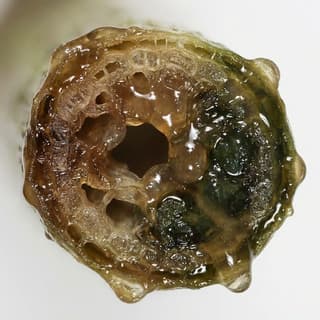
Bacterial soft rot is a destructive plant disease caused primarily by bacteria from the genera Pectobacterium (formerly Erwinia) and Dickeya. These bacteria produce enzymes that break down plant cell walls, causing rapid and foul-smelling tissue decomposition. It mainly affects succulent tissues such as tubers, fruits, stems, and bulbs, being especially problematic in warm and humid conditions.
✓ Related symptoms:
- • Water-soaked spots that progressively enlarge
- • Sunken lesions that expand rapidly
⚡ Quick Fixes:
Immediate Action - Isolation
Downy Mildew
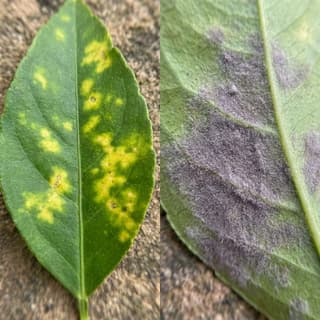
Downy mildew is a fungal-like disease caused by oomycetes (water molds) that thrives in cool, wet conditions. It affects a wide range of plants, causing yellowing leaves with fuzzy white-gray growth underneath, leading to defoliation and reduced yields if left untreated.
✓ Related symptoms:
- • Small green or yellow translucent spots on leaves
⚡ Quick Fixes:
Remove and destroy all infected plant parts. For severe infections, remove entire plant.