Whitefly — Plant Disease
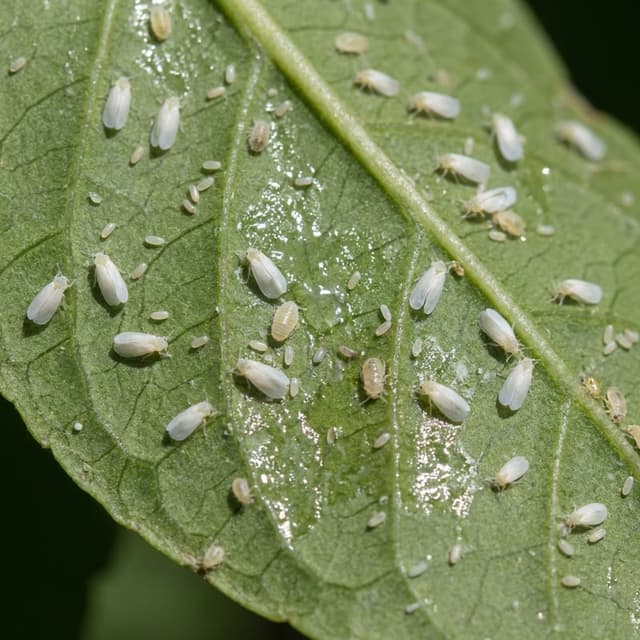
Whiteflies (family Aleyrodidae) are tiny, sap-sucking insects that thrive in warm, still air. They are common on houseplants, greenhouse crops, and garden plants such as tomatoes, peppers, cucumbers, fuchsias, hibiscus, poinsettias, citrus, and many herbs. You’ll often see small white adults flutter up when you touch the plant, sticky honeydew on leaves or nearby surfaces, black sooty mould growing on that honeydew, and leaves that yellow, curl, or drop. Check the undersides of leaves for pale, scale-like nymphs and tiny eggs laid in small arcs. Heavy infestations weaken plants and slow growth.
What is Whitefly?
Whitefly is a pest condition with moderate severity that affects plants. Whiteflies (family Aleyrodidae) are tiny, sap-sucking insects that thrive in warm, still air. They are common on houseplants, greenhouse crops, and garden plants such as tomatoes, peppers, cucumbers, fuchsias, hibiscus, poinsettias, citrus, and many herbs. You’ll often see small white adults flutter...
Whitefly is a pest disease with moderate severity.
Unlike fungal diseases, Whitefly can be controlled quickly with integrated management. Without immediate action, the infestation spreads to nearby plants. Unlike many common diseases, Whitefly is not contagious between plants.
🧪 Natural vs Chemical: Which Treatment Works for Whitefly?
🌱 Natural Solutions
- ✓ Isolate infested plants right away.
- ✓ Rinse foliage thoroughly, especially leaf undersides, with a firm but gentle stream of water, and repeat weekly.
- ✓ Use yellow sticky cards near the plant tops to catch adults and monitor activity.
- ✓ Prune and discard heavily infested leaves, and seal them in a bag before binning.
- ✓ Wipe off honeydew and sooty mould with a damp cloth so leaves can photosynthesise.
- ✓ Improve airflow and avoid hot, stagnant spots, and use a small fan indoors or in greenhouses.
- ✓ Avoid excess nitrogen fertiliser, which encourages tender growth that pests prefer.
- ✓ In enclosed spaces, release beneficials such as Encarsia formosa or Eretmocerus eremicus (tiny parasitic wasps) or lacewing larvae, and follow supplier guidance for temperature and timing.
💉 Chemical Solutions
- ✓ Use chemicals only if physical and biological steps don’t control the problem, aim for full coverage of leaf undersides and repeat every 5–7 days for 2–3 rounds to catch newly hatched nymphs.
- ✓ Apply insecticidal soap (potassium salts of fatty acids).
- ✓ Apply horticultural oils (light mineral/paraffinic or plant-based oils) when plants are not heat-stressed.
- ✓ Apply neem-derived products (azadirachtin or neem oil) for nymphs and eggs.
- ✓ Use spinosad for tougher infestations, apply sparingly and avoid spraying when beneficial insects are active.
🛡️ How to Prevent Whitefly?
TLDR: Prevent Whitefly with 7 essential care practices. Regular monitoring is key for early detection.
- ✓ Inspect new plants and keep them separate for 2–3 weeks before adding to your collection.
- ✓ Space plants for good airflow and avoid hot, stuffy corners.
- ✓ Check the undersides of leaves weekly and keep a few yellow sticky cards up as early warning.
- ✓ Water and feed consistently but avoid over-fertilising with nitrogen.
- ✓ Clean tools, pots, shelves, and remove plant debris and nearby weeds that can host pests.
- ✓ Outdoors, use reflective (silver) mulch to deter adults and rotate crops with non-host plants.
- ✓ Check overwintered plants before bringing them indoors and treat early if you see signs.
🔗Related Diseases
Woolly Beech Aphid
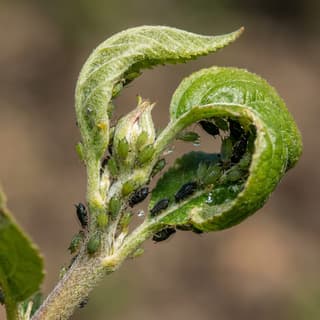
Phyllaphis is a genus of woolly aphids that primarily attack beech (Fagus), typically common beech and copper beech in hedges and as trees. They suck plant sap from young shoots and the undersides of leaves in spring and early summer. Signs of infestation include curled or rolled leaves, sticky honeydew, black sooty mold, and a white, cottony coating around the colonies. The plants usually survive, but heavy infestations can weaken new growth and make the hedge sticky and unsightly. The aphids often overwinter as eggs on thin twigs near buds.
Flea beetle damage
MediumFlea beetles are small, jumping insects that feed on the leaves of many vegetable crops. They chew numerous small, circular holes, creating a characteristic 'shothole' appearance. While established plants can often tolerate the damage, young seedlings are highly susceptible and can be stunted or killed if the infestation is severe.
Woolly Aphid
Prociphilus is a genus of woolly aphids that feed by sucking sap from plants. They produce a fluffy, white, cotton-like coating on leaves, shoots, or sometimes roots. Signs include sticky honeydew, black sooty mold growing on the honeydew, leaf curling or distortion, and clusters of tiny, soft-bodied insects hidden in the "wool." Ants are often active around them because they feed on the honeydew. These aphids commonly affect alder and maple (woolly alder aphid) and ash (woolly ash aphid). They rarely kill established trees, but they can stress young plants and create a messy, sticky problem.
Scale Insects
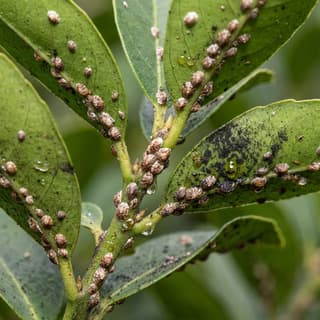
MediumScale insects are small sap-sucking pests that appear as brown, shell-like bumps on plant stems and leaves. There are over 25 species, divided into armored (hard) and unarmored (soft) scales. They feed by piercing plant tissue and extracting sap, which weakens the plant and can lead to yellowing, stunted growth, and even death if left untreated. They also excrete honeydew, which attracts ants and promotes sooty mold growth.