Sweet Basil with Bacterial Leaf Spot: Prevention & Cure
Ocimum basilicum
Bacterial Leaf Spot on Sweet Basil: What to Know?
Bacterial Leaf Spot on Sweet Basil (Ocimum basilicum) is a bacterial condition with moderate severity. Sweet Basil has moderate susceptibility to this disease. Bacterial leaf spot is a plant disease caused by bacteria in the Xanthomonas and Pseudomonas genera that affects various ornamental and edible plants. The bacteria infect leaves through wounds or natu...
Sweet Basil is a easy-care plant. Recovery from Bacterial Leaf Spot takes approximately 14 days with proper treatment. As an indoor plant, ensure good ventilation to aid recovery.
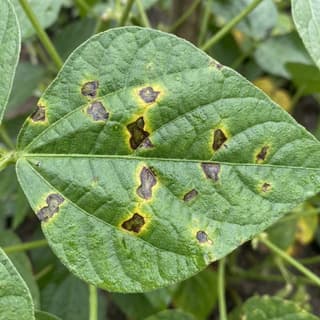
🔍 What Does Bacterial Leaf Spot Look Like on Sweet Basil?
- • Small water-soaked spots on leaves
- • Brown or black lesions with yellow halos
- • Spots usually uniform in size
- • Black-edged lesions
- • Spots enlarge and merge under wet conditions
- • Leaf yellowing and wilting
- • Premature leaf drop
- • Foliage appears wet or greasy in affected areas
❓ What Causes Bacterial Leaf Spot on Sweet Basil?
- → Infection by Xanthomonas campestris or Pseudomonas syringae bacteria
- → Wet and cool conditions (77-86°F / 25-30°C) favor bacterial growth
- → Water splashing spreads bacteria from leaf to leaf
- → Contaminated tools or dirty hands after handling infected plants
- → Bacteria surviving on plant debris in soil
- → Infected seeds or seedlings
- → Poor air circulation and high humidity
- → Overhead watering that wets foliage
💊 How to Treat Bacterial Leaf Spot on Sweet Basil?
TLDR: Treat Bacterial Leaf Spot on Sweet Basil with quick treatment (~7 days) or organic (~14 days). Sweet Basil has moderate susceptibility to this disease.
Quick Fixes
Remove infected leaves
Remove infected leaves
Apply copper-based fungicide
Apply copper-based fungicide
Adjust environmental conditions
Adjust environmental conditions
Second fungicide application
Second fungicide application
Final assessment
Final assessment
Organic Treatment
Remove all infected leaves and destroy (do not compost)
Remove all infected leaves and destroy (do not compost)
Improve air circulation
Improve air circulation
First application of Bordeaux mixture
First application of Bordeaux mixture
Apply baking soda spray
Apply baking soda spray
Second application of Bordeaux mixture
Second application of Bordeaux mixture
Apply neem oil
Apply neem oil
Third application of Bordeaux mixture
Third application of Bordeaux mixture
Assess progress and maintain prevention
Assess progress and maintain prevention
🛡️ How to Prevent Bacterial Leaf Spot on Sweet Basil?
TLDR: Prevent Bacterial Leaf Spot on Sweet Basil with 10 essential preventive care practices.
- ✓ Use certified disease-free seeds and seedlings
- ✓ Provide good air circulation between plants
- ✓ Avoid overhead watering; water at plant base
- ✓ Do not handle plants when foliage is wet
- ✓ Practice crop rotation (minimum 3 years)
- ✓ Remove and destroy infected leaves immediately
- ✓ Sterilize tools between uses with 70% alcohol
- ✓ Avoid excessive nitrogen fertilization
- ✓ Keep area free of plant debris
- ✓ Wash hands after handling diseased plants
🌱 How to Care for Sweet Basil to Prevent Bacterial Leaf Spot?
💧 How to Water
Water every 2-3 days, keeping soil slightly moist but well-drained. Avoid overwatering — excess moisture promotes root rot and downy mildew. Water in the morning at the base of the plant.
☀️ Lighting
Requires full sun for at least 6 hours daily. Indoors, place near south-facing windows or use grow lights. Insufficient light produces small, flavorless leaves.
🪴 Ideal Soil
Use light, fertile, well-draining soil with pH between 6.0 and 7.5. Add organic matter to enrich. Avoid heavy clay soils that retain excess moisture.
Frequently asked questions
Can Bacterial Leaf Spot kill my Sweet Basil?
How long does Sweet Basil take to recover from Bacterial Leaf Spot?
Is Bacterial Leaf Spot contagious to other plants near Sweet Basil?
Sources & References
- Bacterial Leaf Spot Disease - What Causes Bacterial Leaf Spot | Gardening Know How
- Bacterial Leaf Spot: Identify, Prevent and Treat it
- Bacterial and Fungal Leaf Spot | Planet Natural
- Bacterial spot of tomato and pepper | UMN Extension
- Bacterial Leaf Spot on Greenhouse Ornamentals | NC State Extension
- Jardineiro.net - Manjericão
- PictureThis - Manjericão
- UMD Extension - Fusarium Wilt Basil
- ASPCA - Basil Toxicity