Boron Deficiency: How to Identify & Treat Fast
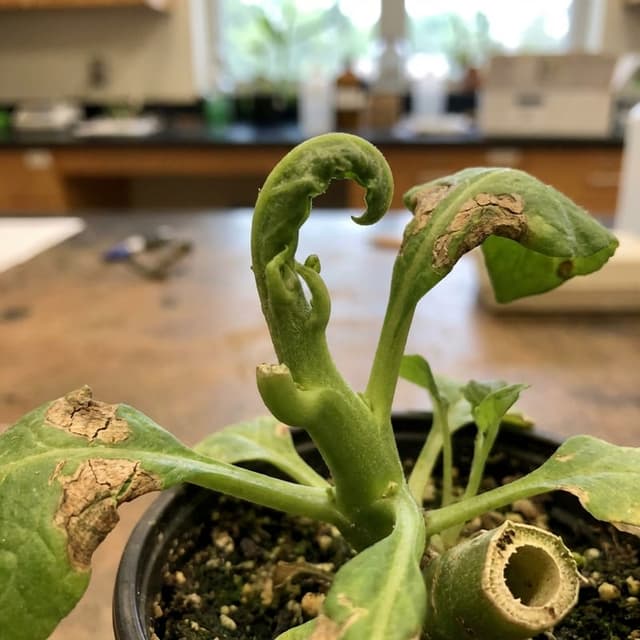
Boron deficiency is a nutrient disorder that affects plant growth and development, particularly at growing points. Boron is essential for cell wall formation, reproductive development, and carbohydrate transport. While critical for plant health, boron has a narrow range between deficiency and toxicity, requiring careful management.
Slow
35 days
What is Boron Deficiency?
Boron Deficiency is a nutrient_deficiency condition with moderate severity that affects plants. Boron deficiency is a nutrient disorder that affects plant growth and development, particularly at growing points. Boron is essential for cell wall formation, reproductive development, and carbohydrate transport. While critical for plant health, boron has a narrow range between deficiency and toxici...
Boron Deficiency is a nutrient_deficiency disease with moderate severity that spreads at a slow rate. Recovery typically takes approximately 35 days with proper treatment. It affects 8 plant species in our database.
Unlike many common diseases, Boron Deficiency is not contagious between plants.
🔍 What Are the Symptoms of Boron Deficiency?
TLDR: Boron Deficiency presents 8 main symptoms. Early identification is crucial for effective treatment.
Main Symptoms
- ! Dying or brown growing tips and terminal buds
- ! Stunted, bushy growth with shortened stem segments
- ! Young leaves become thick, brittle, wrinkled or distorted
- ! Yellowing (chlorosis) of young foliage
- ! Brown necrotic spots on leaf tips and margins
- ! Poor root development with stubby, thickened roots
- ! Flower abortion and poor fruit set
- ! Hollow stems or internal browning in severe cases
Visual Signs
❓ What Causes Boron Deficiency in Plants?
- → Low boron levels in soil or growing medium
- → High pH conditions (above 6.5) that reduce boron availability
- → Sandy or heavily leached soils with low organic matter
- → Drought or low soil moisture preventing boron uptake
- → Excessive calcium or potassium interfering with boron absorption
- → Cold soil temperatures limiting nutrient uptake
💊 How to Treat Boron Deficiency?
TLDR: Treat Boron Deficiency with 21 days of quick treatment or 35 days of organic treatment. Full recovery takes approximately 35 days.
Quick Fixes
~21 days
Identify symptoms quickly
Confirm dying growing tips, stunted bushy growth, and brittle leaves indicate boron deficiency.
Check soil pH
Use pH meter or test strips. If pH is above 6.5, boron is locked up.
Prepare foliar spray
Mix 1/4 teaspoon of borax per gallon of water. Add a drop of dish soap as surfactant.
Apply foliar spray
Spray leaf surfaces (especially undersides) early morning or evening. Foliar application provides fast uptake.
Soil drench application
Mix 1 teaspoon borax per gallon water and drench root zone. Use 1 cup per plant for containers, more for garden beds.
Flush with water
After 2-3 days, water plants thoroughly to distribute boron and prevent localized toxicity.
Monitor response
Watch new growth over 1-2 weeks. If improvement stalls, consider pH adjustment or reapplication.
Materials needed:
Organic Treatment
~35 days
Confirm deficiency
Examine symptoms carefully: dying growing tips, thick brittle leaves, and poor flowering indicate boron deficiency.
Test pH levels
Check soil or growing medium pH. If above 6.5, boron is likely locked up and unavailable.
Adjust pH naturally
If pH is high, apply sulfur or organic acidifiers to bring pH down to 5.5-6.5 range.
Apply compost
Work 2-3 inches of well-aged compost into soil or top-dress container plants. Compost provides slow-release boron.
Apply kelp or seaweed
Water with liquid kelp or seaweed extract (follow label rates). These are naturally rich in boron and other trace minerals.
Prepare borax solution
Dissolve 1 teaspoon of household borax in 1 gallon of water. This creates a safe, dilute boron solution.
Apply borax carefully
Water plants with borax solution once, using about 1 cup per square foot. Do NOT over-apply as boron toxicity is easy to cause.
Ensure proper watering
Keep soil consistently moist (not waterlogged). Boron uptake requires adequate moisture.
Monitor new growth
Watch for healthier new leaves and growing tips over the next 2-4 weeks. Recovery is gradual.
Materials needed:
Expert Treatment
~42 days
Comprehensive diagnosis
Conduct soil or tissue test to confirm boron deficiency and rule out other nutrient issues. Measure exact pH and boron levels.
pH adjustment protocol
If pH exceeds 6.5, apply elemental sulfur or acidifying fertilizers to bring pH to 5.5-6.5 range. Calculate rate based on soil test.
Select appropriate boron source
Choose soluble boron product: Solubor (20.5% B), boric acid (17% B), or borax (11% B). Calculate precise application rate based on deficiency severity.
Apply soil amendment
Apply boron at 0.5-2 lbs actual boron per acre (adjust for container or small area). Band application near root zone is most effective.
Foliar application
Prepare foliar spray at 0.1-0.2% boron concentration. Apply 2-3 times at 10-day intervals for faster uptake. Spray early morning.
Enhance soil conditions
Incorporate organic matter to improve boron retention. Ensure adequate drainage and aeration. Maintain consistent moisture.
Optimize nutrient balance
Ensure calcium and potassium are balanced. Excessive Ca or K can interfere with boron uptake. Adjust fertilization accordingly.
Monitor response weekly
Inspect new growth weekly for improvement. Healthy new leaves and active growing tips indicate recovery.
Retest after 4-6 weeks
Conduct follow-up tissue or soil test to confirm boron levels are in optimal range. Avoid over-correction.
Implement preventive program
Include boron in regular fertilization program at maintenance rates. Monitor pH quarterly. Apply boron annually if needed.
Step by Step
- 1
Test soil or tissue to confirm boron deficiency
- 2
Adjust soil pH to 5.5-6.5 if too alkaline
- 3
Apply appropriate boron source at recommended rate
- 4
Ensure adequate moisture for boron uptake
- 5
Monitor new growth for improvement over 2-3 weeks
- 6
Retest after 4-6 weeks to avoid over-application
- 7
Adjust future fertilization to include trace minerals
🧪 Natural vs Chemical: Which Treatment Works for Boron Deficiency?
🌱 Natural Solutions
- ✓ Add well-aged compost which provides slow-release boron
- ✓ Apply kelp meal or seaweed extracts rich in trace minerals
- ✓ Use organic liquid fertilizers containing boron naturally
- ✓ Incorporate manure compost that contains adequate boron
- ✓ Apply borax solution at very low concentrations (0.1-0.5 oz per gallon)
- ✓ Improve soil drainage and aeration to enhance uptake
💉 Chemical Solutions
- ✓ Apply soluble boron (borax, boric acid, or solubor) to soil
- ✓ Use foliar spray of boron at 0.5-0.75 lbs boron per acre
- ✓ Apply micronutrient fertilizers containing 0.02-0.1% boron
- ✓ Use boron-fortified NPK fertilizers for routine feeding
- ✓ Drench root zone with diluted boron solution
- ✓ Apply chelated micronutrient blends including boron
Treatment Comparison
| Type | Estimated time | Steps | Difficulty | Best For |
|---|---|---|---|---|
| ⚡Quick | ~21 days | 7 | Advanced | Urgent cases |
| 🌿Organic | ~35 days | 9 | Advanced | Indoor plants |
| 🔬Expert | ~42 days | 10 | Advanced | Severe infections |
🛡️ How to Prevent Boron Deficiency?
TLDR: Prevent Boron Deficiency with 6 essential care practices. Regular monitoring is key for early detection.
- ✓ Maintain soil pH between 5.0-6.5 for optimal boron availability
- ✓ Incorporate organic matter (compost) to improve boron retention
- ✓ Ensure consistent moisture levels; avoid prolonged drought
- ✓ Test soil regularly and apply boron only when needed
- ✓ Avoid over-liming which raises pH and locks up boron
- ✓ Use balanced fertilizers that include micronutrients
🔗Related Diseases
Phosphorus Deficiency
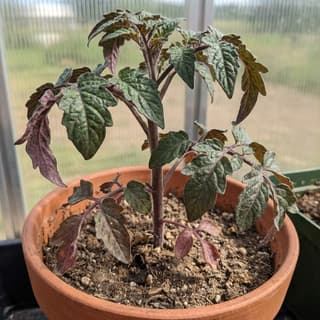
MediumPhosphorus deficiency is a common nutritional problem that hinders healthy plant growth. Phosphorus is essential for root development, flowering, fruiting, and energy metabolism. When deficient, plants exhibit stunted growth and leaves with purple or reddish coloration, especially on older leaves.
Potassium Deficiency
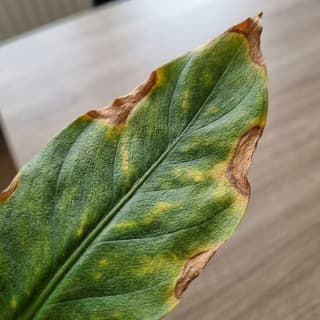
MediumPotassium deficiency is a nutritional disorder that affects a plant's ability to regulate stomatal opening and closing, resulting in characteristic leaf edge burn. Potassium is a mobile nutrient, so symptoms first appear on older, lower leaves.
Iron Deficiency
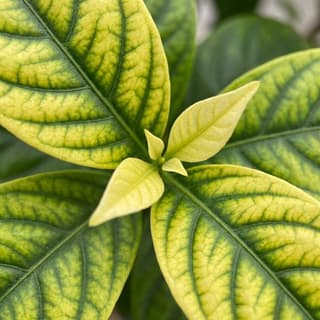
MediumIron deficiency, commonly known as iron chlorosis, is a nutrient deficiency disorder where plants cannot access sufficient iron from the soil. While iron is typically abundant in soil, various soil conditions can limit plant uptake, resulting in characteristic yellowing of leaves while veins remain green.
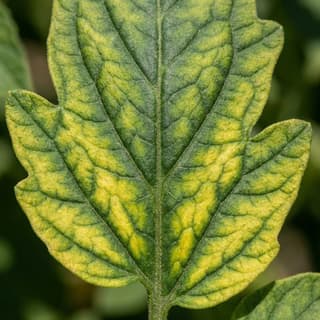
Magnesium Deficiency
MediumMagnesium deficiency is a nutrient disorder characterized by interveinal chlorosis, where leaf tissue between veins turns yellow while the veins remain green. This deficiency affects older leaves first as magnesium is a mobile nutrient that plants relocate to support new growth. Magnesium is essential for chlorophyll production and photosynthesis, making this deficiency critical for plant health.