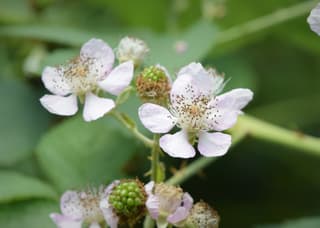
Himalayan Blackberry with Botrytis: Prevention & Cure
Rubus armeniacus
Botrytis on Himalayan Blackberry: What to Know?
Botrytis on Himalayan Blackberry (Rubus armeniacus) is a fungal condition with moderate severity. Himalayan Blackberry has moderate susceptibility to this disease.
Himalayan Blackberry is a easy-care plant.
Unlike bacterial infections, Botrytis on Himalayan Blackberry can be managed with organic fungicides.
🌱 How to Care for Himalayan Blackberry to Prevent Botrytis?
💧 How to Water
Water newly planted canes every 3–7 days during the first growing season. Once established, Himalayan Blackberry is remarkably drought-tolerant and rarely needs supplemental irrigation except during extended dry spells. Overwatering can promote root rot, so allow the soil to partially dry between waterings.
☀️ Lighting
Provide full sun (6 or more hours of direct sunlight per day) for the best fruit production. The plant tolerates partial shade but will produce fewer and smaller berries. Avoid deep shade, which encourages leggy growth and increases susceptibility to powdery mildew.
🪴 Ideal Soil
Himalayan Blackberry adapts to a wide range of soils including sandy, loamy, and clay textures. It prefers well-drained, moderately fertile loam with a slightly acidic to neutral pH (5.5–7.0). It can colonise poor, disturbed, or nutrient-deficient soils, which contributes to its invasive success. Improve drainage in clay-heavy sites by incorporating coarse sand or organic matter before planting.