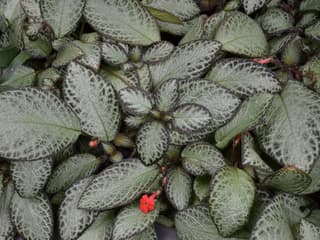
Flame Violet Prone to Botrytis: How to Protect
Episcia reptans
Botrytis on Flame Violet: What to Know?
Botrytis on Flame Violet (Episcia reptans) is a fungal condition with moderate severity. Flame Violet has high susceptibility to this disease.
Flame Violet is a easy-care plant. As an indoor plant, ensure good ventilation to aid recovery.
Flame Violet is highly susceptible to Botrytis, unlike most plants in the same family. Unlike bacterial infections, Botrytis on Flame Violet can be managed with organic fungicides.
🌱 How to Care for Flame Violet to Prevent Botrytis?
💧 How to Water
Water when the top 1 inch of soil begins to dry out, roughly every 7 days. Always use room-temperature water — cold water causes white spots on leaves. Bottom watering is recommended: place the pot in a saucer of water for up to 30 minutes, then drain.
☀️ Lighting
Place in bright indirect light within 3-4 feet of an east- or west-facing window. Avoid direct sun, which scorches and bleaches the foliage. The plant tolerates medium light but will produce fewer flowers.
🪴 Ideal Soil
Use a light, well-draining, organic-rich mix: combine equal parts peat moss (or coco coir), fine vermiculite, and perlite. Ideal pH is 5.5-6.5. Never let roots sit in standing water.