Canker: Fungal Disease | Treatment Guide
Canker is a disease caused by various fungi and bacteria that create necrotic, sunken areas on bark of branches, stems, and trunks. Pathogens enter through wounds and natural openings, especially when plants are stressed. Canker can gradually weaken or kill branches by disrupting water and nutrient flow.
Slow
90 days
What is Canker?
Canker is a fungal condition with high severity that affects plants. Canker is a disease caused by various fungi and bacteria that create necrotic, sunken areas on bark of branches, stems, and trunks. Pathogens enter through wounds and natural openings, especially when plants are stressed. Canker can gradually weaken or kill branches by disrupting water and nutrient...
Canker is a fungal disease with high severity that spreads at a slow rate. Recovery typically takes approximately 90 days with proper treatment. It affects 10 plant species in our database. This condition is contagious and can spread between plants.
Unlike bacterial infections, Canker spreads slowly but is harder to eradicate. Without treatment, affected leaves won't recover. Not recommended to ignore early signs. Without early intervention, recovery can take twice as long. Without isolation, nearby plants can become infected within days.
🔍 What Are the Symptoms of Canker?
TLDR: Canker presents 10 main symptoms. Early identification is crucial for effective treatment.
Main Symptoms
- ! Sunken, discolored lesions on bark
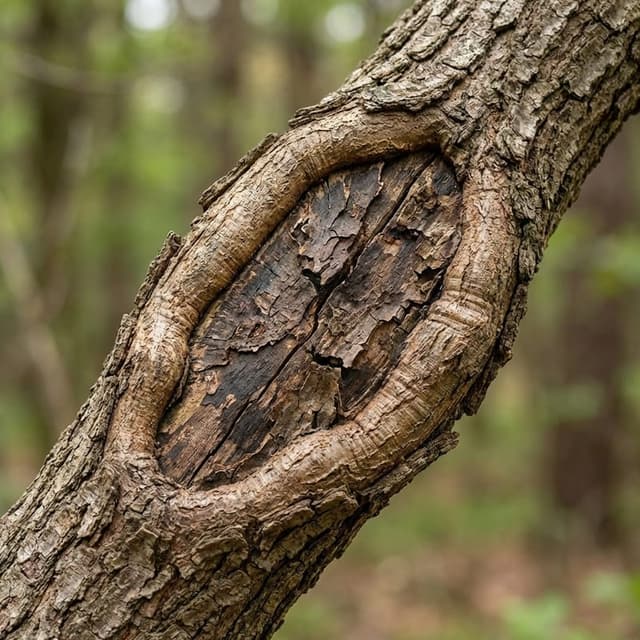
- ! Oval to elongate dark areas on stems and branches
- ! Bark splitting and cracking
- ! Sap or resin oozing from infected areas
- ! Blackened inner bark tissue
- ! Progressive branch dieback beyond lesion
- ! Wilting foliage above infection site
- ! Small raised fruiting bodies on bark surface
- ! Complete girdling of stems and branches
- ! Yellowed, curled, or sparse foliage
Visual Signs
❓ What Causes Canker in Plants?
- → Fungal infection by Cytospora, Phomopsis, Nectria, and Botryosphaeria genera
- → Bacterial infection by Pseudomonas syringae
- → Pathogen entry through pruning wounds, mechanical damage, or insect injuries
- → Plant stress from drought, transplanting, or winter damage
- → Extreme temperatures and adverse environmental conditions
- → Improper cultural practices weakening the plant
- → Bark wounds serving as entry points for pathogens
- → Poor species selection for local conditions
💊 How to Treat Canker?
TLDR: Treat Canker with 45 days of quick treatment or 90 days of organic treatment. Full recovery takes approximately 90 days.
Quick Fixes
~45 days
Identify and mark all branches with canker
Use colored tape to mark affected areas
Prune infected branches 6-8 inches below lesion
Use sterilized tools; do on dry day
Immediately apply copper fungicide to wounds
Copper-based products are most effective
Dispose of all infected material in sealed trash
Do not leave on ground or compost
Spray systemic fungicide on entire plant
Thiophanate-methyl or propiconazole
Second systemic fungicide application
Follow label instructions
Inspect for new symptoms
Prune immediately if finding new cankers
Final evaluation and preventive application
Continue monthly monitoring
Materials needed:
Organic Treatment
~90 days
Carefully inspect entire plant identifying all cankers
Use flashlight to examine bark for sunken lesions
Prepare clean pruning tools and 70% alcohol for sterilization
Sharp pruning shears and saw for larger branches
Prune all infected branches 6-8 inches below visible lesion
Do on dry day; sterilize between cuts
Apply bordeaux paste to pruning wounds
Protects against reinfection
Dispose of infected material in sealed trash
Do not compost diseased material
Spray neem oil on entire plant
Apply in late afternoon; repeat every 14 days
Apply compost tea to soil around plant
Strengthens immune system
Second neem oil application
Continue biweekly for 2 months
Inspect for new cankers and prune if necessary
Monitor especially areas near old lesions
Evaluate overall health and adjust irrigation and fertilization
Reduce stress to prevent recurrence
Final inspection and preventive bordeaux mixture application
Apply before rainy periods
Continuously monitor and maintain proper cultural practices
Prevention is the best strategy
Materials needed:
Expert Treatment
~135 days
Complete diagnosis: identify specific pathogen if possible
Send sample to lab for causal agent identification
Map and document all lesions with photos and location
Create detailed record for monitoring
Strategic pruning: remove severely affected branches
Cut 8-12 inches below lesion; sterilize between cuts
Scrape superficial trunk cankers to healthy tissue
Only for accessible cankers; constantly disinfect tool
Apply specific fungicide/bactericide to wounds
Use specific product based on lab diagnosis
Implement drip irrigation to reduce stress
Maintain consistent moisture without waterlogging
Systemic fungicide application via foliar spray
Thiophanate-methyl + propiconazole tank mix
Soil analysis and pH and nutrient adjustment
Correct deficiencies that may be stressing plant
Second round of pruning emerging new cankers
Continue rigorous sterilization protocol
Application of biostimulants and humic acids
Strengthens plant immune response
Complete reassessment: compare with initial documentation
Adjust strategy based on progression
Preventive application of copper + sulfur
Before rainy period or active growth
Trunk injection of systemic fungicide (if available)
Professional procedure for severe cases
Intensive monitoring and maintenance pruning
Remove any new symptom immediately
Final evaluation and establishment of annual preventive protocol
Document lessons learned and maintenance schedule
Step by Step
- 1
1. Identify all branches with canker symptoms during careful inspection
- 2
2. Sterilize pruning tools with 70% alcohol before starting
- 3
3. Cut infected branches 6-8 inches below visible canker area
- 4
4. Make clean angled cuts to facilitate water drainage
- 5
5. Sterilize tool between each cut
- 6
6. Apply bordeaux paste or copper fungicide to pruning wound
- 7
7. Dispose of infected material in sealed trash (do not compost)
- 8
8. Monitor plant weekly for new infections
- 9
9. Apply preventive fungicide to vulnerable areas
- 10
10. Improve cultural practices to reduce plant stress
🧪 Natural vs Chemical: Which Treatment Works for Canker?
🌱 Natural Solutions
- ✓ Sanitation pruning removing infected branches 6-8 inches below visible lesion
- ✓ Destroy or dispose of infected material (do not compost)
- ✓ Apply bordeaux paste on pruning wounds
- ✓ Use neem oil as preventive during active growth periods
- ✓ Improve soil drainage and avoid overwatering
- ✓ Apply compost tea as plant immune system booster
- ✓ Spray baking soda solution (1 tablespoon per liter of water) biweekly
💉 Chemical Solutions
- ✓ Copper-based fungicides applied preventively during susceptible periods
- ✓ Bactericides containing streptomycin for bacterial cankers (where permitted)
- ✓ Systemic fungicides containing thiophanate-methyl or propiconazole
- ✓ Important: fungicides and bactericides have limited efficacy on established cankers
Treatment Comparison
| Type | Estimated time | Steps | Difficulty | Best For |
|---|---|---|---|---|
| ⚡Quick | ~45 days | 8 | Advanced | Urgent cases |
| 🌿Organic | ~90 days | 12 | Advanced | Indoor plants |
| 🔬Expert | ~135 days | 15 | Advanced | Severe infections |
🛡️ How to Prevent Canker?
TLDR: Prevent Canker with 12 essential care practices. Regular monitoring is key for early detection.
- ✓ Maintain plant vigor through proper planting, watering, and fertilization
- ✓ Select species and varieties adapted to local soil and climate conditions
- ✓ Avoid all unnecessary bark wounds
- ✓ Prune only when necessary and in dry conditions
- ✓ Sterilize pruning tools between each cut with 70% alcohol or bleach solution
- ✓ Apply mulch to maintain soil moisture and reduce stress
- ✓ Protect plants against winter damage and frost
- ✓ Remove dead or diseased branches promptly
- ✓ Avoid pruning when bark is wet to reduce spread
- ✓ Regularly inspect plants for early detection
- ✓ Minimize water stress through adequate irrigation during dry periods
- ✓ Apply balanced fertilizers to maintain overall plant health
🔗Related Diseases
Rust
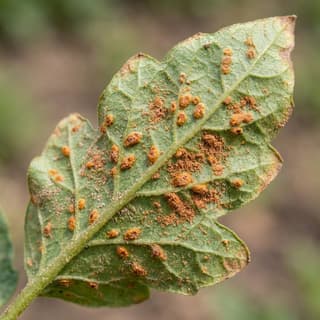
Rust fungi (Pucciniales) are fungal diseases that form rust-colored, usually orange to brown pustules with powdery spore dust on leaves, stems, or fruits. Typical symptoms include small spots that develop into cushions or rings; leaves turn yellow, curl, and drop prematurely. The fungi spread primarily in damp weather and dense foliage. Many ornamental and crop plants are affected, frequently including roses, mallows (hollyhocks), pears (pear rust), and currants. Some rust fungi require two host plants for their life cycle, such as pear and certain juniper species.
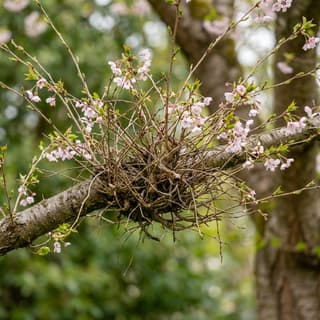
Cherry Witches' Broom
Taphrina wiesneri is a fungal disease affecting cherry trees (Prunus species, including sweet, sour, and ornamental varieties). The fungus overwinters in buds and bark, infecting young leaves and shoots during cool, wet spring weather. Infected leaves become thickened, puckered, and curled, often displaying reddish or yellow blotches and a fine whitish bloom on the surface. Severely affected leaves may drop prematurely. Small twigs can develop 'witches' brooms,' which are dense clusters of weak, distorted shoots.
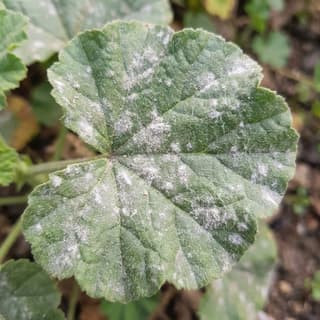
Powdery Mildew
MediumPowdery mildew is a common fungal disease caused by various fungi species including Erysiphe, Podosphaera, Oïdium, and Leveillula. It affects over 10,000 plant species worldwide. The disease thrives in warm, dry climates with high humidity and appears as a distinctive white powdery coating on plant surfaces.

Root Rot
HighRoot rot is a serious fungal disease that affects the root system of plants, causing them to decay and die. It is primarily caused by overwatering, poor drainage, or soil-borne fungi such as Pythium, Phytophthora, Rhizoctonia, and Fusarium. The disease thrives in waterlogged conditions where roots are deprived of oxygen, making them susceptible to fungal infection.