Zucchini Prone to Downy Mildew: How to Protect
Cucurbita pepo
Downy Mildew on Zucchini: What to Know?
Downy Mildew on Zucchini (Cucurbita pepo) is a fungal condition with high severity. Zucchini has high susceptibility to this disease. Downy mildew is a fungal-like disease caused by oomycetes (water molds) that thrives in cool, wet conditions. It affects a wide range of plants, causing yellowing leaves with fuzzy white-gray growth u...
Zucchini is a easy-care plant. Recovery from Downy Mildew takes approximately 14 days with proper treatment.
Zucchini is highly susceptible to Downy Mildew, unlike most plants in the same family. Without early intervention, recovery takes 21 days instead of 14 days. Unlike bacterial infections, Downy Mildew on Zucchini can be managed with organic fungicides.
🔍 What Does Downy Mildew Look Like on Zucchini?
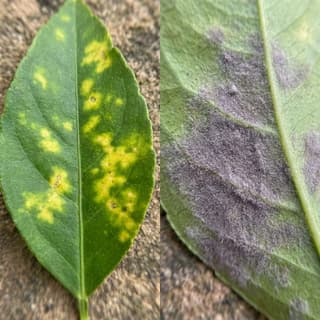
- • Small green or yellow translucent spots on leaves
- • Yellow to brown irregular patches on upper leaf surfaces
- • White, gray, or purple fuzzy growth on leaf undersides
- • Leaf yellowing, curling, and distortion
- • Premature leaf drop
- • Stunted growth in severe cases
❓ What Causes Downy Mildew on Zucchini?
- → Oomycete pathogens (Peronospora, Plasmopara, Pseudoperonospora species)
- → Cool temperatures (15-23°C / 59-73°F)
- → High humidity above 85%
- → Prolonged leaf wetness from rain, irrigation, or dew
- → Poor air circulation and overcrowding
- → Spread via airborne spores, water splash, contaminated tools
💊 How to Treat Downy Mildew on Zucchini?
TLDR: Treat Downy Mildew on Zucchini with quick treatment (~7 days) or organic (~14 days). Zucchini has high susceptibility to this disease.
Quick Fixes
Remove and destroy all infected plant parts. For severe infections, remove entire plant.
Remove and destroy all infected plant parts. For severe infections, remove entire plant.
Apply copper-based or chlorothalonil fungicide to all plants (infected and nearby). Cover leaf undersides thoroughly.
Apply copper-based or chlorothalonil fungicide to all plants (infected and nearby). Cover leaf undersides thoroughly.
Monitor for spread. Improve air circulation by spacing plants and pruning dense growth.
Monitor for spread. Improve air circulation by spacing plants and pruning dense growth.
Second fungicide application. Rotate to different chemical class if available (e.g., mancozeb).
Second fungicide application. Rotate to different chemical class if available (e.g., mancozeb).
Assess progress. Continue weekly fungicide applications until 2 weeks after symptoms disappear.
Assess progress. Continue weekly fungicide applications until 2 weeks after symptoms disappear.
Organic Treatment
Remove all infected leaves immediately and dispose (burn or bury). Disinfect pruning shears between cuts.
Remove all infected leaves immediately and dispose (burn or bury). Disinfect pruning shears between cuts.
Apply neem oil spray to all plant surfaces, especially leaf undersides. Spray in early morning or evening.
Apply neem oil spray to all plant surfaces, especially leaf undersides. Spray in early morning or evening.
Apply baking soda solution (1 tbsp per gallon water) to raise leaf pH and inhibit pathogen growth.
Apply baking soda solution (1 tbsp per gallon water) to raise leaf pH and inhibit pathogen growth.
Prune overcrowded areas to improve air circulation. Water only at soil level in morning.
Prune overcrowded areas to improve air circulation. Water only at soil level in morning.
Reapply neem oil spray. Check for new infections and remove affected leaves.
Reapply neem oil spray. Check for new infections and remove affected leaves.
Apply beneficial microbes (Trichoderma or Bacillus) to soil and foliage to suppress pathogen.
Apply beneficial microbes (Trichoderma or Bacillus) to soil and foliage to suppress pathogen.
Final inspection. Continue preventative measures: proper spacing, morning watering, weekly monitoring.
Final inspection. Continue preventative measures: proper spacing, morning watering, weekly monitoring.
🛡️ How to Prevent Downy Mildew on Zucchini?
TLDR: Prevent Downy Mildew on Zucchini with 9 essential preventive care practices.
- ✓ Choose resistant plant varieties when available
- ✓ Space plants widely for better air circulation
- ✓ Use drip irrigation instead of overhead watering
- ✓ Water in the morning to allow leaves to dry quickly
- ✓ Prune plants to improve airflow
- ✓ Practice crop rotation annually
- ✓ Remove infected debris at season end
- ✓ Disinfect tools between uses
- ✓ Avoid working with wet plants
🌱 How to Care for Zucchini to Prevent Downy Mildew?
💧 How to Water
Water deeply every 3-5 days at the base of the plant. Avoid wetting the foliage to prevent fungal diseases like powdery mildew. Soil should be moist but never waterlogged.
☀️ Lighting
Requires full sun with at least 6-8 hours of direct sunlight per day. Essential for flowering and fruit production.
🪴 Ideal Soil
Use fertile, rich organic, well-draining soil with pH between 6.0 and 6.8. Amend with compost before planting for best results.
Frequently asked questions
Can Downy Mildew kill my Zucchini?
How long does Zucchini take to recover from Downy Mildew?
Is Downy Mildew contagious to other plants near Zucchini?
Sources & References
- Downy mildews: Symptoms, Causes & Control | RHS Advice
- Downy Mildew: Causes, Symptoms, Prevention & Treatment
- Downy Mildew – Wisconsin Horticulture
- PictureThis - Cuidados Cucurbita pepo
- PFAF Plant Database - Cucurbita pepo
- UMN Extension - Powdery Mildew Cucurbits
- Missouri Botanical Garden - Cucurbita pepo