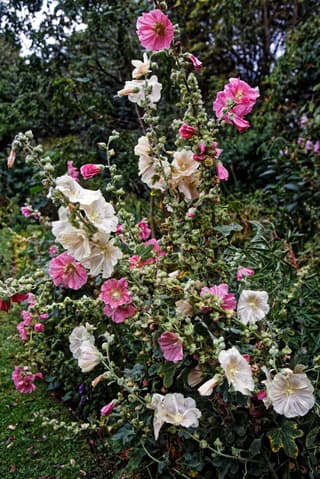
Hollyhock with Flea beetle damage? Rare but Treatable
Alcea
Flea beetle damage on Hollyhock: What to Know?
Flea beetle damage on Hollyhock (Alcea) is a pest condition with moderate severity. Hollyhock has low susceptibility to this disease. Flea beetles are small, jumping insects that feed on the leaves of many vegetable crops. They chew numerous small, circular holes, creating a characteristic 'shothole' appearance. While established pl...
Hollyhock is a medium-care plant. Recovery from Flea beetle damage takes approximately 14 days with proper treatment.
Unlike most plants, Hollyhock has natural resistance to Flea beetle damage. Best treated with preventive measures rather than reactive treatment. Unlike fungal diseases, Flea beetle damage on Hollyhock responds quickly to integrated pest management.
🔍 What Does Flea beetle damage Look Like on Hollyhock?
- • Small, circular holes in leaves (shothole pattern)
- • Bleaching or pitting on the leaf surface
- • Stunted growth in young seedlings
- • Presence of tiny, shiny black or striped beetles that jump when disturbed
- • Skeletonized leaves in severe cases
❓ What Causes Flea beetle damage on Hollyhock?
- → Adult flea beetles overwintering in garden debris or soil
- → Presence of weed hosts (like wild mustard) near the garden
- → Warm, dry weather conditions which favor beetle activity
- → Lack of crop rotation
💊 How to Treat Flea beetle damage on Hollyhock?
TLDR: Treat Flea beetle damage on Hollyhock with quick treatment (~7 days) or organic (~14 days). Hollyhock has low susceptibility to this disease.
Quick Fixes
Initial Knockdown
Apply Pyrethrin spray directly to the beetles and affected leaves in the early morning.
Follow-up
Monitor for remaining beetles and re-spray if necessary.
Organic Treatment
Dusting
Dust the leaves with food-grade Diatomaceous Earth, focusing on the undersides.
Neem Application
Spray a Neem oil solution on the foliage to repel adults and disrupt feeding.
🛡️ How to Prevent Flea beetle damage on Hollyhock?
TLDR: Prevent Flea beetle damage on Hollyhock with 5 essential preventive care practices.
- ✓ Use floating row covers to protect young seedlings
- ✓ Plant 'trap crops' like radishes or mustard to lure beetles away
- ✓ Practice strict crop rotation each season
- ✓ Remove garden weeds and debris where beetles overwinter
- ✓ Delay planting until later in the spring when beetles are less active
🌱 How to Care for Hollyhock to Prevent Flea beetle damage?
💧 How to Water
Water deeply once the top few centimeters of soil dry out, aiming for the base of the plant rather than the foliage - wet leaves encourage rust and fungal disease.
☀️ Lighting
Give hollyhocks at least 6-8 hours of direct sun daily; morning sun is ideal since it dries dew quickly and reduces disease pressure.
🪴 Ideal Soil
Grow in fertile, humus-rich, well-drained loam with a neutral to slightly alkaline pH (6.0-7.5); avoid soggy winter soil, which causes crown rot.