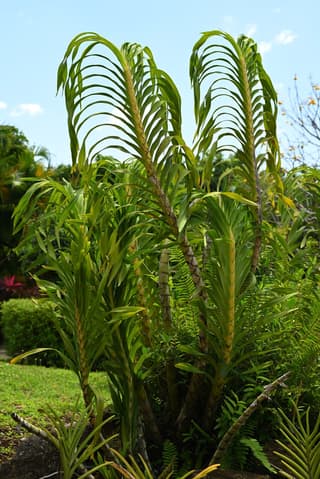
Giant orchid (Grammatophyllum) with Fungi: Prevention & Cure
Grammatophyllum
Fungi on Giant orchid (Grammatophyllum): What to Know?
Fungi on Giant orchid (Grammatophyllum) (Grammatophyllum) is a other condition with moderate severity. Giant orchid (Grammatophyllum) has moderate susceptibility to this disease. Fungi take energy from the plants on which they live, causing damage to the plant. Fungal infections are responsible for approximately two-thirds of infectious plant diseases and cause wilting, moldin...
Giant orchid (Grammatophyllum) is a hard-care plant. As an indoor plant, ensure good ventilation to aid recovery.
🛡️ How to Prevent Fungi on Giant orchid (Grammatophyllum)?
TLDR: Prevent Fungi on Giant orchid (Grammatophyllum) with 6 essential preventive care practices.
- ✓ Use resistant species and cultivars as well as healthy, certified seeds and seedlings.
- ✓ Ensure having good soil drainage to avoid overwatering.
- ✓ Improve the air circulation around the plant (e.g. by pruning excess foliage or increasing the spacing between plants).
- ✓ Avoid prolonged wetting of the leaves, which can be caused e.g. by overhead irrigation.
- ✓ Rotate crops. Avoid planting sensitive crops in infested soil.
- ✓ Disinfect tools, infected flower pots, and hands to avoid disease transmission.
🌱 How to Care for Giant orchid (Grammatophyllum) to Prevent Fungi?
💧 How to Water
During the growing season water generously, especially when flower spikes are emerging, usually every 3-5 days, letting the mix approach dryness before the next watering. Keep it a little drier in winter. Water in the morning so the leaves dry before night, and never leave the pot standing in water. Brown, shrivelled leaf tips mean it is too dry.
☀️ Lighting
It likes strong light, similar to a Cattleya: morning sun is ideal, but direct midday sun burns the leaves. Indoors, use an east window or a very bright window with a sheer curtain. Lime-green leaves show the right light; dark green means too little, yellowing means too much. Without enough light and heat it will not flower.
🪴 Ideal Soil
Use a very coarse, airy mix: large-grade fir bark, charcoal, lava rock or a blend of these; sphagnum moss also works for young plants. Mature plants do best in wooden baskets or large pots with plenty of drainage. Repot every 2 years in spring, into a container with room for 2-3 years of growth.