Fusarium Wilt: Fungal Disease | Treatment Guide
Fusarium wilt is a serious fungal disease caused by the soil-borne fungus Fusarium oxysporum. The fungus invades roots and blocks the water-conducting vessels (xylem) of the plant, causing progressive wilting and eventual death. Host-specific forms of the pathogen exist that attack different plant species.
Medium
30 days
What is Fusarium Wilt?
Fusarium Wilt is a fungal condition with high severity that affects plants. Fusarium wilt is a serious fungal disease caused by the soil-borne fungus Fusarium oxysporum. The fungus invades roots and blocks the water-conducting vessels (xylem) of the plant, causing progressive wilting and eventual death. Host-specific forms of the pathogen exist that attack different plant s...
Fusarium Wilt is a fungal disease with high severity that spreads at a moderate rate. Recovery typically takes approximately 30 days with proper treatment. It affects 10 plant species in our database. This condition is contagious and can spread between plants.
Unlike bacterial infections, Fusarium Wilt spreads slowly but is harder to eradicate. Without treatment, affected leaves won't recover. Not recommended to ignore early signs. Without early intervention, recovery can take twice as long. Without isolation, nearby plants can become infected within days.
🔍 What Are the Symptoms of Fusarium Wilt?
TLDR: Fusarium Wilt presents 7 main symptoms. Early identification is crucial for effective treatment.
Main Symptoms
- ! Wilting during the hottest part of the day with recovery at night (early stage)
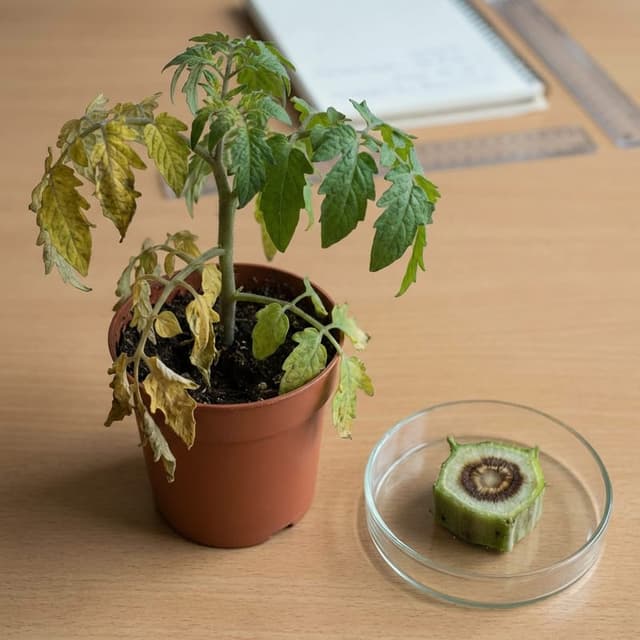
- ! Asymmetrical yellowing of leaves (one side of plant or leaflets)
- ! Progressive upward wilting from the stem base
- ! Dark red to brown discoloration of vascular tissues
- ! Stunted growth and dwarfism
- ! Pale green to golden yellow foliage
- ! Progressive death of leaves from bottom to top
Visual Signs
❓ What Causes Fusarium Wilt in Plants?
- → Infection by soil-borne fungus Fusarium oxysporum
- → Entry through roots, especially wounds
- → Soil temperature above 75°F (24°C) favors development
- → Acidic soil and excess nitrogen increase susceptibility
- → Contaminated tools and infected soil
- → Contaminated transplants and seeds
💊 How to Treat Fusarium Wilt?
TLDR: Treat Fusarium Wilt with 15 days of quick treatment or 30 days of organic treatment. Full recovery takes approximately 30 days.
Quick Fixes
~15 days
Remove Plant
Immediately remove entire infected plant with roots. Dispose in sealed trash (DO NOT compost).
Disinfect Area
Spray area with diluted bleach solution (1:10). Allow to dry.
Apply Biofungicide
If available, immediately apply Mycostop or Trichoderma to affected soil.
Isolate Area
DO NOT plant anything in same area for at least 6 months. Fusarium remains in soil.
Materials needed:
Organic Treatment
~30 days
Immediate Removal
Completely remove infected plant including all roots. Do not compost - burn or dispose in sealed trash.
Tool Disinfection
Clean all tools with 10% bleach solution for 5 minutes. Allow to dry completely in sun.
Soil Solarization
Cover affected area with clear plastic for 4-6 weeks in summer. Heat eliminates pathogens.
pH Correction
Test soil pH. If acidic, add lime to raise pH to 7.0-7.2. Fusarium prefers acidic soils.
Biological Inoculation
Add well-cured compost rich in Trichoderma or apply biological product (Mycostop). Wait 2 weeks before replanting.
Replant with Resistant Varieties
Use ONLY Fusarium-resistant varieties. Check certification. Maintain good drainage.
Materials needed:
Expert Treatment
~45 days
Laboratory Diagnosis
Collect vascular tissue and soil samples. Send to lab for F. oxysporum confirmation and forma specialis identification.
Contamination Mapping
Test soil in grid pattern (3ft x 3ft) to delineate contaminated area. Use ELISA or qPCR if available.
Total Biomass Removal
Remove all plants in affected area + 6ft buffer. Extract root system completely to 16in depth.
Intensive Solarization
Irrigate soil to field capacity. Cover with clear plastic (6 mil). Maintain 6-8 weeks in hot period (>75°F). Goal: 113°F+ at 6in depth.
Chemical Treatment (if permitted)
Apply fumigant (e.g., metam-sodium) per local regulations. ONLY by certified applicator.
Physical-Chemical Correction
Complete analysis: pH, NPK, organic matter, texture. Adjust pH to 7.0-7.5 with dolomitic lime. Add well-composted organic matter (9-13 tons/acre).
Microbial Bioaugmentation
Inoculate with antagonist consortium: Trichoderma harzianum (10^6 CFU/g), Bacillus subtilis, Pseudomonas fluorescens. Apply on multiple dates.
Suppressiveness Testing
Bioassay before replanting: grow susceptible indicator plant at 10 points. Observe for 30 days.
Strategic Replanting
Use ONLY cultivars with proven resistance (known races). Apply Mycostop at planting. Balanced fertigation (avoid excess N).
Epidemiological Monitoring
Weekly inspection for 90 days. Spore traps. Monthly soil qPCR. Disease progress curve analysis.
Step by Step
- 1
Completely remove infected plants including roots
- 2
Burn or bury plants in non-cultivable area
- 3
Disinfect tools with 10% bleach solution
- 4
Solarize soil for 4-6 weeks in summer
- 5
Adjust soil pH to neutral-alkaline
- 6
Apply biological fungicide before planting
- 7
Use only resistant varieties for replanting
🧪 Natural vs Chemical: Which Treatment Works for Fusarium Wilt?
🌱 Natural Solutions
- ✓ Apply Mycostop (biological fungicide with Streptomyces)
- ✓ Use Trichoderma spp. as biological antagonist
- ✓ Apply well-cured organic compost for beneficial microbiota
- ✓ Aerated compost tea for microbial colonization
- ✓ Garlic extract as natural antifungal
- ✓ Neem oil preventively
- ✓ Bacillus subtilis as biological control
💉 Chemical Solutions
- ✓ No effective chemical treatment available
- ✓ Soil fumigation (restricted in many regions)
- ✓ Systemic fungicides have limited efficacy
Treatment Comparison
| Type | Estimated time | Steps | Difficulty | Best For |
|---|---|---|---|---|
| ⚡Quick | ~15 days | 4 | Advanced | Urgent cases |
| 🌿Organic | ~30 days | 6 | Advanced | Indoor plants |
| 🔬Expert | ~45 days | 10 | Advanced | Severe infections |
🛡️ How to Prevent Fusarium Wilt?
TLDR: Prevent Fusarium Wilt with 9 essential care practices. Regular monitoring is key for early detection.
- ✓ Use Fusarium-resistant varieties (most effective method)
- ✓ Crop rotation for 3-5 years away from susceptible plants
- ✓ Raise soil pH to 7 in acidic soils
- ✓ Avoid excessive nitrogen in fertilization
- ✓ Use certified disease-free seeds and transplants
- ✓ Clean soil and debris from all tools
- ✓ Improve soil drainage
- ✓ Avoid root injuries during transplanting
- ✓ Soil solarization in infected areas
🔗Related Diseases
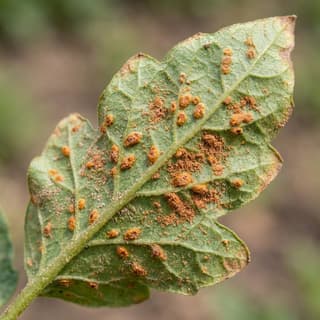
Rust
Rust fungi (Pucciniales) are fungal diseases that form rust-colored, usually orange to brown pustules with powdery spore dust on leaves, stems, or fruits. Typical symptoms include small spots that develop into cushions or rings; leaves turn yellow, curl, and drop prematurely. The fungi spread primarily in damp weather and dense foliage. Many ornamental and crop plants are affected, frequently including roses, mallows (hollyhocks), pears (pear rust), and currants. Some rust fungi require two host plants for their life cycle, such as pear and certain juniper species.
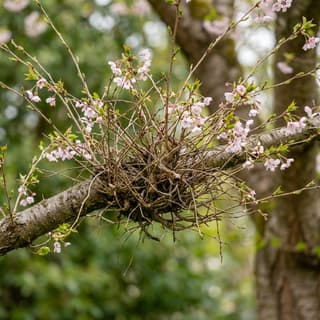
Cherry Witches' Broom
Taphrina wiesneri is a fungal disease affecting cherry trees (Prunus species, including sweet, sour, and ornamental varieties). The fungus overwinters in buds and bark, infecting young leaves and shoots during cool, wet spring weather. Infected leaves become thickened, puckered, and curled, often displaying reddish or yellow blotches and a fine whitish bloom on the surface. Severely affected leaves may drop prematurely. Small twigs can develop 'witches' brooms,' which are dense clusters of weak, distorted shoots.
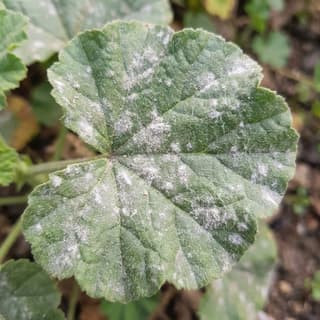
Powdery Mildew
MediumPowdery mildew is a common fungal disease caused by various fungi species including Erysiphe, Podosphaera, Oïdium, and Leveillula. It affects over 10,000 plant species worldwide. The disease thrives in warm, dry climates with high humidity and appears as a distinctive white powdery coating on plant surfaces.

Root Rot
HighRoot rot is a serious fungal disease that affects the root system of plants, causing them to decay and die. It is primarily caused by overwatering, poor drainage, or soil-borne fungi such as Pythium, Phytophthora, Rhizoctonia, and Fusarium. The disease thrives in waterlogged conditions where roots are deprived of oxygen, making them susceptible to fungal infection.