Iron Deficiency: How to Identify & Treat Fast
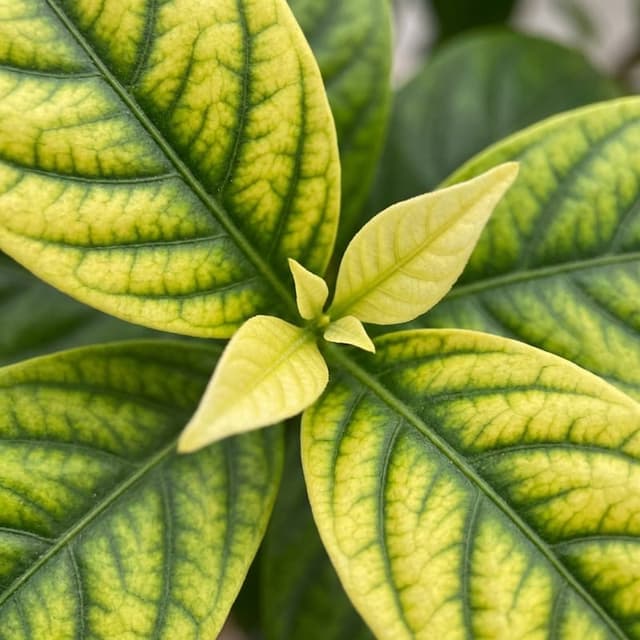
Iron deficiency, commonly known as iron chlorosis, is a nutrient deficiency disorder where plants cannot access sufficient iron from the soil. While iron is typically abundant in soil, various soil conditions can limit plant uptake, resulting in characteristic yellowing of leaves while veins remain green.
Slow
21 days
What is Iron Deficiency?
Iron Deficiency is a nutrient_deficiency condition with moderate severity that affects plants. Iron deficiency, commonly known as iron chlorosis, is a nutrient deficiency disorder where plants cannot access sufficient iron from the soil. While iron is typically abundant in soil, various soil conditions can limit plant uptake, resulting in characteristic yellowing of leaves while veins remain...
Iron Deficiency is a nutrient_deficiency disease with moderate severity that spreads at a slow rate. Recovery typically takes approximately 21 days with proper treatment. It affects 10 plant species in our database.
Unlike many common diseases, Iron Deficiency is not contagious between plants.
🔍 What Are the Symptoms of Iron Deficiency?
TLDR: Iron Deficiency presents 7 main symptoms. Early identification is crucial for effective treatment.
Main Symptoms
- ! Yellowing of leaves (chlorosis) while veins remain green - most obvious symptom
- ! Yellowing starts at the tips of new growth and progresses to older leaves
- ! Severe cases show yellowing even in leaf veins
- ! Leaves may turn completely white in extreme deficiency
- ! Leaf edges may scorch and turn brown as cells die
- ! Poor overall growth and stunted development
- ! Leaf loss in advanced stages
Visual Signs
❓ What Causes Iron Deficiency in Plants?
- → High soil pH (above 7.0) restricting iron availability
- → Compacted or waterlogged soil limiting root oxygen
- → Clay soil lacking organic matter
- → Excessive phosphorus blocking iron uptake
- → Poor drainage and saturated soil conditions
- → Cold soil temperatures reducing iron absorption
- → Alkaline soil conditions
💊 How to Treat Iron Deficiency?
TLDR: Treat Iron Deficiency with 11 days of quick treatment or 21 days of organic treatment. Full recovery takes approximately 21 days.
Quick Fixes
~11 days
Step 1
Apply chelated iron (FeEDDHA or FeEDTA) directly to soil around root zone
Step 2
Water thoroughly after application to activate chelates
Step 3
Spray foliage with ferrous sulfate solution (1-2 tablespoons per gallon) for rapid greening
Step 4
Repeat foliar application every 7-10 days until symptoms improve
Step 5
Follow up with soil application for sustained results
Materials needed:
Organic Treatment
~21 days
Step 1
Add 2-3 inches of organic compost around the plant base
Step 2
Mix composted manure into the top 6 inches of soil
Step 3
Apply iron-rich organic amendments like blood meal or fish emulsion
Step 4
Add peat moss to acidify soil and improve iron availability
Step 5
Mulch with organic material to maintain soil moisture and acidity
Materials needed:
Expert Treatment
~32 days
Step 1
Test soil pH and iron levels to confirm deficiency cause
Step 2
Lower soil pH to 5.5-6.5 using elemental sulfur (if pH is above 7)
Step 3
Apply chelated iron FeEDDHA at recommended rate based on soil test
Step 4
Improve soil drainage if waterlogging is contributing to deficiency
Step 5
Add organic matter to enhance natural iron chelation
Step 6
Monitor leaf color and conduct follow-up soil tests in 6-8 weeks
Step 7
Adjust irrigation to avoid overwatering which reduces iron availability
Step by Step
- 1
Test soil pH and nutrient levels to confirm iron deficiency
- 2
Improve drainage if soil is waterlogged or compacted
- 3
For quick results: Apply iron chelate foliar spray directly to leaves
- 4
For long-term solution: Apply FeEDDHA iron chelate to soil (lasts 1-2 seasons)
- 5
Work organic matter into soil if clay-based
- 6
Adjust watering schedule to prevent saturation
- 7
Aerate soil around plant base if compacted
- 8
Monitor new growth for improvement (foliar spray shows results in days)
- 9
Reapply treatments as needed based on plant response
- 10
Maintain soil pH in appropriate range for plant species
🧪 Natural vs Chemical: Which Treatment Works for Iron Deficiency?
🌱 Natural Solutions
- ✓ Work organic material (peat moss, compost) into clay soils
- ✓ Apply chelated iron as soil amendment
- ✓ Add sulfur to lower soil pH for acid-loving plants
- ✓ Use compost tea or worm castings for gentle iron boost
- ✓ Mulch with organic materials to improve soil quality
- ✓ Apply iron-rich foliar spray (diluted iron chelate solution)
- ✓ Incorporate coffee grounds for slight pH adjustment
💉 Chemical Solutions
- ✓ Apply FeEDDHA iron chelate to soil (most effective for alkaline soils)
- ✓ Use iron chelate foliar sprays for quick response (results in days)
- ✓ Apply iron sulfate as soil amendment
- ✓ Use chelated micronutrient fertilizers containing iron
- ✓ Follow manufacturer instructions for application rates
Treatment Comparison
| Type | Estimated time | Steps | Difficulty | Best For |
|---|---|---|---|---|
| ⚡Quick | ~11 days | 5 | Advanced | Urgent cases |
| 🌿Organic | ~21 days | 5 | Advanced | Indoor plants |
| 🔬Expert | ~32 days | 7 | Advanced | Severe infections |
🛡️ How to Prevent Iron Deficiency?
TLDR: Prevent Iron Deficiency with 8 essential care practices. Regular monitoring is key for early detection.
- ✓ Choose appropriate soil for plant species (avoid lime soils for acid-loving plants)
- ✓ Add well-rotted manure or compost to improve soil structure
- ✓ Ensure proper drainage to prevent waterlogging
- ✓ Aerate compacted areas around plant base
- ✓ Reduce watering in poorly draining areas
- ✓ Control soil pH through amendments
- ✓ Optimize phosphorus fertilization to prevent excess
- ✓ Test soil regularly to monitor nutrient levels
🔗Related Diseases
Phosphorus Deficiency
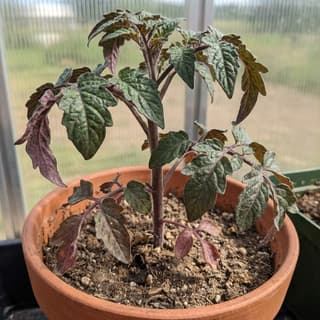
MediumPhosphorus deficiency is a common nutritional problem that hinders healthy plant growth. Phosphorus is essential for root development, flowering, fruiting, and energy metabolism. When deficient, plants exhibit stunted growth and leaves with purple or reddish coloration, especially on older leaves.
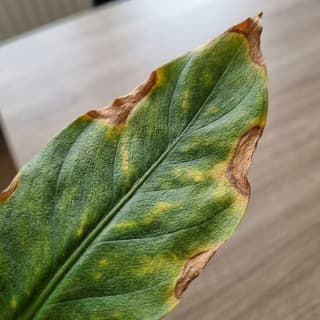
Potassium Deficiency
MediumPotassium deficiency is a nutritional disorder that affects a plant's ability to regulate stomatal opening and closing, resulting in characteristic leaf edge burn. Potassium is a mobile nutrient, so symptoms first appear on older, lower leaves.
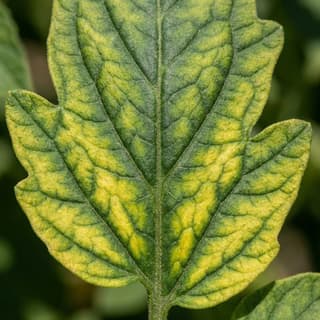
Magnesium Deficiency
MediumMagnesium deficiency is a nutrient disorder characterized by interveinal chlorosis, where leaf tissue between veins turns yellow while the veins remain green. This deficiency affects older leaves first as magnesium is a mobile nutrient that plants relocate to support new growth. Magnesium is essential for chlorophyll production and photosynthesis, making this deficiency critical for plant health.
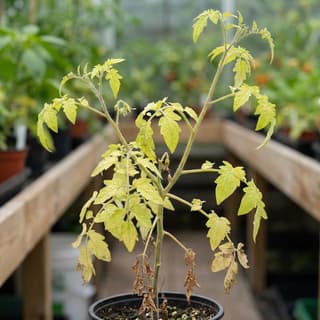
Nitrogen Deficiency
MediumNitrogen deficiency occurs when plants lack sufficient nitrogen, an essential macronutrient needed for chlorophyll production and overall growth. This deficiency typically manifests as yellowing leaves, starting with older foliage and progressing to newer growth if left untreated.