Soil pH Imbalance: Environmental Stress | How to Fix
Soil pH imbalance occurs when soil becomes too acidic (low pH < 6.0) or too alkaline (high pH > 7.5), preventing plants from absorbing essential nutrients. The ideal pH range for most plants is 6.5-7.5. When pH is outside this range, nutrients become chemically locked in the soil, leading to deficiency symptoms even when nutrients are present.
Slow
90 days
What is Soil pH Imbalance?
Soil pH Imbalance is a environmental condition with moderate severity that affects plants. Soil pH imbalance occurs when soil becomes too acidic (low pH < 6.0) or too alkaline (high pH > 7.5), preventing plants from absorbing essential nutrients. The ideal pH range for most plants is 6.5-7.5. When pH is outside this range, nutrients become chemically locked in the soil, leading to deficie...
Soil pH Imbalance is a environmental disease with moderate severity that spreads at a slow rate. Recovery typically takes approximately 90 days with proper treatment. It affects 10 plant species in our database.
Unlike infectious diseases, Soil pH Imbalance is caused by environmental conditions. Without correcting the environment, symptoms return even after treatment. Unlike many common diseases, Soil pH Imbalance is not contagious between plants.
🔍 What Are the Symptoms of Soil pH Imbalance?
TLDR: Soil pH Imbalance presents 9 main symptoms. Early identification is crucial for effective treatment.
Main Symptoms
- ! Yellowing of older leaves with low pH (acidic soil)
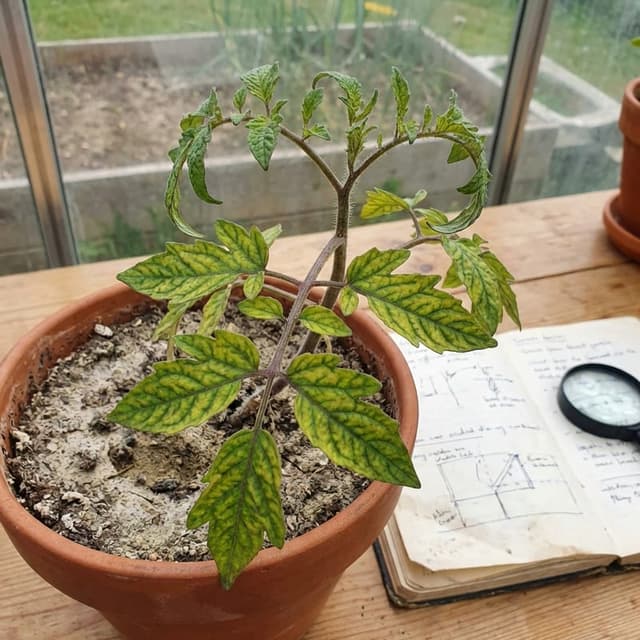
- ! Interveinal chlorosis on young leaves with high pH (alkaline soil)
- ! Stunted or slow growth
- ! Brown spots or tips on leaves
- ! Curled, twisted, or withered leaves
- ! Purple or red cast on leaves in cool weather (phosphorus tie-up)
- ! Poor root development
- ! Reduced flowering and fruiting
- ! Moss growth on soil surface (acidic conditions)
Visual Signs
❓ What Causes Soil pH Imbalance in Plants?
- → Natural soil composition (sandy, peaty, or chalky soils)
- → Use of hard water for irrigation (increases alkalinity)
- → Over-application of lime or wood ash
- → Excessive use of acidifying fertilizers
- → Heavy rainfall leaching nutrients (causes acidity)
- → Decomposing organic matter affecting pH balance
- → Geographic location with naturally acidic or alkaline soil
💊 How to Treat Soil pH Imbalance?
TLDR: Treat Soil pH Imbalance with 45 days of quick treatment or 90 days of organic treatment. Full recovery takes approximately 90 days.
Quick Fixes
~45 days
Step 1
Test soil pH immediately
Step 2
For acidic soil: Apply agricultural lime at recommended rate (typically 5-10 lbs per 100 sq ft)
Step 3
For alkaline soil: Apply aluminum sulfate (1-2 lbs per 100 sq ft for faster action than elemental sulfur)
Step 4
Water deeply immediately after application
Step 5
Retest pH after 2-3 weeks
Step 6
Apply foliar fertilizer to address immediate nutrient deficiencies
Step 7
Repeat amendment at half-rate if pH still not in range
Materials needed:
Organic Treatment
~90 days
Step 1
Test soil pH to determine if acidic (<6.5) or alkaline (>7.5)
Step 2
For acidic soil: Mix 2-3 tablespoons ground limestone per gallon of soil
Step 3
For alkaline soil: Mix 1-2 tablespoons elemental sulfur per gallon of soil
Step 4
Add 2 inches of compost to buffer pH and improve soil structure
Step 5
Water thoroughly to help amendments penetrate soil
Step 6
Retest pH after 4-6 weeks
Step 7
If needed, repeat with half the original amendment dose
Step 8
Maintain with monthly compost top-dressing
Materials needed:
Expert Treatment
~135 days
Step 1
Conduct comprehensive soil test (pH, NPK, micronutrients, organic matter)
Step 2
Calculate precise amendment needs based on soil type, volume, and target pH
Step 3
For acidic soil: Apply pelletized limestone at calculated rate, incorporate into top 6-8 inches
Step 4
For alkaline soil: Apply elemental sulfur at calculated rate (0.5-2 lbs per 100 sq ft depending on severity)
Step 5
Add iron sulfate if alkaline pH has caused iron chlorosis
Step 6
Incorporate 3-4 inches of high-quality compost throughout root zone
Step 7
Install drip irrigation or use filtered water to prevent re-alkalinization
Step 8
Apply appropriate fertilizer based on soil test results
Step 9
Monitor pH monthly for first 6 months
Step 10
Adjust fertilization program to maintain target pH range
Step 11
Retest soil every 3 months during correction phase
Step 12
Once stable, test every 6-12 months and maintain with seasonal amendments
Step by Step
- 1
Test current soil pH with a reliable meter
- 2
Identify whether pH is too high or too low
- 3
Calculate amendment amount based on soil volume and current pH
- 4
Apply amendment evenly across soil surface
- 5
Mix amendment into top 6-8 inches of soil
- 6
Water thoroughly after application
- 7
Wait 2-4 weeks and retest pH
- 8
Repeat application if needed, adjusting pH by no more than 0.5 units per treatment
- 9
Monitor plant response and adjust care routine
🧪 Natural vs Chemical: Which Treatment Works for Soil pH Imbalance?
🌱 Natural Solutions
- ✓ Elemental sulfur to lower pH (acidify alkaline soil)
- ✓ Ground limestone (calcic) to raise pH (neutralize acidic soil)
- ✓ Dolomitic limestone to raise pH and add magnesium
- ✓ Wood ash to raise pH (use sparingly)
- ✓ Coffee grounds for gradual acidification
- ✓ Compost to buffer and stabilize pH naturally
- ✓ Pine needles or peat moss to acidify soil
- ✓ Crushed eggshells to raise pH gradually
💉 Chemical Solutions
- ✓ Aluminum sulfate for fast pH reduction
- ✓ Sulfuric acid for rapid acidification (expert use only)
- ✓ Agricultural lime for quick pH increase
- ✓ Iron sulfate to lower pH and add iron
- ✓ Hydrated lime for immediate alkalinity
Treatment Comparison
| Type | Estimated time | Steps | Difficulty | Best For |
|---|---|---|---|---|
| ⚡Quick | ~45 days | 7 | Advanced | Urgent cases |
| 🌿Organic | ~90 days | 8 | Advanced | Indoor plants |
| 🔬Expert | ~135 days | 12 | Advanced | Severe infections |
🛡️ How to Prevent Soil pH Imbalance?
TLDR: Prevent Soil pH Imbalance with 7 essential care practices. Regular monitoring is key for early detection.
- ✓ Test soil pH regularly (every 6-12 months) using a reliable pH meter
- ✓ Use filtered or rainwater instead of hard tap water
- ✓ Choose plants suited to your natural soil pH
- ✓ Apply amendments gradually in small doses
- ✓ Monitor water quality and adjust irrigation practices
- ✓ Maintain proper drainage to prevent nutrient leaching
- ✓ Add organic matter to buffer pH fluctuations
🔗Related Diseases
Severe Defoliation
HighThis condition involves a sudden and massive loss of leaves caused by adverse environmental factors. The plant sheds its foliage in an attempt to survive extreme stress, such as abrupt temperature changes, improper watering, or transplant shock. If the underlying cause is not addressed, the plant may completely wither and die.
Severe Defoliation and Dormancy
HighThis condition is triggered by extreme environmental stress, such as sudden temperature fluctuations, insufficient light, or improper watering. In an effort to survive, the plant sheds its leaves and enters a dormant state to conserve energy.
Leaf Drop (Environmental Stress)
MediumLeaf drop occurs when a plant undergoes sudden environmental changes, such as insufficient light, excessive wind, or temperature fluctuations. It is not a fungal disease, but rather a physical response to stress.
Physical Leaf Damage
LowThis is not an infectious disease, but rather the result of external mechanical or environmental factors. It occurs due to rough handling, strong winds, hail, or pets. Leaves exhibit tears, cuts, or frayed edges, but the rest of the plant typically remains healthy and green.