Phytophthora Blight: Fungal Disease | Treatment Guide
Devastating fungal disease caused by Phytophthora species (primarily P. capsici and P. infestans), famously responsible for the Irish Potato Famine in the 1840s. Affects all plant parts including roots, stems, leaves, and fruits in warm, wet conditions. The pathogen is technically an oomycete (water mold) that thrives in saturated soils and can survive in soil for 5+ years.
Fast
14 days
What is Phytophthora Blight?
Phytophthora Blight is a fungal condition with high severity that affects plants. Devastating fungal disease caused by Phytophthora species (primarily P. capsici and P. infestans), famously responsible for the Irish Potato Famine in the 1840s. Affects all plant parts including roots, stems, leaves, and fruits in warm, wet conditions. The pathogen is technically an oomycete (water...
Phytophthora Blight is a fungal disease with high severity that spreads at a fast rate. Recovery typically takes approximately 14 days with proper treatment. It affects 10 plant species in our database. This condition is contagious and can spread between plants.
Unlike bacterial infections, Phytophthora Blight spreads slowly but is harder to eradicate. Without treatment, affected leaves won't recover. Not recommended to ignore early signs. Without early intervention, recovery can take twice as long. Without isolation, nearby plants can become infected within days.
🔍 What Are the Symptoms of Phytophthora Blight?
TLDR: Phytophthora Blight presents 9 main symptoms. Early identification is crucial for effective treatment.
Main Symptoms
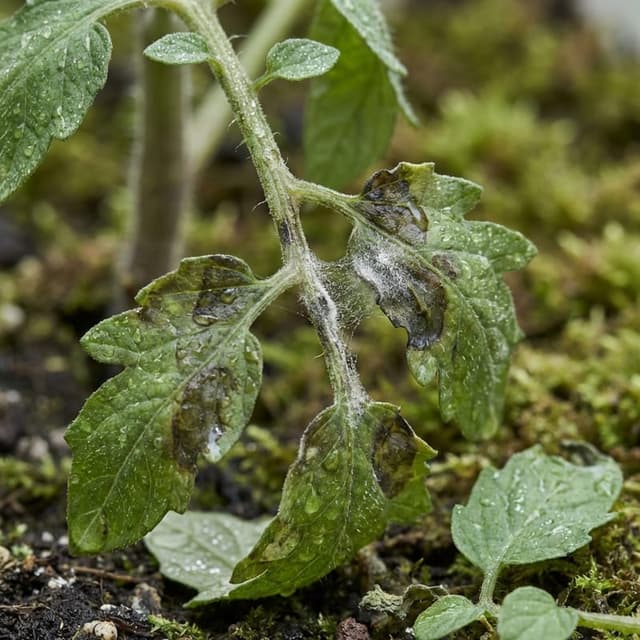
- ! Water-soaked lesions on leaves with vague borders and white fluffy fungal growth
- ! White powdered sugar-like spores on infected tissue
- ! Grey-brown centers with light-green edges on leaves
- ! Black, water-soaked roots and crown
- ! Elongated brown lesions on stems that encircle the stem
- ! Wilting plants that pull easily from soil
- ! Soft, water-soaked rot on fruit
- ! Bluish lesions on tubers
- ! Buckeye rot on tomatoes with concentric target-like pattern
Visual Signs
❓ What Causes Phytophthora Blight in Plants?
- → Warm (75-85°F / 23-29°C) and wet conditions with high soil moisture
- → Free water essential - zoospores swim through water films
- → Saturated, poorly drained soils where water puddles
- → Excessive or overhead irrigation
- → Pathogen overwinters in soil and plant debris for 5+ years
- → Spread via water, wind, rain, and contaminated soil on equipment
- → Presence of oospores (survival structures) in soil
💊 How to Treat Phytophthora Blight?
TLDR: Treat Phytophthora Blight with 7 days of quick treatment or 14 days of organic treatment. Full recovery takes approximately 14 days.
Quick Fixes
~7 days
Immediately apply systemic fungicide (mefenoxam) as soil drench
Spray foliage with phosphonate or fosetyl-Al
Remove visibly infected plants within 24 hours
Cease all irrigation for 3-5 days to dry soil
Repeat fungicide applications every 5-7 days for 3 weeks
Implement drainage system or raised beds
Materials needed:
Organic Treatment
~14 days
Remove and dispose of all infected plants plus 2 feet of neighboring plants
Improve drainage with raised beds 8-12 inches high
Apply copper-based fungicide to remaining plants every 7-10 days
Reduce irrigation frequency and use drip irrigation only
Incorporate well-cured compost into soil for beneficial microbiome
Monitor daily and immediately remove any new infection
Materials needed:
Expert Treatment
~21 days
Test soil for Phytophthora presence and species identification
Remove infected zone with 3-foot borders, till deeply
Install tile drainage system or create permanent raised beds
Apply rotational fungicide program: phenylamide + phosphonate + copper
Implement subsurface drip irrigation with soil moisture sensors
Incorporate compost inoculated with Trichoderma and Bacillus
Establish sanitation protocol: equipment cleaning + footbath
Transition to resistant cultivars next season
Monitor with serological test kits weekly
Document disease patterns and treatment efficacy for adjustments
Step by Step
- 1
Immediately remove infected and neighboring plants
- 2
Dispose of diseased material away from production areas
- 3
Improve drainage before replanting
- 4
Apply preventive fungicides to remaining plants
- 5
Monitor daily for new infections
- 6
Avoid working in wet conditions
- 7
Implement 3-year crop rotation
- 8
Do not harvest or mix fruit from infested areas
🧪 Natural vs Chemical: Which Treatment Works for Phytophthora Blight?
🌱 Natural Solutions
- ✓ Remove infected plants plus neighboring apparently healthy plants
- ✓ Improve drainage with raised beds and slope
- ✓ Apply strict hygiene measures
- ✓ Optimize plant potential and resilience
- ✓ Use longer intervals between irrigations
- ✓ Apply well-cured compost to boost beneficial microorganisms
- ✓ Implement tile drainage systems in fields
💉 Chemical Solutions
- ✓ Copper-based fungicides for preventive protection
- ✓ Phosphonates for root and foliar uptake
- ✓ Phenylamides (mefenoxam, metalaxyl) for root rot - apply to soil
- ✓ Contact fungicides containing aluminum tris or fosetyl-Al
- ✓ Multiple preventive applications throughout season
- ✓ NOTE: Resistance to mefenoxam and metalaxyl has been documented
Treatment Comparison
| Type | Estimated time | Steps | Difficulty | Best For |
|---|---|---|---|---|
| ⚡Quick | ~7 days | 6 | Advanced | Urgent cases |
| 🌿Organic | ~14 days | 6 | Advanced | Indoor plants |
| 🔬Expert | ~21 days | 10 | Advanced | Severe infections |
🛡️ How to Prevent Phytophthora Blight?
TLDR: Prevent Phytophthora Blight with 10 essential care practices. Regular monitoring is key for early detection.
- ✓ Plant in well-drained areas using raised beds
- ✓ Avoid working in wet, compacted soils
- ✓ Rotate for minimum 3 years out of susceptible crops
- ✓ Use well water rather than surface water for irrigation
- ✓ Clean equipment thoroughly to remove soil
- ✓ Scout low-lying areas where water accumulates
- ✓ Choose resistant cultivars when available
- ✓ Ensure adequate air circulation for rapid drying
- ✓ Avoid over-irrigation and overhead watering
- ✓ Disinfect recirculating nutrient solutions
🔗Related Diseases
Rust
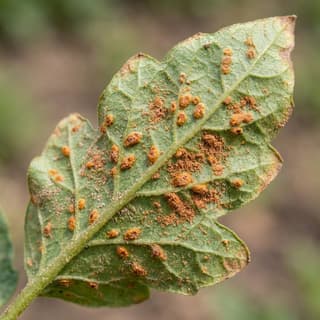
Rust fungi (Pucciniales) are fungal diseases that form rust-colored, usually orange to brown pustules with powdery spore dust on leaves, stems, or fruits. Typical symptoms include small spots that develop into cushions or rings; leaves turn yellow, curl, and drop prematurely. The fungi spread primarily in damp weather and dense foliage. Many ornamental and crop plants are affected, frequently including roses, mallows (hollyhocks), pears (pear rust), and currants. Some rust fungi require two host plants for their life cycle, such as pear and certain juniper species.
Cherry Witches' Broom
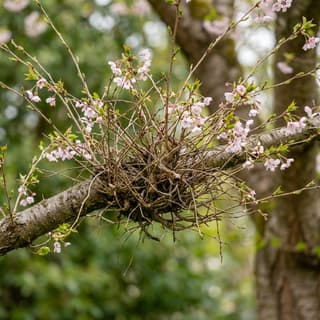
Taphrina wiesneri is a fungal disease affecting cherry trees (Prunus species, including sweet, sour, and ornamental varieties). The fungus overwinters in buds and bark, infecting young leaves and shoots during cool, wet spring weather. Infected leaves become thickened, puckered, and curled, often displaying reddish or yellow blotches and a fine whitish bloom on the surface. Severely affected leaves may drop prematurely. Small twigs can develop 'witches' brooms,' which are dense clusters of weak, distorted shoots.
Powdery Mildew
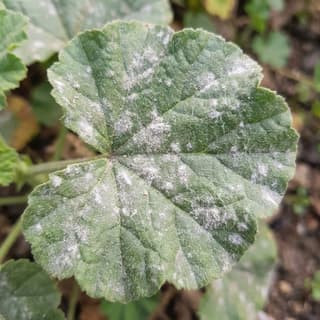
MediumPowdery mildew is a common fungal disease caused by various fungi species including Erysiphe, Podosphaera, Oïdium, and Leveillula. It affects over 10,000 plant species worldwide. The disease thrives in warm, dry climates with high humidity and appears as a distinctive white powdery coating on plant surfaces.

Root Rot
HighRoot rot is a serious fungal disease that affects the root system of plants, causing them to decay and die. It is primarily caused by overwatering, poor drainage, or soil-borne fungi such as Pythium, Phytophthora, Rhizoctonia, and Fusarium. The disease thrives in waterlogged conditions where roots are deprived of oxygen, making them susceptible to fungal infection.