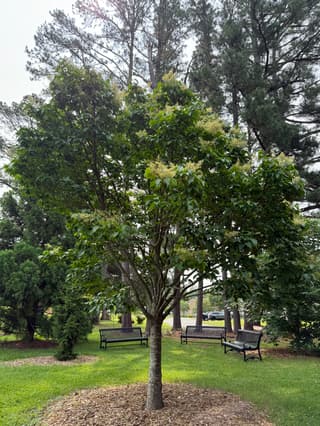
Japanese Tree Lilac Prone to Pseudocercospora: How to Protect
Syringa reticulata
Pseudocercospora on Japanese Tree Lilac: What to Know?
Pseudocercospora on Japanese Tree Lilac (Syringa reticulata) is a fungal condition with moderate severity. Japanese Tree Lilac has high susceptibility to this disease.
Japanese Tree Lilac is a easy-care plant.
Japanese Tree Lilac is highly susceptible to Pseudocercospora, unlike most plants in the same family. Unlike bacterial infections, Pseudocercospora on Japanese Tree Lilac can be managed with organic fungicides.
🌱 How to Care for Japanese Tree Lilac to Prevent Pseudocercospora?
💧 How to Water
Water regularly for the first 1-2 seasons after planting. Once established, trees are drought tolerant and generally do not need supplemental watering except during severe drought. Avoid waterlogged sites to prevent root rot.
☀️ Lighting
Plant in full sun (minimum 6 hours daily). In partial shade, flowering is significantly reduced. Full sun also promotes good air circulation, reducing the risk of fungal diseases.
🪴 Ideal Soil
Prefers fertile, well-drained soil with a slightly acidic to neutral pH (6.0–8.0). Tolerates clay soils and urban conditions. Amend with organic matter at planting to improve drainage and fertility.