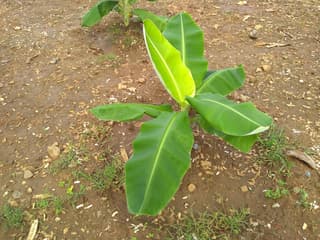
Banana Prone to Pseudocercospora: How to Protect
Musa
Pseudocercospora on Banana: What to Know?
Pseudocercospora on Banana (Musa) is a fungal condition with moderate severity. Banana has high susceptibility to this disease.
Banana is a easy-care plant. As an indoor plant, ensure good ventilation to aid recovery.
Banana is highly susceptible to Pseudocercospora, unlike most plants in the same family. Unlike bacterial infections, Pseudocercospora on Banana can be managed with organic fungicides.
🌱 How to Care for Banana to Prevent Pseudocercospora?
💧 How to Water
Water when the top 5 cm (2 inches) of soil dries out — roughly every 3–5 days in summer and every 7–10 days in winter. Avoid waterlogging as roots are prone to rot. Always use water at room temperature.
☀️ Lighting
Banana plants need bright, direct or near-direct light — at least 6–8 hours of strong light per day. Indoors, place it at the brightest window available, ideally south- or west-facing. Insufficient light leads to pale leaves and slow growth.
🪴 Ideal Soil
Use a rich, well-draining, slightly acidic soil mix (pH 5.5–6.5). Combine garden soil with organic compost and perlite for good drainage. Avoid compacted soils that retain excess moisture around the roots.