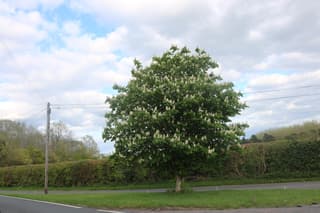
Horse Chestnut Prone to Bacterial Blight: How to Protect
Aesculus hippocastanum
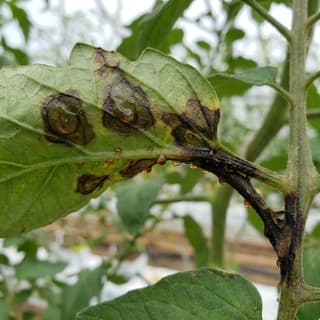
Bacterial Blight on Horse Chestnut: What to Know?
Bacterial Blight on Horse Chestnut (Aesculus hippocastanum) is a bacterial condition with moderate severity. Horse Chestnut has high susceptibility to this disease. Pseudomonas is a group of bacteria that causes leaf spots, blights, cankers, and soft rots on many garden and houseplants. It thrives in cool, wet, or humid weather and spreads with splashing water, r...
Horse Chestnut is a medium-care plant.
Horse Chestnut is highly susceptible to Bacterial Blight, unlike most plants in the same family.
🛡️ How to Prevent Bacterial Blight on Horse Chestnut?
TLDR: Prevent Bacterial Blight on Horse Chestnut with 7 essential preventive care practices.
- ✓ Water wisely by using drip or a watering can at the base and watering early so leaves dry quickly.
- ✓ Keep the area clean by removing plant debris at season’s end and sanitizing pots, trays, and tools.
- ✓ Improve drainage and avoid overwatering, especially for houseplants.
- ✓ Provide good spacing, prune to open the canopy, and avoid working among plants when foliage is wet.
- ✓ Mulch soil to limit splash and protect plants from frost and mechanical injury such as hail or rough handling, which create entry points for bacteria.
- ✓ Choose healthy starts and resistant or tolerant varieties when available, and rotate crops each year.
- ✓ Fertilize moderately and avoid excess nitrogen that encourages soft, susceptible growth.
🌱 How to Care for Horse Chestnut to Prevent Bacterial Blight?
💧 How to Water
Water young trees deeply once or twice a week during the first two growing seasons. Mature trees are moderately drought-tolerant but appreciate deep watering during prolonged dry spells; avoid waterlogging, which encourages root rot.
☀️ Lighting
Grows best in full sun, which promotes the heaviest flowering, though it tolerates partial shade.
🪴 Ideal Soil
Prefers deep, fertile, well-drained loam with a slightly acidic to neutral pH (6.0-7.0); avoid shallow, compacted, or permanently wet soils.
Frequently asked questions
Can Bacterial Blight kill my Horse Chestnut?
Is Bacterial Blight contagious to other plants near Horse Chestnut?
Sources & References
- Aesculus hippocastanum - NC State Extension Gardener Plant Toolbox
- Common Horse-Chestnut (Aesculus hippocastanum) Care Guide - Plantiary
- Other common pest and disease problems of horse chestnut - Forest Research
- Biological Flora of the British Isles: Aesculus hippocastanum
- Castano de Indias - fitoterapia.net