Pythium Root Rot: Fungal Disease | Treatment Guide
Pythium root rot is a serious fungal disease caused by various Pythium species including P. aphanidermatum, P. ultimum, and P. irregulare. These water molds are present in practically all cultivated soils and attack plant roots under wet conditions, causing rapid wet rot that can extend into the stem. The disease is favored by poor drainage, overwatering, and specific temperatures depending on the species.
Fast
14 days
What is Pythium Root Rot?
Pythium Root Rot is a fungal condition with high severity that affects plants. Pythium root rot is a serious fungal disease caused by various Pythium species including P. aphanidermatum, P. ultimum, and P. irregulare. These water molds are present in practically all cultivated soils and attack plant roots under wet conditions, causing rapid wet rot that can extend into the ste...
Pythium Root Rot is a fungal disease with high severity that spreads at a fast rate. Recovery typically takes approximately 14 days with proper treatment. It affects 10 plant species in our database. This condition is contagious and can spread between plants.
Unlike bacterial infections, Pythium Root Rot spreads slowly but is harder to eradicate. Without treatment, affected leaves won't recover. Not recommended to ignore early signs. Without early intervention, recovery can take twice as long. Without isolation, nearby plants can become infected within days.
🔍 What Are the Symptoms of Pythium Root Rot?
TLDR: Pythium Root Rot presents 9 main symptoms. Early identification is crucial for effective treatment.
Main Symptoms
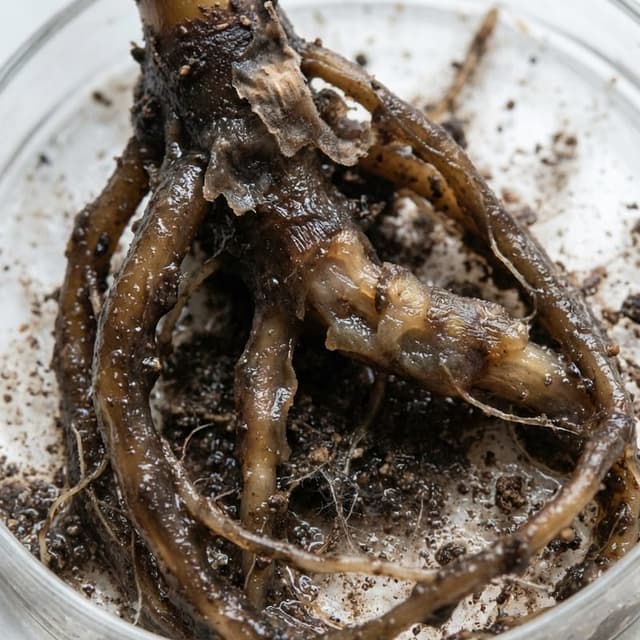
- ! Dark brown to black wet rot of roots
- ! Roots soften and disintegrate easily
- ! Outer cortical tissue pulls off easily exposing vascular strand
- ! Brown and dead root tips
- ! Stunted growth and undersized plants
- ! Wilting during the day with recovery at night
- ! Progressive yellowing of leaves
- ! Plant collapse and death in severe cases
- ! Crown may turn brown-black with soft rot
Visual Signs
❓ What Causes Pythium Root Rot in Plants?
- → Infection by Pythium species (P. aphanidermatum, P. ultimum, P. irregulare)
- → Soil moisture above 70% of available water capacity
- → Poor drainage and waterlogged substrate
- → Overwatering or too frequent irrigation
- → Favorable temperatures (above 77°F for P. aphanidermatum, lower temperatures for other species)
- → Use of non-pasteurized or contaminated substrate
- → Contaminated pots, tools, and surfaces
- → Spread through contaminated irrigation water
- → Transmission by fungus gnats and shore flies
- → Excessive levels of ammonium or soluble salts in substrate
💊 How to Treat Pythium Root Rot?
TLDR: Treat Pythium Root Rot with 7 days of quick treatment or 14 days of organic treatment. Full recovery takes approximately 14 days.
Quick Fixes
~7 days
Step 1
Step 2
Step 3
Step 4
Step 5
Step 6
Materials needed:
Organic Treatment
~14 days
Step 1
Step 2
Step 3
Step 4
Step 5
Step 6
Step 7
Materials needed:
Expert Treatment
~21 days
Step 1
Step 2
Step 3
Step 4
Step 5
Step 6
Step 7
Step 8
Step 9
Step 10
Step by Step
- 1
IMMEDIATE: Stop all watering and let substrate dry
- 2
Remove plant from pot and carefully inspect roots
- 3
Cut all brown, soft, or rotting roots with sterilized scissors
- 4
Wash remaining roots with clean water
- 5
Treat roots with 3% hydrogen peroxide or appropriate fungicide
- 6
Repot in fresh, well-drained, sterilized substrate
- 7
Use clean, disinfected pot (wash with 10% bleach solution)
- 8
Water lightly only after repotting and keep substrate moist, not waterlogged
- 9
Improve drainage and permanently reduce watering frequency
- 10
Monitor daily for 2-3 weeks for signs of new infection
- 11
Apply preventive fungicide as recommended
- 12
Isolate treated plant from others to avoid cross-contamination
🧪 Natural vs Chemical: Which Treatment Works for Pythium Root Rot?
🌱 Natural Solutions
- ✓ Steam substrate at 140°F for 30 minutes
- ✓ Use solarization with double-tent coverage (160°F for 30 min or 140°F for 1h)
- ✓ Add 20% composted pine bark to substrate
- ✓ Apply Gliocladium virens biocontrol agent to substrate
- ✓ Improve drainage and reduce watering frequency
- ✓ Use diluted hydrogen peroxide (3%) for rescue irrigation
- ✓ Apply cinnamon extract or neem oil as natural fungicide
- ✓ Remove and discard severely infected plants
- ✓ Isolate affected plants to prevent spread
💉 Chemical Solutions
- ✓ Mefenoxam (Subdue MAXX) - preventive or curative application
- ✓ Fluopicolide - high efficacy with low environmental impact
- ✓ Cyazofamid - only treatment effective for curative control in research
- ✓ Fenamidone - preventive control
- ✓ Boscalid + Pyraclostrobin - combination for broad control
- ✓ Etridiazole - preventive option
- ✓ Fosetyl-Al - systemic effect
- ✓ Propamocarb - substrate application
- ✓ IMPORTANT: Some Pythium strains are resistant to mefenoxam - rotate between fungicide classes
Treatment Comparison
| Type | Estimated time | Steps | Difficulty | Best For |
|---|---|---|---|---|
| ⚡Quick | ~7 days | 6 | Advanced | Urgent cases |
| 🌿Organic | ~14 days | 7 | Advanced | Indoor plants |
| 🔬Expert | ~21 days | 10 | Advanced | Severe infections |
🛡️ How to Prevent Pythium Root Rot?
TLDR: Prevent Pythium Root Rot with 10 essential care practices. Regular monitoring is key for early detection.
- ✓ Use well-drained substrate with adequate air pore space
- ✓ Pasteurize or solarize substrate before use (140°F for 30 min)
- ✓ Avoid overwatering and maintain good water management
- ✓ Ensure proper drainage in pots and beds
- ✓ Inspect roots of new plant material before introducing to collection
- ✓ Keep pots, tools, and growing areas clean and disinfected
- ✓ Keep irrigation hose ends elevated off the ground
- ✓ Avoid excessive levels of ammonium and soluble salts in substrate
- ✓ Use substrate with at least 20% composted pine bark
- ✓ Control fungus gnats that can transmit spores
🔗Related Diseases
Rust
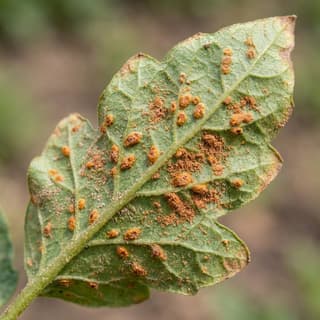
Rust fungi (Pucciniales) are fungal diseases that form rust-colored, usually orange to brown pustules with powdery spore dust on leaves, stems, or fruits. Typical symptoms include small spots that develop into cushions or rings; leaves turn yellow, curl, and drop prematurely. The fungi spread primarily in damp weather and dense foliage. Many ornamental and crop plants are affected, frequently including roses, mallows (hollyhocks), pears (pear rust), and currants. Some rust fungi require two host plants for their life cycle, such as pear and certain juniper species.
Cherry Witches' Broom
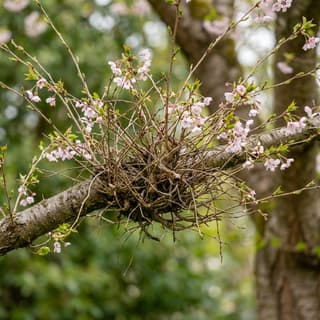
Taphrina wiesneri is a fungal disease affecting cherry trees (Prunus species, including sweet, sour, and ornamental varieties). The fungus overwinters in buds and bark, infecting young leaves and shoots during cool, wet spring weather. Infected leaves become thickened, puckered, and curled, often displaying reddish or yellow blotches and a fine whitish bloom on the surface. Severely affected leaves may drop prematurely. Small twigs can develop 'witches' brooms,' which are dense clusters of weak, distorted shoots.
Powdery Mildew
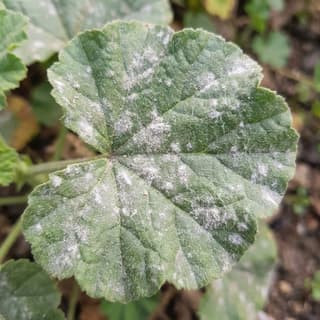
MediumPowdery mildew is a common fungal disease caused by various fungi species including Erysiphe, Podosphaera, Oïdium, and Leveillula. It affects over 10,000 plant species worldwide. The disease thrives in warm, dry climates with high humidity and appears as a distinctive white powdery coating on plant surfaces.

Root Rot
HighRoot rot is a serious fungal disease that affects the root system of plants, causing them to decay and die. It is primarily caused by overwatering, poor drainage, or soil-borne fungi such as Pythium, Phytophthora, Rhizoctonia, and Fusarium. The disease thrives in waterlogged conditions where roots are deprived of oxygen, making them susceptible to fungal infection.