Leaf Drop (Environmental Stress): Environmental Stress | How to Fix
Leaf drop occurs when a plant undergoes sudden environmental changes, such as insufficient light, excessive wind, or temperature fluctuations. It is not a fungal disease, but rather a physical response to stress.
Slow
21 days
What is Leaf Drop (Environmental Stress)?
Leaf Drop (Environmental Stress) is a environmental condition with moderate severity that affects plants. Leaf drop occurs when a plant undergoes sudden environmental changes, such as insufficient light, excessive wind, or temperature fluctuations. It is not a fungal disease, but rather a physical response to stress.
Leaf Drop (Environmental Stress) is a environmental disease with moderate severity that spreads at a slow rate. Recovery typically takes approximately 21 days with proper treatment.
Unlike infectious diseases, Leaf Drop (Environmental Stress) is caused by environmental conditions. Without correcting the environment, symptoms return even after treatment. Unlike many common diseases, Leaf Drop (Environmental Stress) is not contagious between plants.
🔍 What Are the Symptoms of Leaf Drop (Environmental Stress)?
TLDR: Leaf Drop (Environmental Stress) presents 4 main symptoms. Early identification is crucial for effective treatment.
Main Symptoms
- ! Leaves falling while still green
- ! Yellowing leaves that drop at the slightest touch
- ! Drying of leaf tips
- ! Foliage loss on only one side of the plant
Visual Signs
❓ What Causes Leaf Drop (Environmental Stress) in Plants?
- → Sudden change in location
- → Cold drafts or air conditioning
- → Low air humidity
- → Irregular watering schedules
💊 How to Treat Leaf Drop (Environmental Stress)?
Step by Step
- 1
Identify the source of environmental stress
- 2
Stabilize watering and lighting conditions
- 3
Increase humidity around the plant
- 4
Monitor for the emergence of new growth
🧪 Natural vs Chemical: Which Treatment Works for Leaf Drop (Environmental Stress)?
🌱 Natural Solutions
- ✓ Misting leaves with mineral water
- ✓ Using a pebble tray with water
- ✓ Applying pine bark mulch
💉 Chemical Solutions
- ✓ Potassium-rich mineral fertilizer
- ✓ Anti-stress amino acid supplements
🛡️ How to Prevent Leaf Drop (Environmental Stress)?
TLDR: Prevent Leaf Drop (Environmental Stress) with 4 essential care practices. Regular monitoring is key for early detection.
- ✓ Avoid moving the plant frequently
- ✓ Keep the plant away from fans and air conditioning units
- ✓ Maintain a consistent watering routine
- ✓ Group plants together to increase natural humidity
🔗Related Diseases
Severe Defoliation
HighThis condition involves a sudden and massive loss of leaves caused by adverse environmental factors. The plant sheds its foliage in an attempt to survive extreme stress, such as abrupt temperature changes, improper watering, or transplant shock. If the underlying cause is not addressed, the plant may completely wither and die.
Severe Defoliation and Dormancy
HighThis condition is triggered by extreme environmental stress, such as sudden temperature fluctuations, insufficient light, or improper watering. In an effort to survive, the plant sheds its leaves and enters a dormant state to conserve energy.
Physical Leaf Damage
LowThis is not an infectious disease, but rather the result of external mechanical or environmental factors. It occurs due to rough handling, strong winds, hail, or pets. Leaves exhibit tears, cuts, or frayed edges, but the rest of the plant typically remains healthy and green.
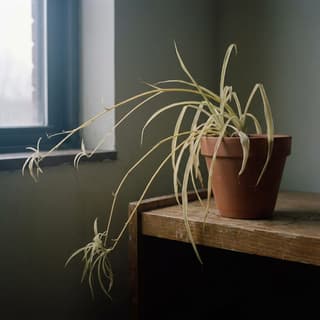
Low Light Stress
MediumLow light stress, also known as etiolation, occurs when plants do not receive adequate light for proper growth and development. This leads to abnormal growth patterns characterized by elongated stems, pale leaves, and weakened overall structure as the plant attempts to reach toward available light sources.